


CUET Preparation Today
The correct statement regarding a carbonyl compound with hydrogen atom on its alpha carbon is: A. A carbonyl compound with hydrogen atom on its a-alpha carbon rapidly equilibrates with its corresponding enol and this process is known as carbonylation. Choose the correct answer from the options given below: |
A only B only C only D only |
B only |
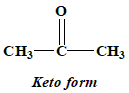
The correct answer is Option (2) → B only. Let us delve deeper into the concepts related to carbonyl compounds, alpha carbons, and keto-enol tautomerism to provide a thorough understanding of why option B is the correct statement. Carbonyl Compounds Carbonyl compounds are organic molecules that contain a carbonyl group (C=O). This group is a functional group in many different classes of organic compounds, including: Aldehydes: where the carbonyl group is at the end of a carbon chain (e.g., methanal, ethanal). Ketones: where the carbonyl group is located within the carbon chain (e.g., propanone, butanone). Alpha Carbon The alpha carbon refers to the first carbon atom that is directly attached to the carbonyl carbon. If a carbonyl compound has a hydrogen atom on its alpha carbon, it can undergo tautomerization. Keto-Enol Tautomerism Tautomerization is a chemical reaction that involves the rearrangement of bonds within a compound. In the case of carbonyl compounds with an alpha hydrogen, the equilibrium between the keto and enol forms can be summarized as follows: Keto Form: The carbonyl compound is typically more stable and predominates in solution. For example, in the case of acetone (a ketone):
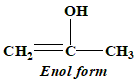
Enol Form: The enol form is formed by the migration of a hydrogen atom from the alpha carbon to the oxygen atom, leading to a carbon-carbon double bond. For example:
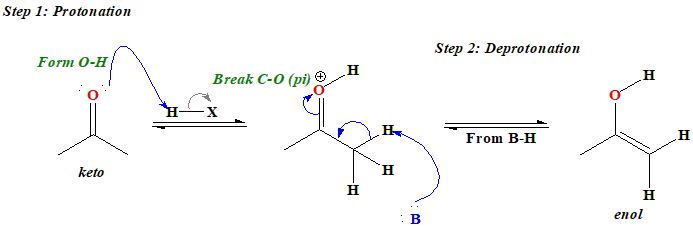
Mechanism of Tautomerization
This reaction is typically catalyzed by acids or bases but can occur spontaneously due to the inherent acidity of the alpha hydrogen. Importance of Alpha Hydrogen The presence of the hydrogen atom on the alpha carbon is crucial for the existence of the enol form. Without this hydrogen, a carbonyl compound cannot participate in tautomerization to form an enol Evaluating the Statements A. A carbonyl compound with a hydrogen atom on its alpha carbon rapidly equilibrates with its corresponding enol, and this process is known as carbonylation. Incorrect: The term "carbonylation" refers to the addition of carbon monoxide to a compound, not the process of keto-enol tautomerism. B. A carbonyl compound with a hydrogen atom on its alpha carbon rapidly equilibrates with its corresponding enol, and this process is known as keto-enol tautomerism. Correct: This statement is accurate. The equilibrium between keto and enol forms occurs rapidly and is correctly termed keto-enol tautomerism. C. A carbonyl compound with a hydrogen atom on its alpha carbon never equilibrates with the corresponding enol. Incorrect: This is false, as such carbonyl compounds do equilibrate with their enol forms. D. A carbonyl compound with a hydrogen atom on its alpha carbon rapidly equilibrates with its corresponding enol, and this process is known as aldehyde-ketone equilibration. Incorrect: While this statement describes the equilibrium correctly, the terminology is not standard. The process is not typically referred to as "aldehyde-ketone equilibration." Conclusion In summary, the correct understanding of keto-enol tautomerism and the role of alpha hydrogens leads us to conclude that option B is the accurate statement regarding the behavior of carbonyl compounds with alpha hydrogen atoms. |