Match List-I with List-II
| List-I | List-II | ||
| (A) | Marginal propensity to save | (I) | Slope of consumption function |
| (B) | Marginal propensity to consume | (II) | Value is 1 at the break even point of the economy |
| (C) | Investment Multiplier | (III) | Reciprocal of marginal propensity to save |
| (D) | Average propensity to consume | (IV) | 1-c |
Choose the correct answer from the options given below:
Answer & explanation
Correct answer: option 4
The correct answer is Option (4) → (A)-(IV), (B)-(I), (C)-(III), (D)-(II)
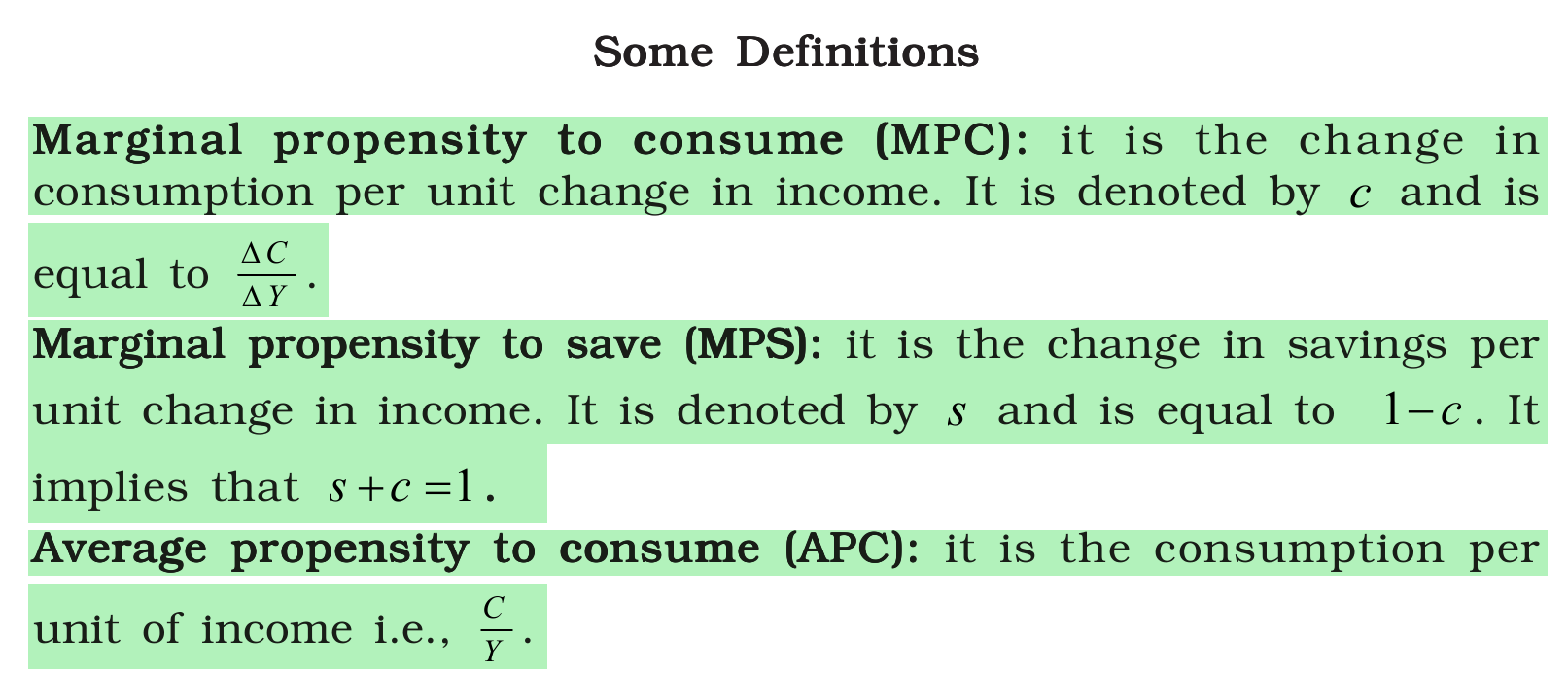
The marginal propensity to consume (c) is the change in consumption per unit change in income. The marginal propensity to save (s) is the change in saving per unit change in income. Extra income is either consumed or saved, so c + s = 1.
| List-I | List-II | Reason |
|---|---|---|
| (A) Marginal propensity to save | (IV) 1-c | Saving is the part of income not consumed. So s = 1 − c. |
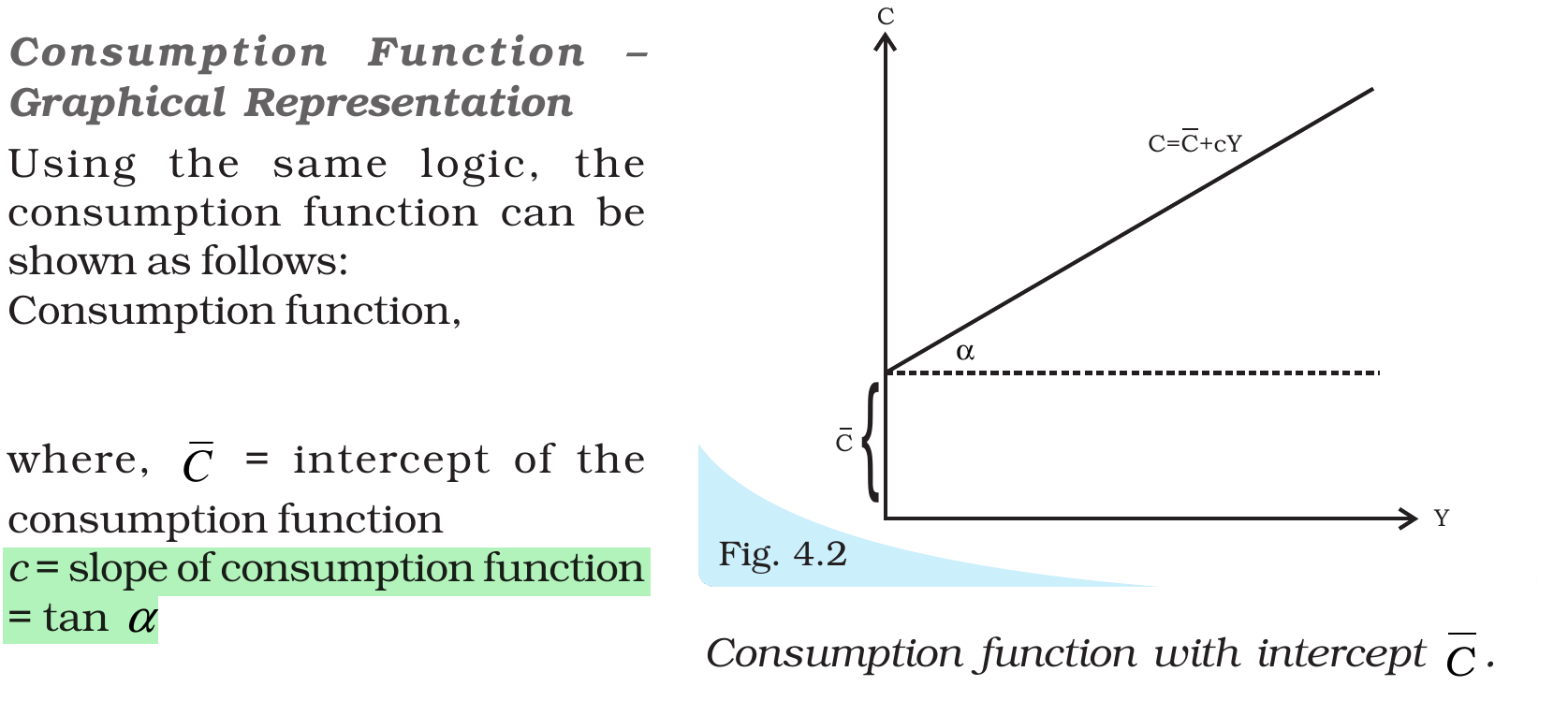
| (B) Marginal propensity to consume | (I) Slope of consumption function | In \( C = \bar{C} + cY \), c shows how much consumption rises per unit rise in income. So c is the slope of the consumption function. |
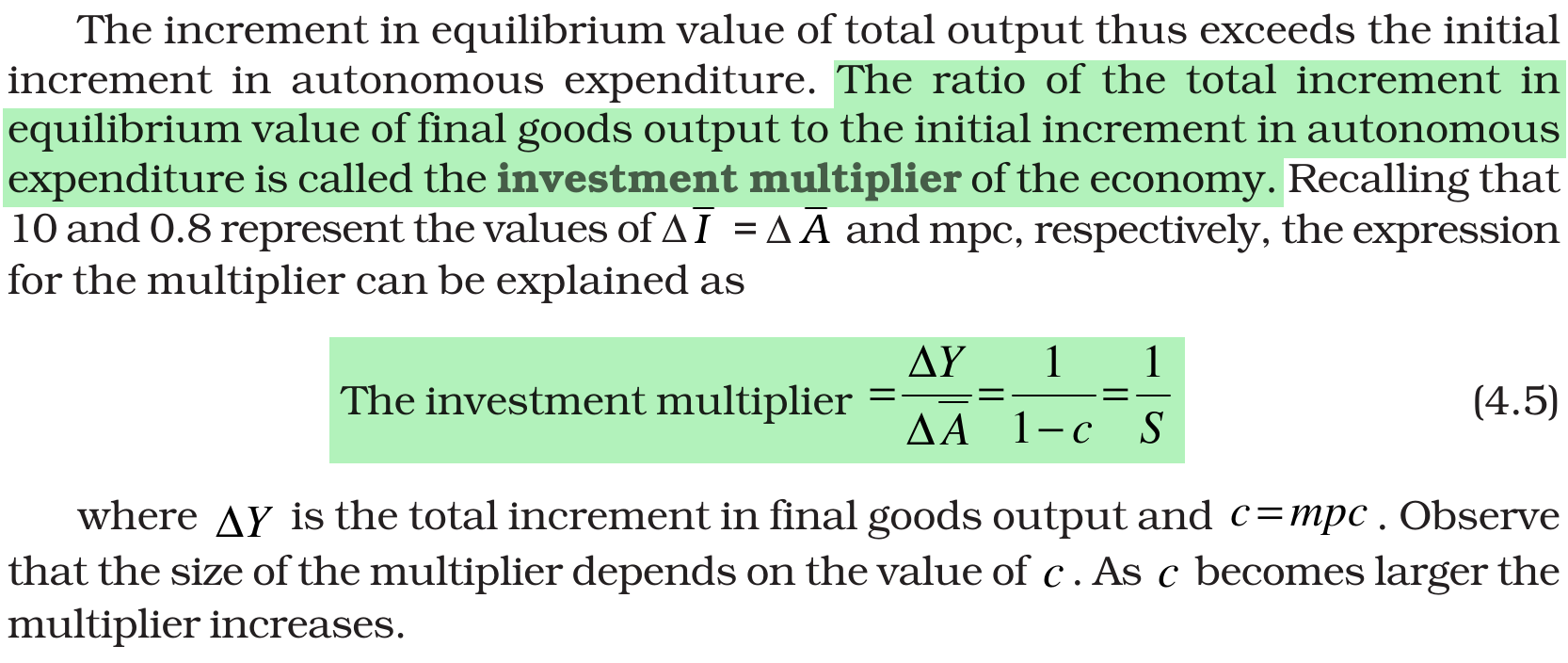
| (C) Investment Multiplier | (III) Reciprocal of marginal propensity to save | The multiplier is 1/(1 − c), and 1 − c is s. So the multiplier is 1/s. |
| (D) Average propensity to consume | (II) Value is 1 at the break even point of the economy | Average propensity to consume is C/Y. At the break even point, consumption equals income and saving is zero, so C/Y = 1. |
Note: The NCERT books (2026-27, 2025-26, 2023-24 and pre-rationalised) use ‘break-even point’ only for a firm. For the economy, it is the level of income at which consumption equals income.
NCERT (2026-27): Introductory Macroeconomics — Chapter 4: Determination of Income and Employment
|