Identify the correct sequence for computing National Income:
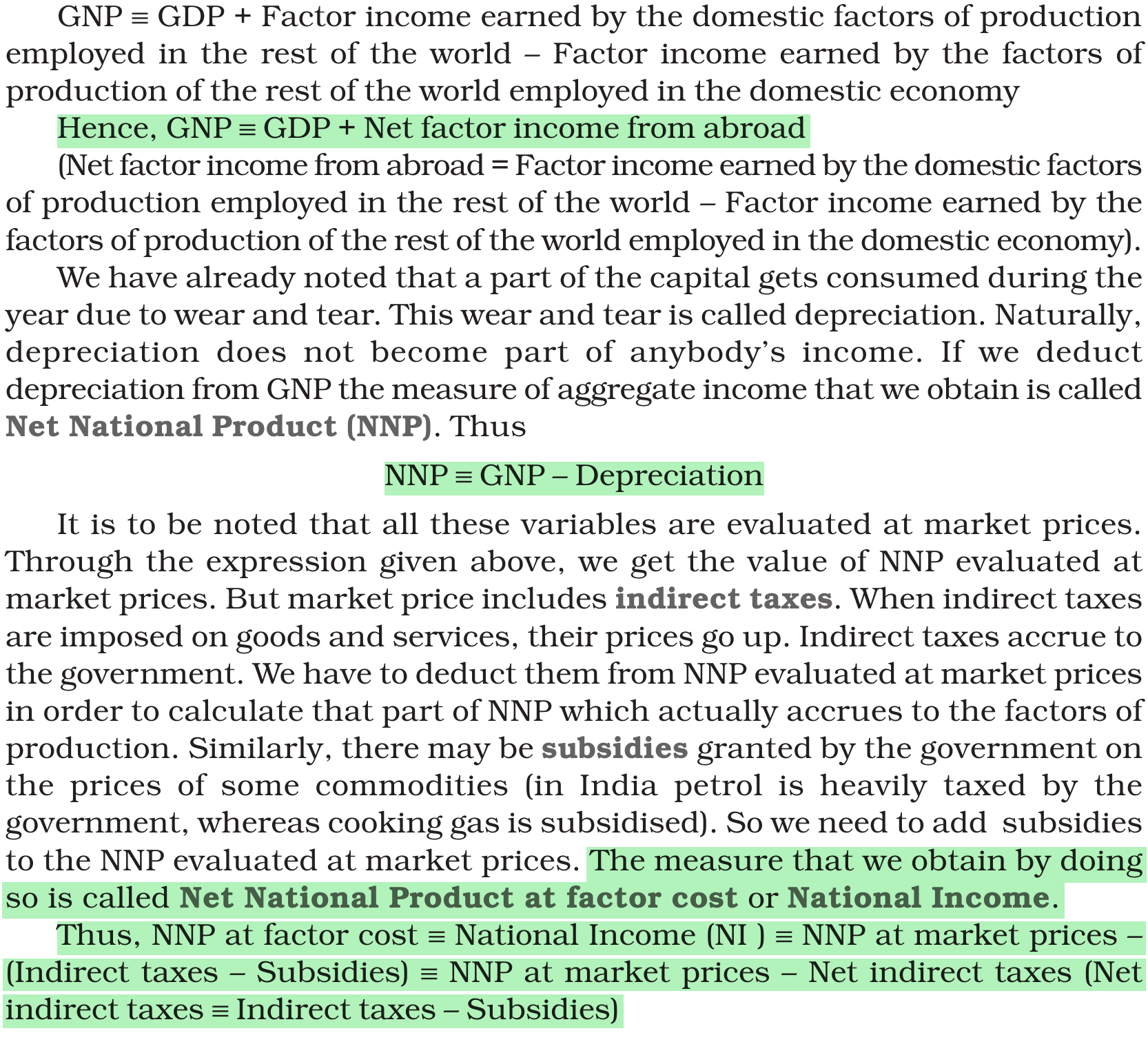
A. Add NFIA to calculate NNPFC.
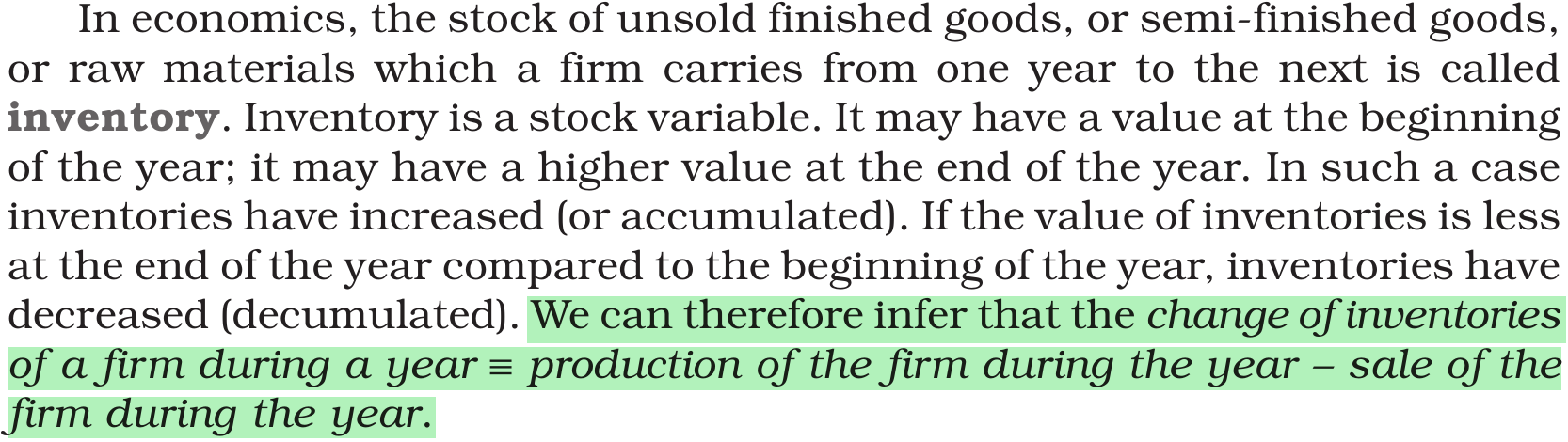
B. Add sales and change in stock to get value of output (VO).
C. Value of intermediate consumption to be deducted from value of output to calculate GVA at MP.
D. Deduct value of depreciation and Net Indirect Tax to get NVAFC.
Choose the correct answer from the options given below:
Answer & explanation
Correct answer: option 2
The correct answer is Option (2) → B, C, D, A
The value added method starts from what firms produce. It ends at national income, which is Net National Product at factor cost (NNPFC).
B. Add sales and change in stock to get value of output (VO). — First find what was produced, sold or kept in stock.
VO = Sales + Change in stock
C. Value of intermediate consumption to be deducted from value of output to calculate GVA at MP. — Inputs bought from others are removed, which leaves gross value added at market prices (GVAMP).
GVAMP = VO − Intermediate consumption
D. Deduct value of depreciation and Net Indirect Tax to get NVAFC. — Removing these two gives net value added at factor cost (NVAFC), the income earned inside the country.
NVAFC = GVAMP − Depreciation − Net indirect tax
A. Add NFIA to calculate NNPFC. — Adding net factor income from abroad (NFIA) turns the domestic figure into the national one.
NNPFC = NVAFC + NFIA
NCERT (2026-27): “2.2.1 The Product or Value Added Method … We have already introduced the concept of depreciation, which is also known as consumption of fixed capital. Since the capital which is used to carry out production undergoes wear and tear, the producer has to undertake replacement investments to keep the value of capital constant. The replacement investment is same as depreciation of capital. If we include depreciation in value added then the measure of value added that we obtain is called Gross Value Added. If we deduct the value of depreciation from gross value added we obtain Net Value Added. Unlike gross value added, net value added does not include wear and tear that capital has undergone.…”
|