What is the correct chronological sequence of democratic developments in India?
A. Constitutional status granted to Panchayati Raj Institutions.
B. Development of Van Panchayats
C. Right to Information Act
D. Right to Livelihood as constitutional right.
Choose the correct answer from the options given below:
Answer & explanation
Correct answer: option 1
The correct answer is Option (1) → D, A, B, C
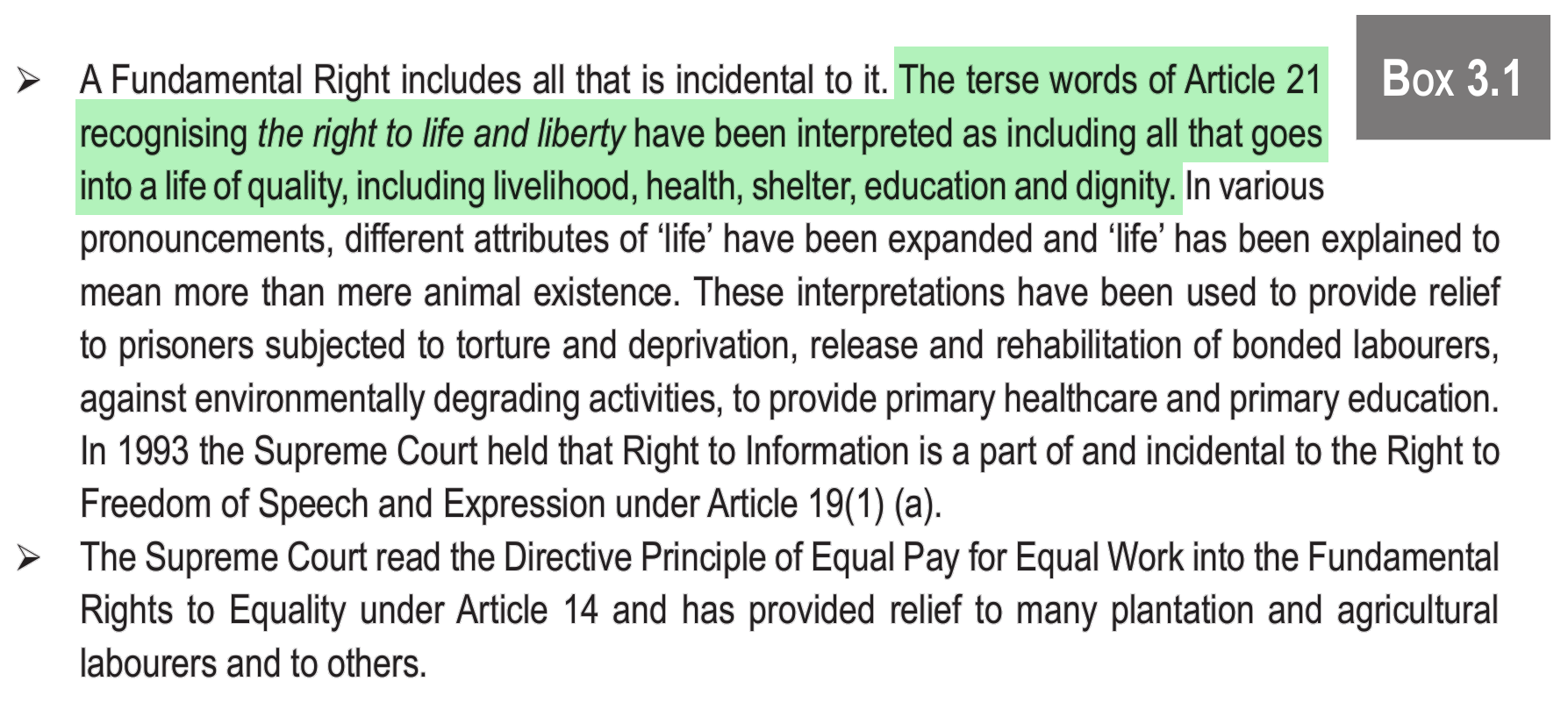
(D) Right to Livelihood as constitutional right — the Supreme Court has read the right to life under Article 21 to include all that goes into a life of quality, including livelihood.
(A) Constitutional status granted to Panchayati Raj Institutions — the 73rd Amendment of 1992.
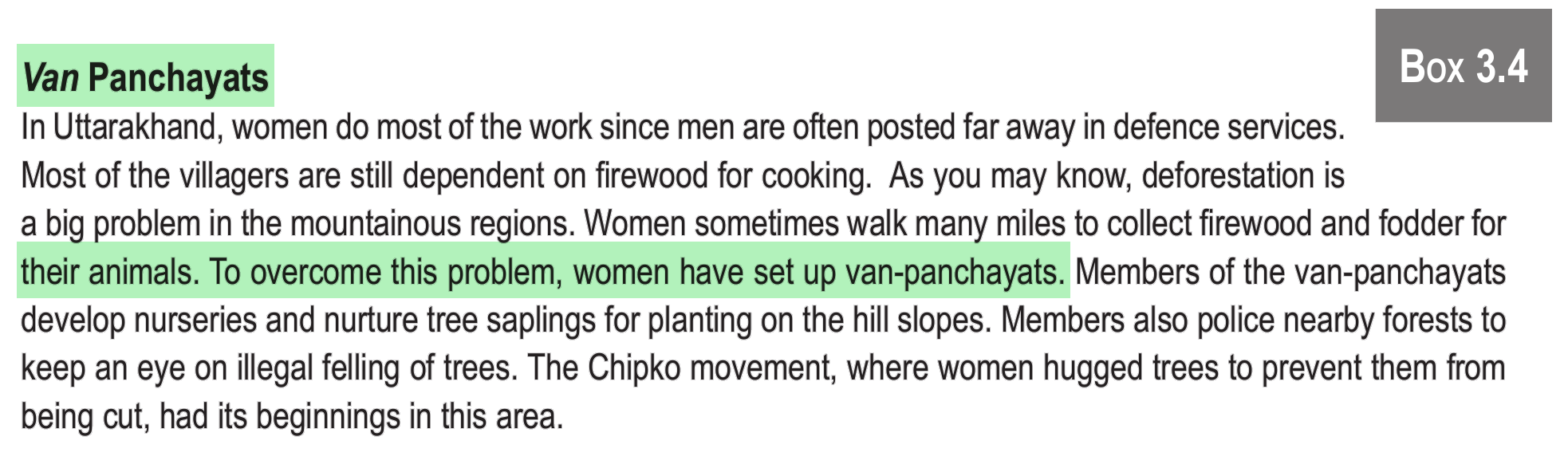
(B) Development of Van Panchayats — village forest councils of the Uttarakhand hills, run largely by women, who raise nurseries and guard the forests against illegal felling. They are taken here as a part of the grassroots democracy that grew after the 73rd Amendment.
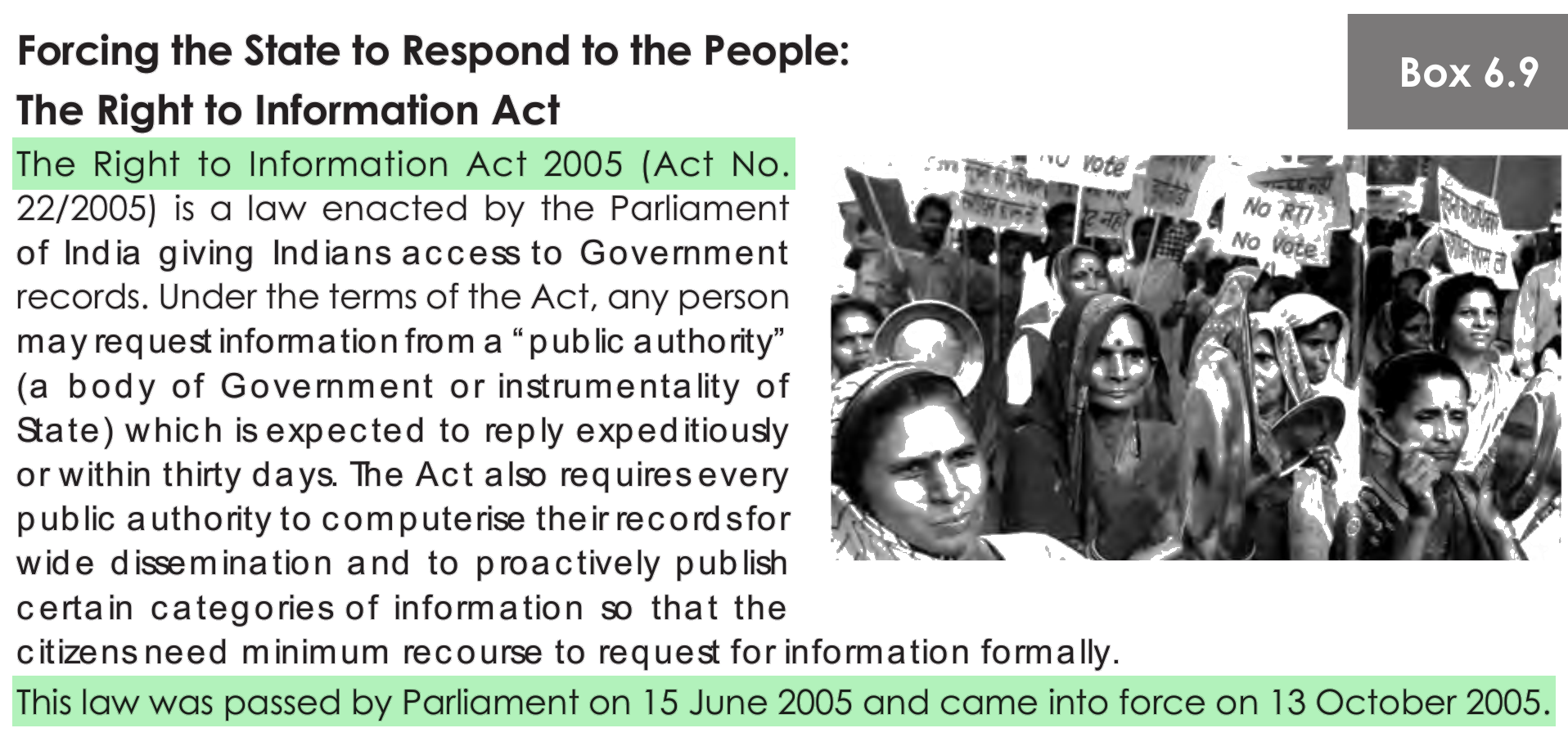
(C) Right to Information Act — 2005, the latest of the four.
Note: NCERT (2025-26) gives no date for statement B (the Van Panchayats) or for statement D (the right to livelihood): it describes both in boxes of the same chapter without a year, and dates only statement A, the 73rd Amendment (1992), and statement C, the Right to Information Act (2005). The answer has been marked as per the official NTA Answer Key, which places D first and B after the 73rd Amendment.
NCERT (2025-26): “You will realise that the Constitution has the capacity to help people because it is based on the basic norms of social justice. For instance, the Directive Principle on Village Panchayats was moved as an amendment in the Constituent Assembly by K. Santhanam. After forty odd years, it became a Constitutional imperative after the 73rd Amendment in 1992.…”
|