Match List I with List II
| LIST I | LIST II |
| (A) Y | (I) Y - C |
| (B) C | (II) \( \displaystyle \frac{1}{\text{MPS}} \) |
| (C) S | (III) \( \overline{A} + c \cdot y \) |
| (D) Investment multiplier | (IV) \( \overline{C} + c \cdot y \) |
Choose the correct answer from the options given below:
Answer & explanation
Correct answer: option 3
The correct answer is Option (3) → A-III, B-IV, C-I, D-II
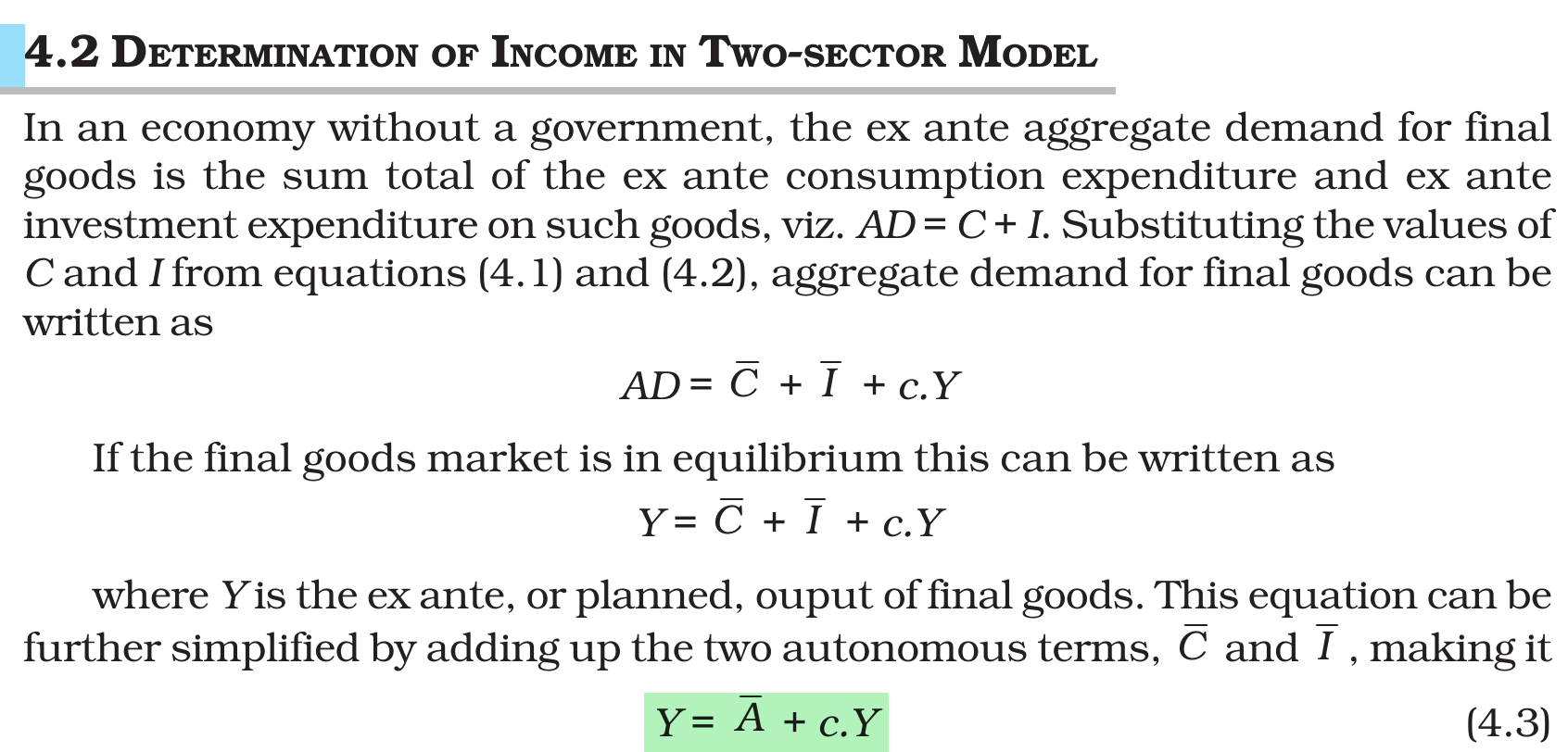
Here c is the marginal propensity to consume (MPC), \( \overline{C} \) is autonomous consumption and \( \overline{A} = \overline{C} + \overline{I} \) is total autonomous expenditure.
| List-I | List-II | Reason |
|---|---|---|
| (A) Y | (III) \( \overline{A} + c \cdot y \) | In equilibrium, output equals aggregate demand, which is autonomous expenditure plus c times income. |
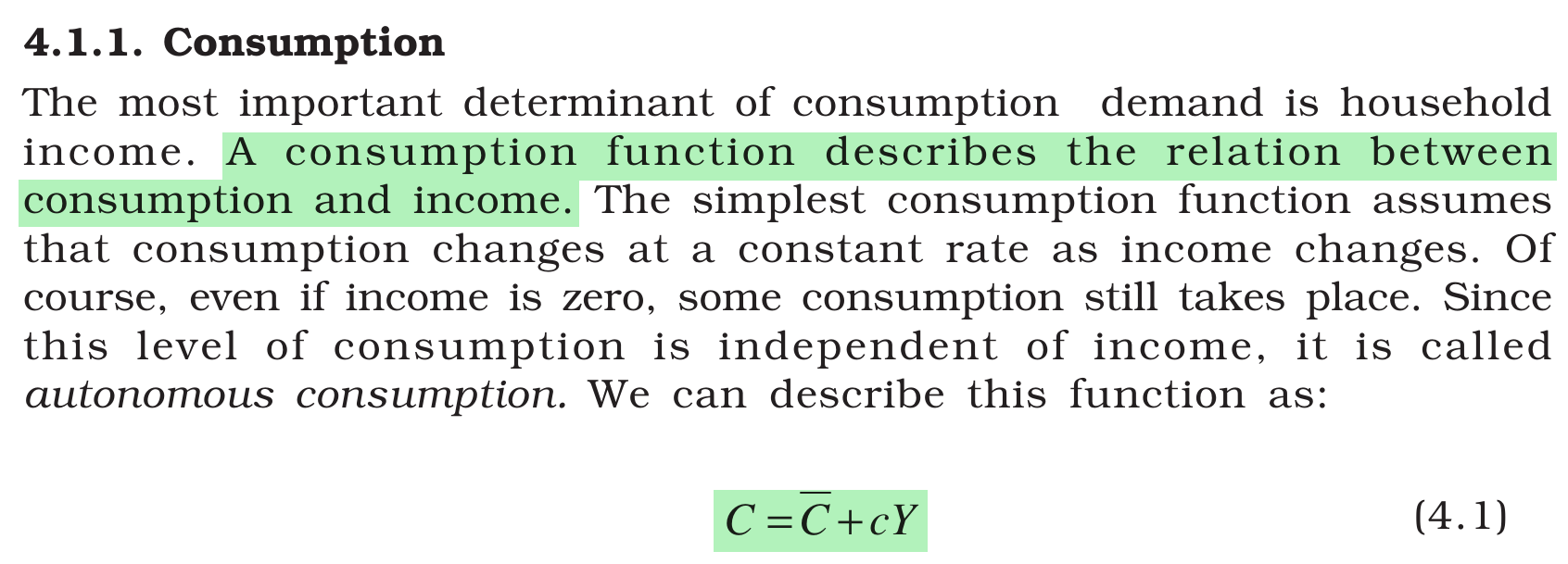
| (B) C | (IV) \( \overline{C} + c \cdot y \) | This is the consumption function: autonomous consumption plus the part of income consumed. |
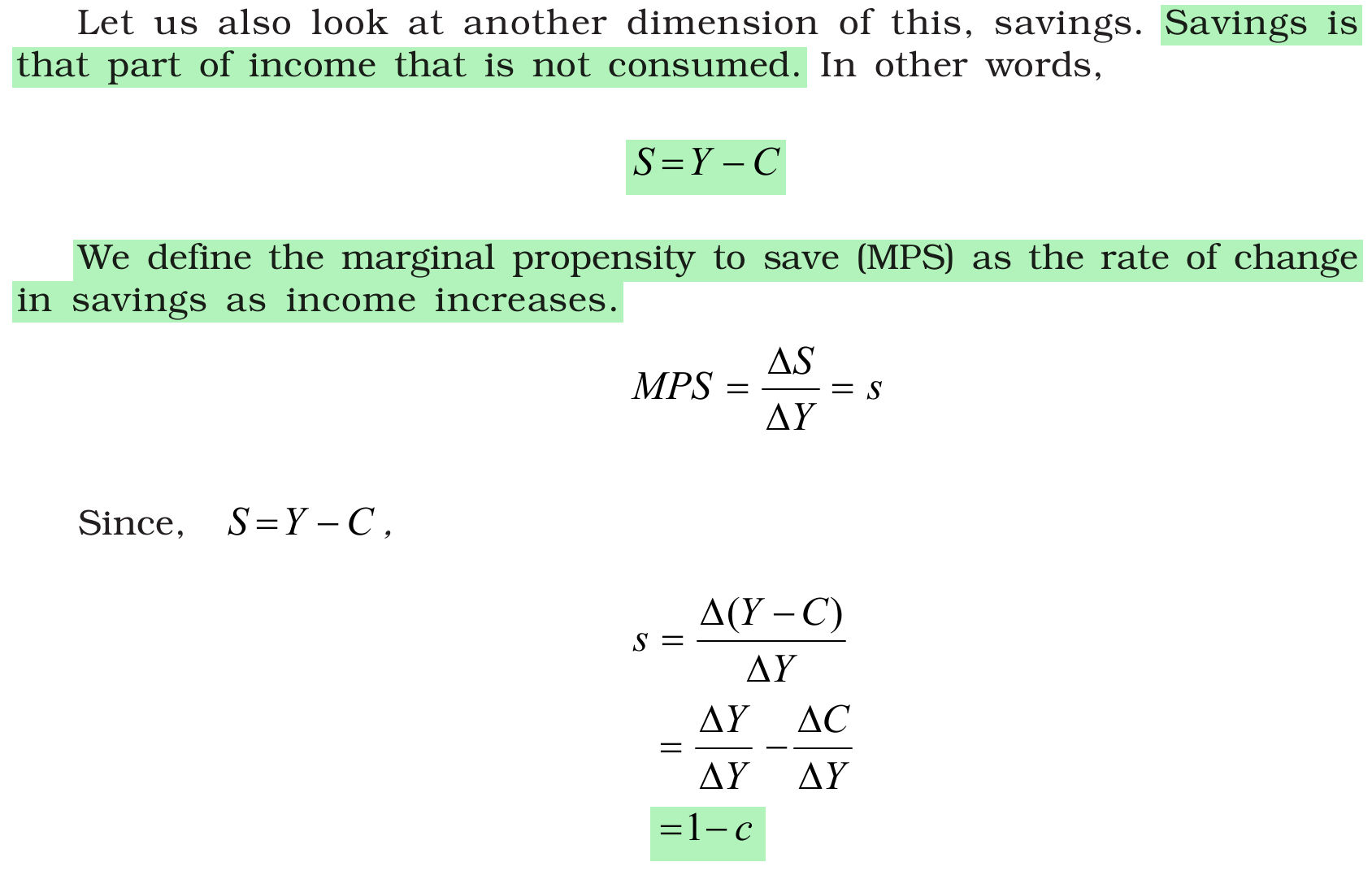
| (C) S | (I) Y - C | Income that is not consumed is saved. |
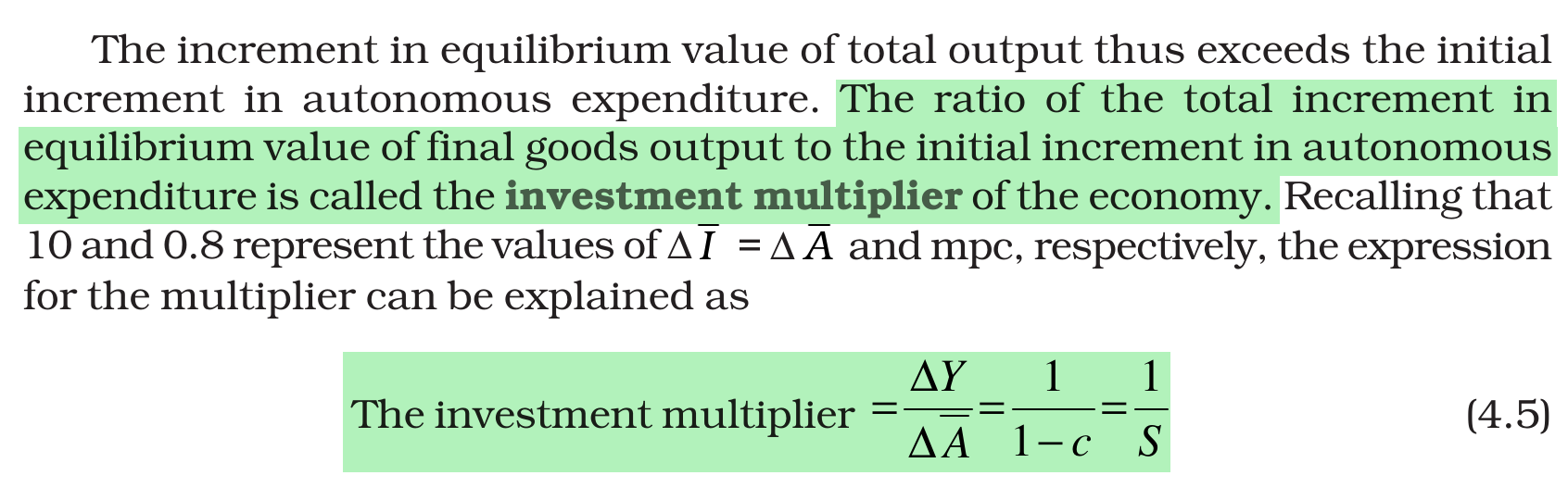
| (D) Investment multiplier | (II) \( \displaystyle \frac{1}{\text{MPS}} \) | The multiplier is 1/(1 − c), and 1 − c is the MPS. |
NCERT (2026-27): “4.1.1. Consumption …If consumption takes place even when income is zero, it is because of autonomous consumption. The induced component of consumption, cY shows the dependence of consumption on income. When income rises by Re 1. induced consumption rises by MPC i.e. c or the marginal propensity to consume. It may be explained as a rate of change of consumption as income changes.…”
|