Match List-I with List-II
| List-I Events | List-II year | ||
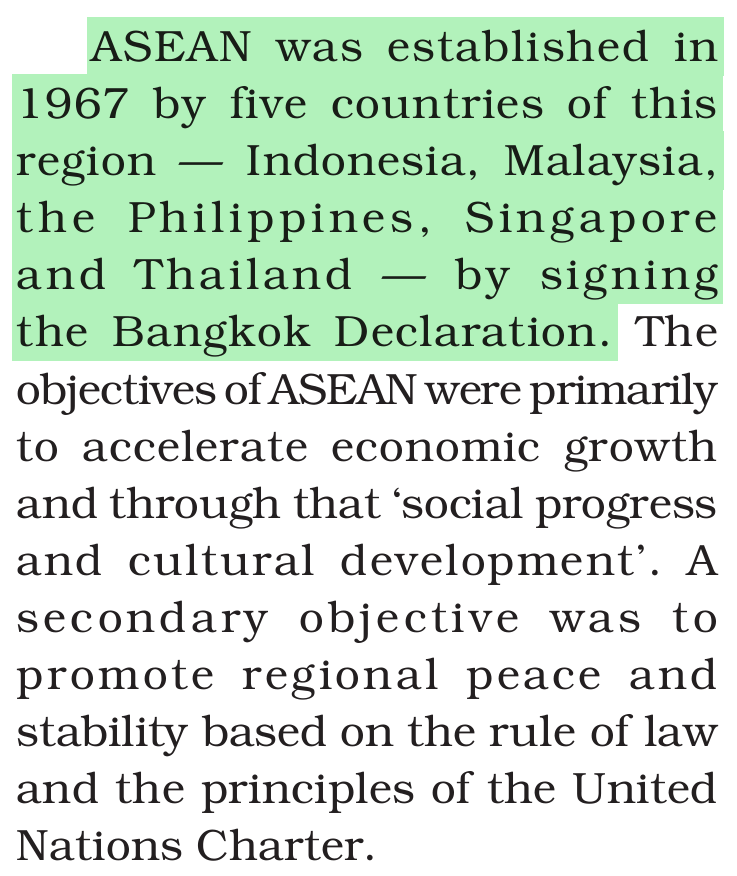
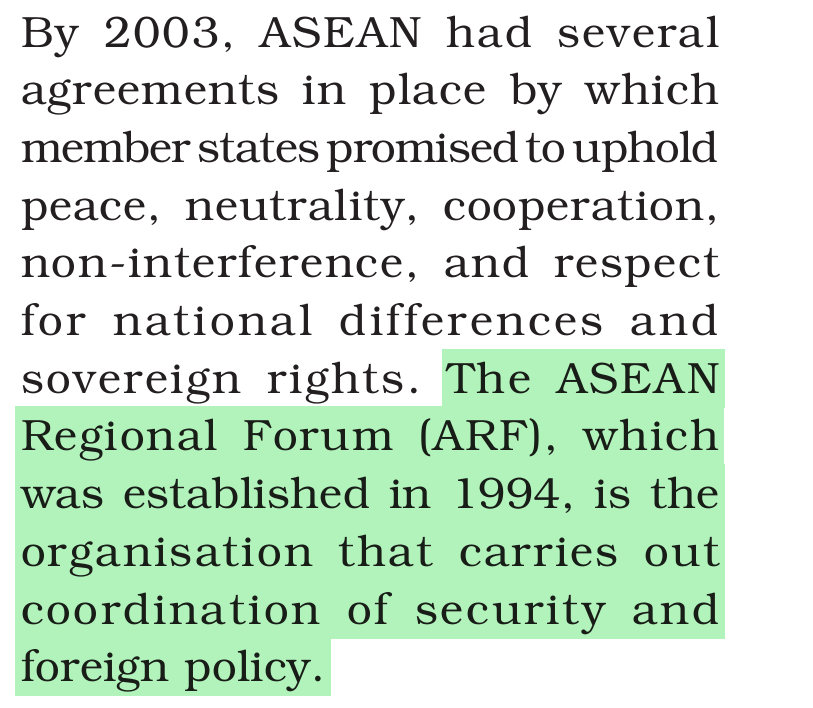
| (A) | ASEAN Regional Forum | (I) | 2003 |
| (B) | ASEAN-India FTA | (II) | 1967 |
| (C) | Establishment of ASEAN | (III) | 2010 |
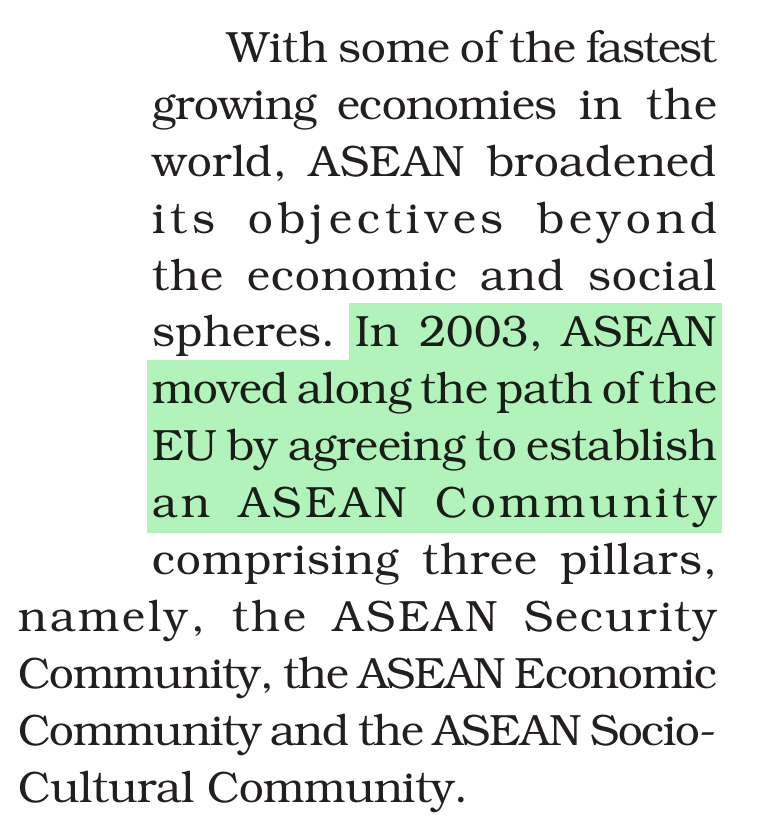
| (D) | Agreeing to establish ASEAN Community | (IV) | 1994 |
Choose the correct answer from the options given below:
Answer & explanation
Correct answer: option 4
The correct answer is Option (4) → (A) – (IV), (B) – (III), (C) – (II), (D) – (I)
(A) ASEAN Regional Forum — this matches (IV) 1994.
(B) ASEAN-India FTA — this matches (III) 2010.
(C) Establishment of ASEAN — this matches (II) 1967. It was established by the Bangkok Declaration.
(D) Agreeing to establish ASEAN Community — this matches (I) 2003.
NCERT (2025-26): “Overview … After the end of the bipolar structure of world politics in the early 1990s, it became clear that alternative centres of political and economic power could limit America’s dominance. Thus, in Europe, the European Union (EU) and, in Asia, the Association of South East Asian Nations (ASEAN), have emerged as forces to reckon with. While evolving regional solutions to their historical enmities and weaknesses, both the EU and the ASEAN have developed alternative institutions and conventions that build a more peaceful and cooperative regional order and have transformed the countries in the region into prosperous economies.… Association of South East Asian Nations (ASEAN) … Take a look at the political map of the world. Which countries would you say fall in the southeastern region of Asia? Before and during the Second World War, this region of Asia suffered the economic and political consequences of repeated colonialisms, both European and Japanese. At the end of the war, it confronted problems of nation-building, the ravages of poverty and economic backwardness and the pressure to align with one great power or another during the Cold War. This was a recipe for conflict, which the countries of Southeast Asia could ill afford. Efforts at Asian and Third World unity, such as the Bandung Conference and the Non-Aligned Movement, were ineffective in establishing the conventions for informal cooperation and interaction.…”
|