Match List-I with List-II:
| List-I Painting/Illustration | List-II Source | ||
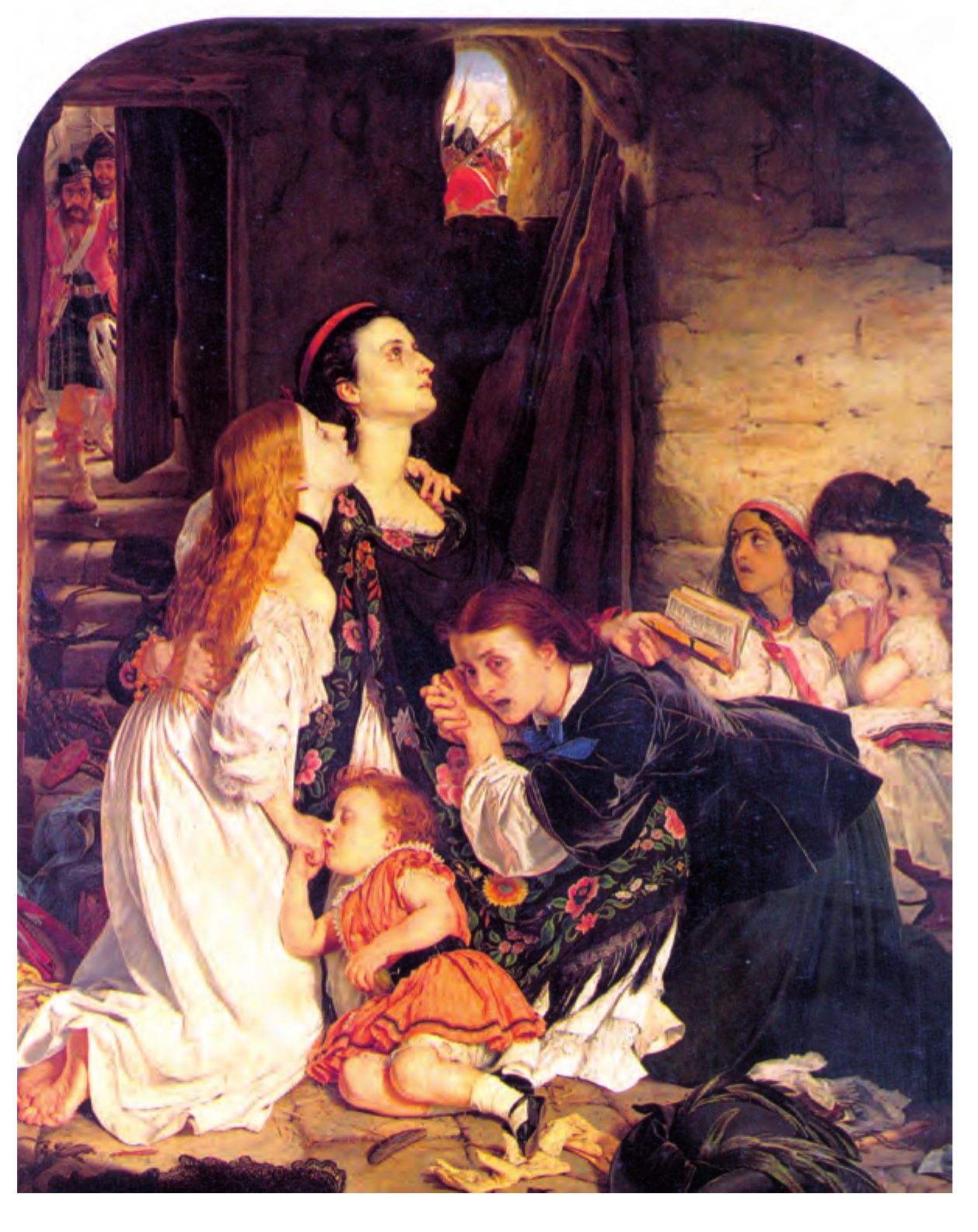
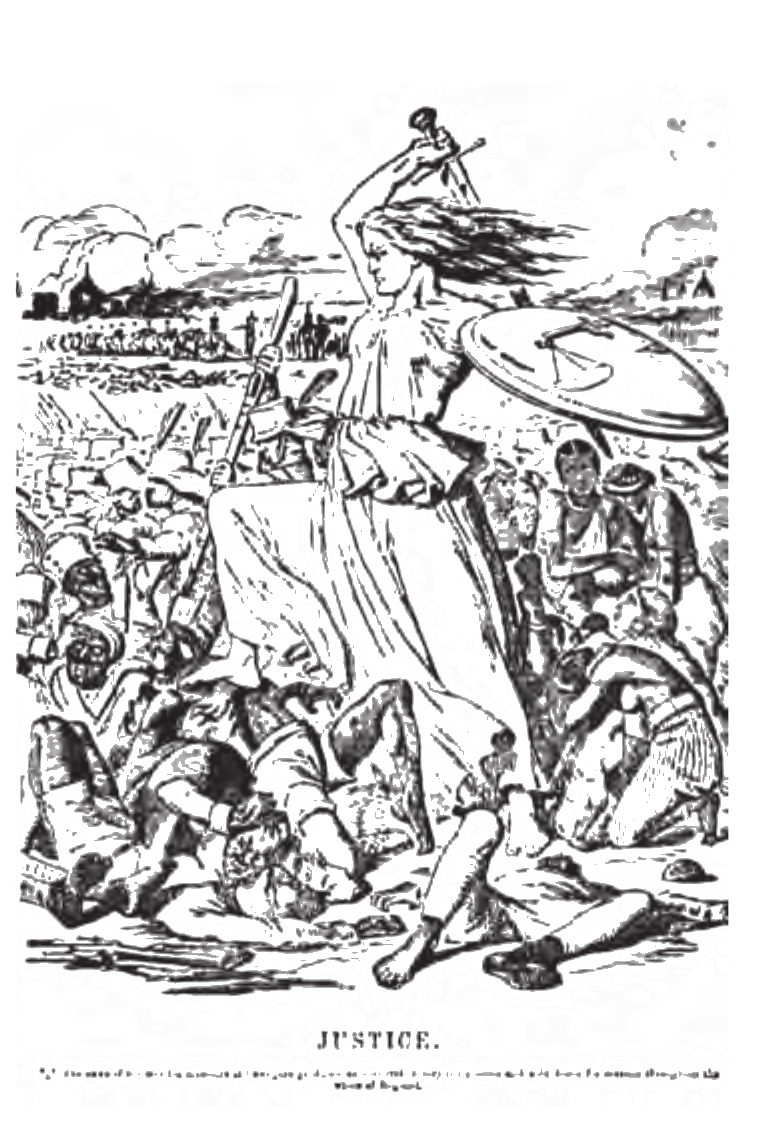
| (A) | In Memoriam | (I) | Punch |
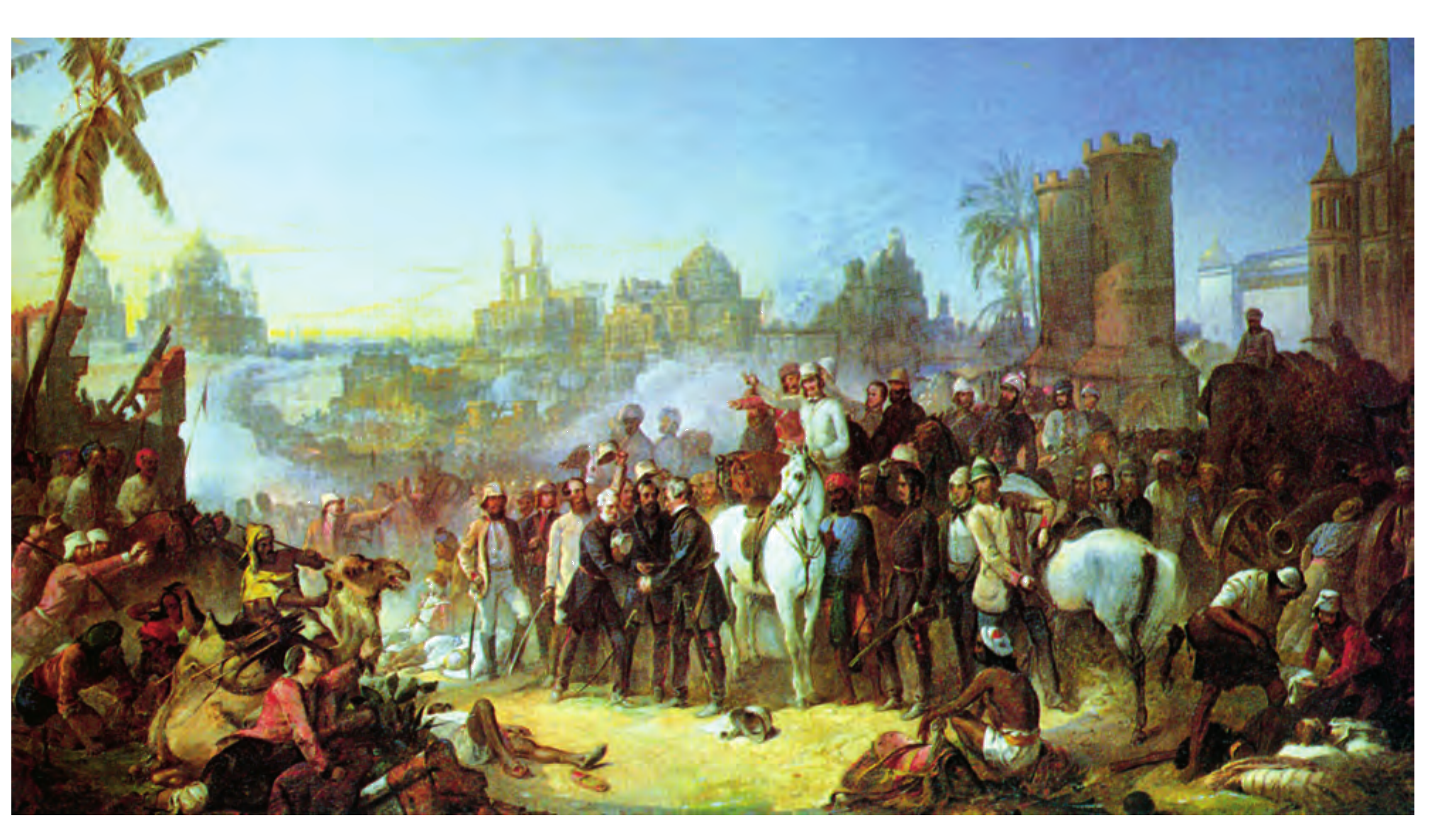
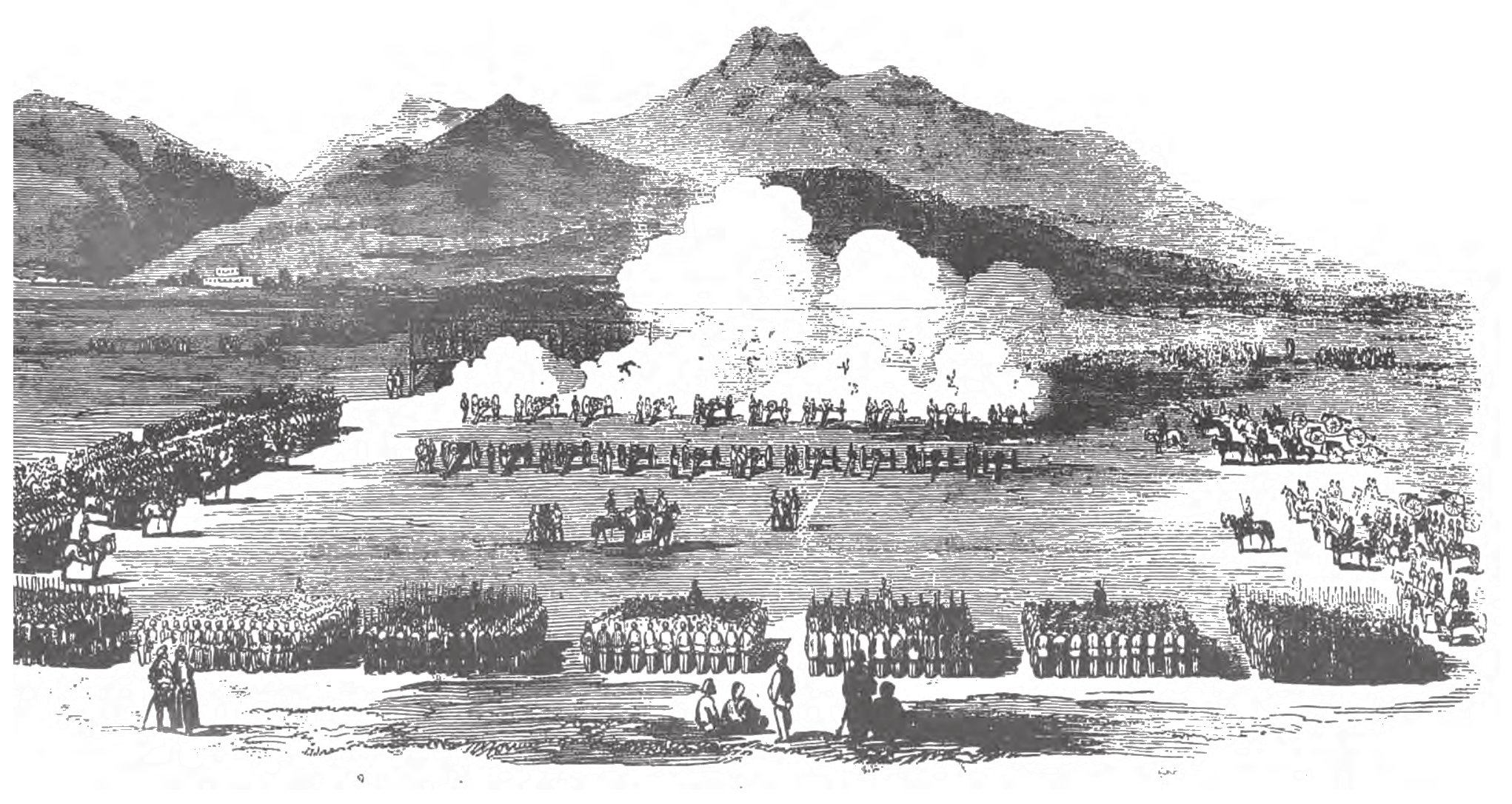
| (B) | Relief of Lucknow | (II) | London News |
| (C) | Justice | (III) | Joseph Noel Paton |
| (D) | Execution of mutinous sepoys in Peshawar | (IV) | Thomas Jones Barker |
Choose the correct answer from the options given below:
Answer & explanation
Correct answer: option 4
The correct answer is Option (4) → (A)-(III), (B)-(IV), (C)-(I), (D)-(II)
(A) In Memoriam — this matches (III) Joseph Noel Paton. Paton painted it two years after the mutiny: English women and children huddled in a circle, helpless and innocent, waiting for the inevitable. It suggests violence without showing it.
(B) Relief of Lucknow — this matches (IV) Thomas Jones Barker. Barker painted it in 1859; it celebrates the British heroes — Campbell, Outram and Havelock — at the moment the besieged British garrison at Lucknow was rescued.
(C) Justice — this matches (I) Punch. This picture appeared in Punch on 12 September 1857, after the news of the massacre at Cawnpore (Kanpur) roused a wild desire for revenge in England.
(D) Execution of mutinous sepoys in Peshawar — this matches (II) London News. “Execution of mutineers in Peshawar: Blowing from the guns” appeared in the Illustrated London News on 3 October 1857, one of the images of executions circulated through popular journals.
NCERT (2026-27): “5.1 Celebrating the saviours … Some of them commemorate the British heroes who saved the English and repressed the rebels. ‘Relief of Lucknow’, painted by Thomas Jones Barker in 1859, is an example of this type.… 5.2 English women and the honour of Britain … Artists expressed as well as shaped these sentiments through their visual representations of trauma and suffering. ‘In Memoriam’ (Fig. 10.11) was painted by Joseph Noel Paton two years after the mutiny. You can see English women and children huddled in a circle, looking helpless and innocent, seemingly waiting for the inevitable – dishonour, violence and death. ‘In Memoriam’ does not show gory violence; it only suggests it.… 5.4 The performance of terror … The urge for vengeance and retribution was expressed in the brutal way in which the rebels were executed. They were blown from guns, or hanged from the gallows. Images of these executions were widely circulated through popular journals.”
Fig. 10.10 “Relief of Lucknow”, painted by Thomas Jones Barker, 1859
Fig. 10.15 Execution of mutineers in Peshawar: Blowing from the guns, Illustrated London News, 3 October 1857 |