Identify the causative organism for typhoid fever in human beings?
Answer & explanation
Correct answer: option 3
The correct answer is Option (3) → Salmonella
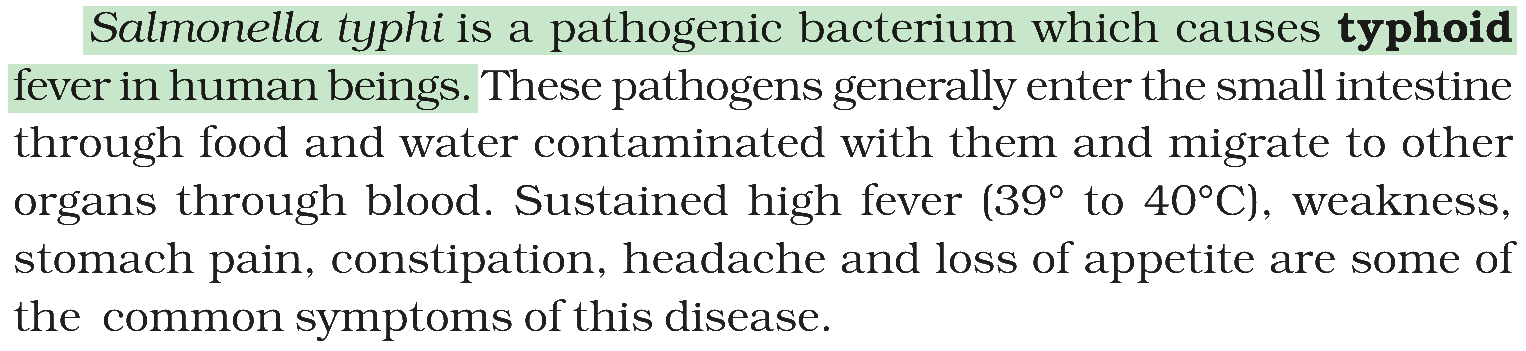
Typhoid fever is caused by the bacterium Salmonella typhi. It enters the small intestine through contaminated food and water, and then reaches other organs through the blood. Its symptoms include a long high fever, weakness, stomach pain, constipation, headache and loss of appetite. It is confirmed by the Widal test.
(1) Plasmodium — Incorrect. Plasmodium is a protozoan. It causes malaria and spreads through the bite of the female Anopheles mosquito.
(2) Escherichia — Incorrect. Escherichia coli is a common bacterium of the human gut. It does not cause typhoid.
(3) Salmonella — Correct. Salmonella is the genus of the bacterium Salmonella typhi. This bacterium is the pathogen that causes typhoid fever in human beings, so it is the causative organism asked.
(4) Streptococcus — Incorrect. Streptococcus pneumoniae causes pneumonia, which infects the lungs.
NCERT Extract:
Common Diseases in Humans – …