Arrange the following in a chronological order:
A. Salt Satyagraha
B. Cripps Mission
C. Rowlatt Satyagraha
D. Chauri-Chaura
E. Cabinet Mission
Choose the correct answer from the options given below:
Answer & explanation
Correct answer: option 3
The correct answer is Option (3) → C, D, A, B, E
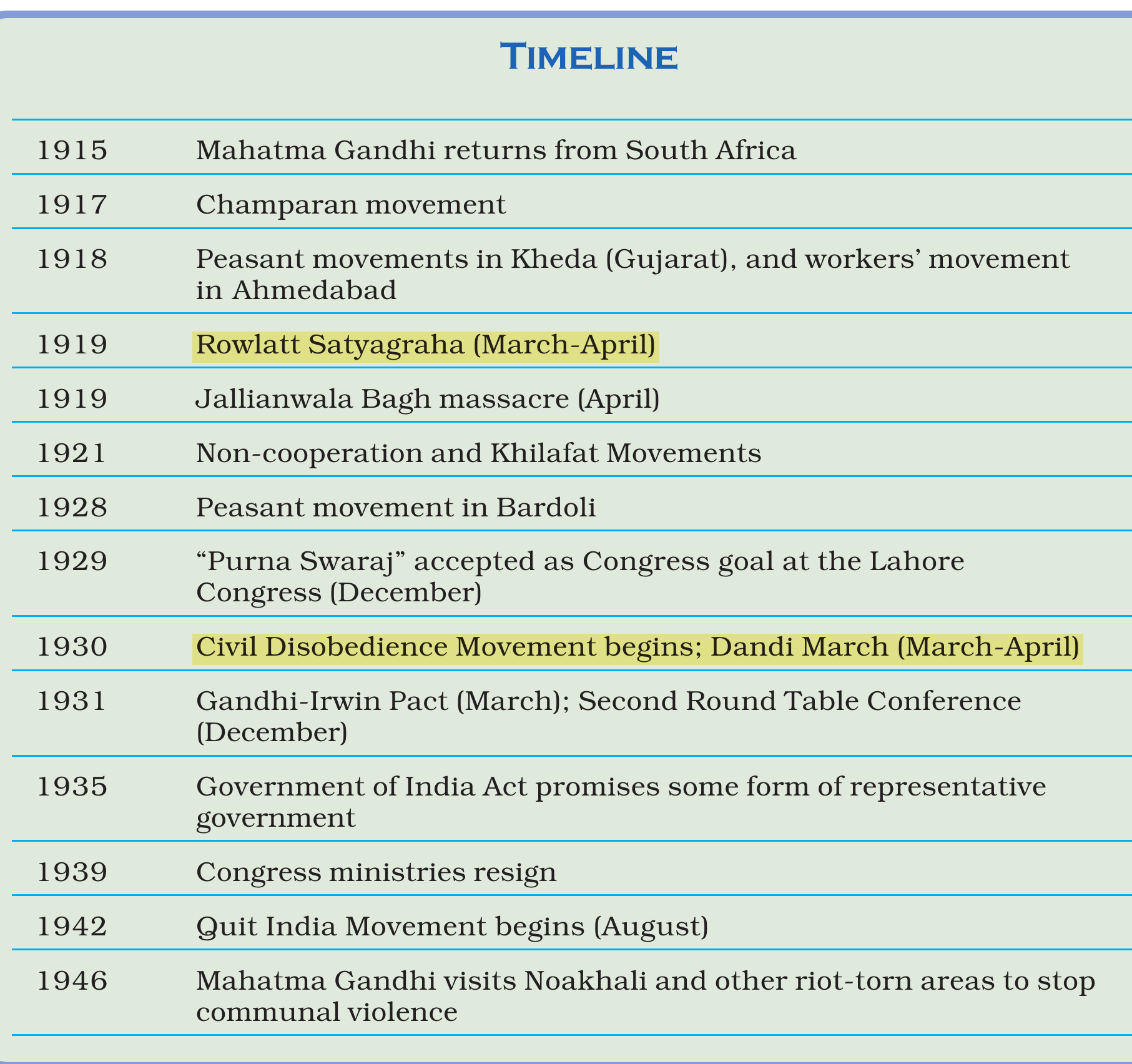
C. Rowlatt Satyagraha — March-April 1919. Gandhiji called for a countrywide campaign against the Rowlatt Act.
D. Chauri-Chaura — February 1922. Peasants attacked and torched a police station in the hamlet of Chauri Chaura, and Gandhiji called off the Non-cooperation Movement.
A. Salt Satyagraha — March-April 1930. The Civil Disobedience Movement began with the Dandi March to break the salt law.
B. Cripps Mission — spring of 1942, when Sir Stafford Cripps was sent to India to forge a compromise with Gandhiji and the Congress.
E. Cabinet Mission — summer of 1946. It failed to get the Congress and the League to agree on a federal system.
NCERT (2026-27): “2.1 Knitting a popular movement … Then, in February 1922, a group of peasants attacked and torched a police station in the hamlet of Chauri Chaura, in the United Provinces (now, Uttar Pradesh and Uttaranchal). Several constables perished in the conflagration.… …In the spring of 1942, Churchill was persuaded to send one of his ministers, Sir Stafford Cripps, to India to try and forge a compromise with Gandhiji and the Congress.… …A Cabinet Mission sent in the summer of 1946 failed to get the Congress and the League to agree on a federal system that would keep India together while allowing the provinces a degree of autonomy.…”
Timeline, chapter ‘Mahatma Gandhi and the Nationalist Movement’ |