Match List-I (aspects of a business affected by financial management decisions) with List-II (how they are affected):
| List-I | List-II | ||
|---|---|---|---|
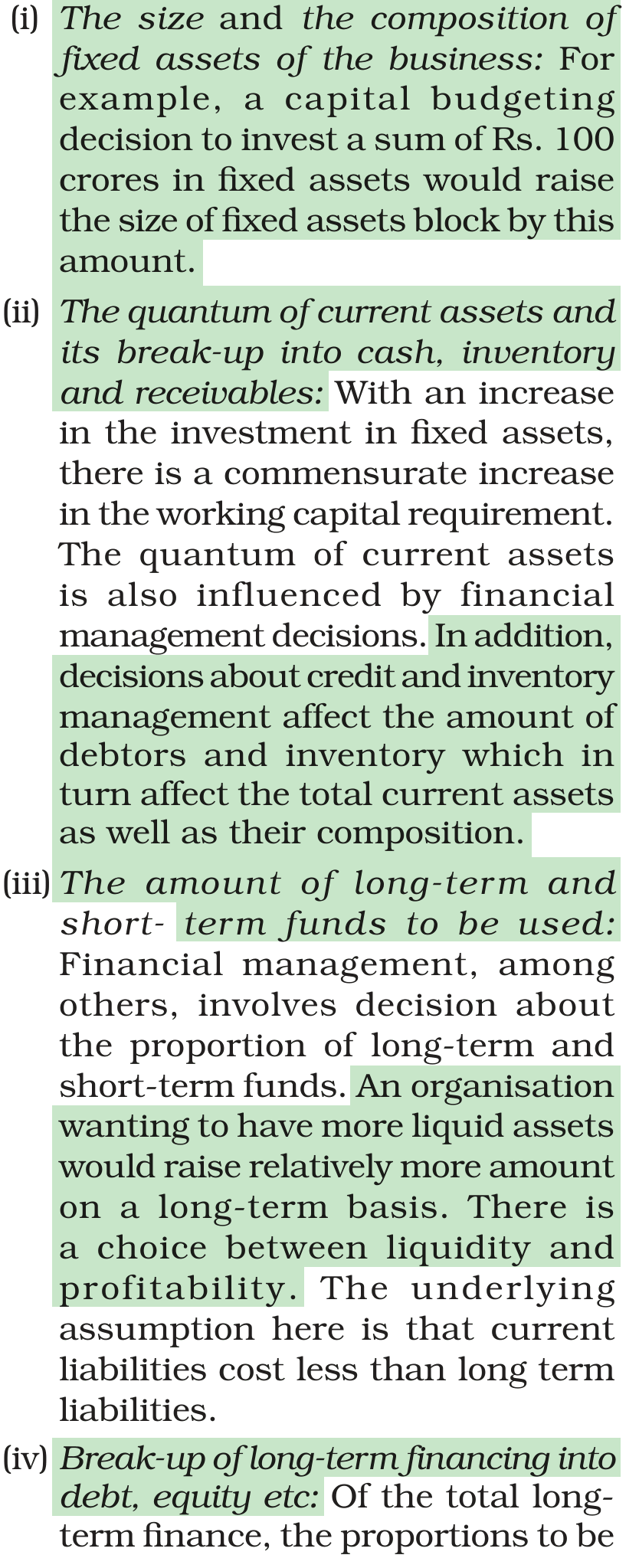
| (A) | Size and composition of fixed assets | (I) | Decisions about credit and inventory management affect the amount of debtors and inventory. |
| (B) | Quantum of current assets and their break-up | (II) | A capital budgeting decision to invest a large sum in a new plant. |
| (C) | Amount of long-term and short-term funds to be used | (III) | There is a choice between liquidity and profitability. |
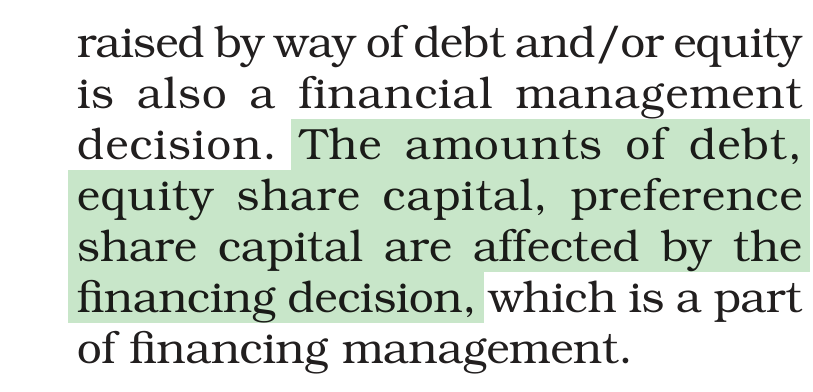
| (D) | Break-up of long-term financing by source | (IV) | The amounts of debt, equity share capital and preference share capital raised. |
Choose the correct answer from the options given below:
Answer & explanation
Correct answer: option 1
The correct answer is Option (1) → (A)-(II), (B)-(I), (C)-(III), (D)-(IV)
| List-I | List-II | Reason |
|---|---|---|
| (A) Size and composition of fixed assets | (II) A capital budgeting decision to invest a large sum in a new plant. | A plant is a fixed asset. Investing in it raises the size of the fixed assets block. |
| (B) Quantum of current assets and their break-up | (I) Decisions about credit and inventory management affect the amount of debtors and inventory. | Debtors and inventory are current assets. So these decisions change both the total of current assets and its break-up. |
| (C) Amount of long-term and short-term funds to be used | (III) There is a choice between liquidity and profitability. | More long-term funds give the firm more liquid assets but cost more. Short-term funds cost less, so the firm must balance liquidity against profit. |
| (D) Break-up of long-term financing by source | (IV) The amounts of debt, equity share capital and preference share capital raised. | Debt, equity and preference capital are the sources of long-term finance. How much comes from each is fixed by the financing decision. |
NCERT (2026-27 Edition):
|