
In a pea plant, violet flower colour is dominant over white. If a heterozygous violet-flowered plant is crossed with a white-flowered plant, what ratio of violet to white plants would you expect in the progeny?
Answer & explanation
Correct answer: option 3
The correct answer is Option (3) → 1:1
Crossing a plant that shows the dominant trait with the recessive parent is a test cross. Let W be violet (dominant) and w white (recessive). The heterozygous violet plant is Ww and the white plant is ww.
Gametes: Ww gives W and w in equal proportion; ww gives only w.
| W | w | |
|---|---|---|
| w | Ww (violet) | ww (white) |
| w | Ww (violet) | ww (white) |
Half the progeny are Ww (violet) and half are ww (white), so violet : white = 1 : 1. This is what the right half of Figure 4.5 shows.
Option (1) 9:1 — Incorrect. A 9 : 1 ratio does not come out of any cross between two plants that differ in one character.
Option (2) 3:1 — Incorrect. 3 : 1 is the F2 ratio when two heterozygotes (Ww × Ww) are crossed, not when Ww is crossed with ww.
Option (4) 1:3 — Incorrect. 1 : 3 would mean three white plants for every violet one. The cross gives equal numbers of the two.
NCERT Extract:
Inheritance of One Gene – “… In a typical test cross an organism (pea plants here) showing a dominant phenotype (and whose genotype is to be determined) is crossed with the recessive parent instead of self-crossing. The progenies of such a cross can easily be analysed to predict the genotype of the test organism. Figure 4.5 shows the results of typical test cross where violet colour flower (W) is dominant over white colour flower (w).”
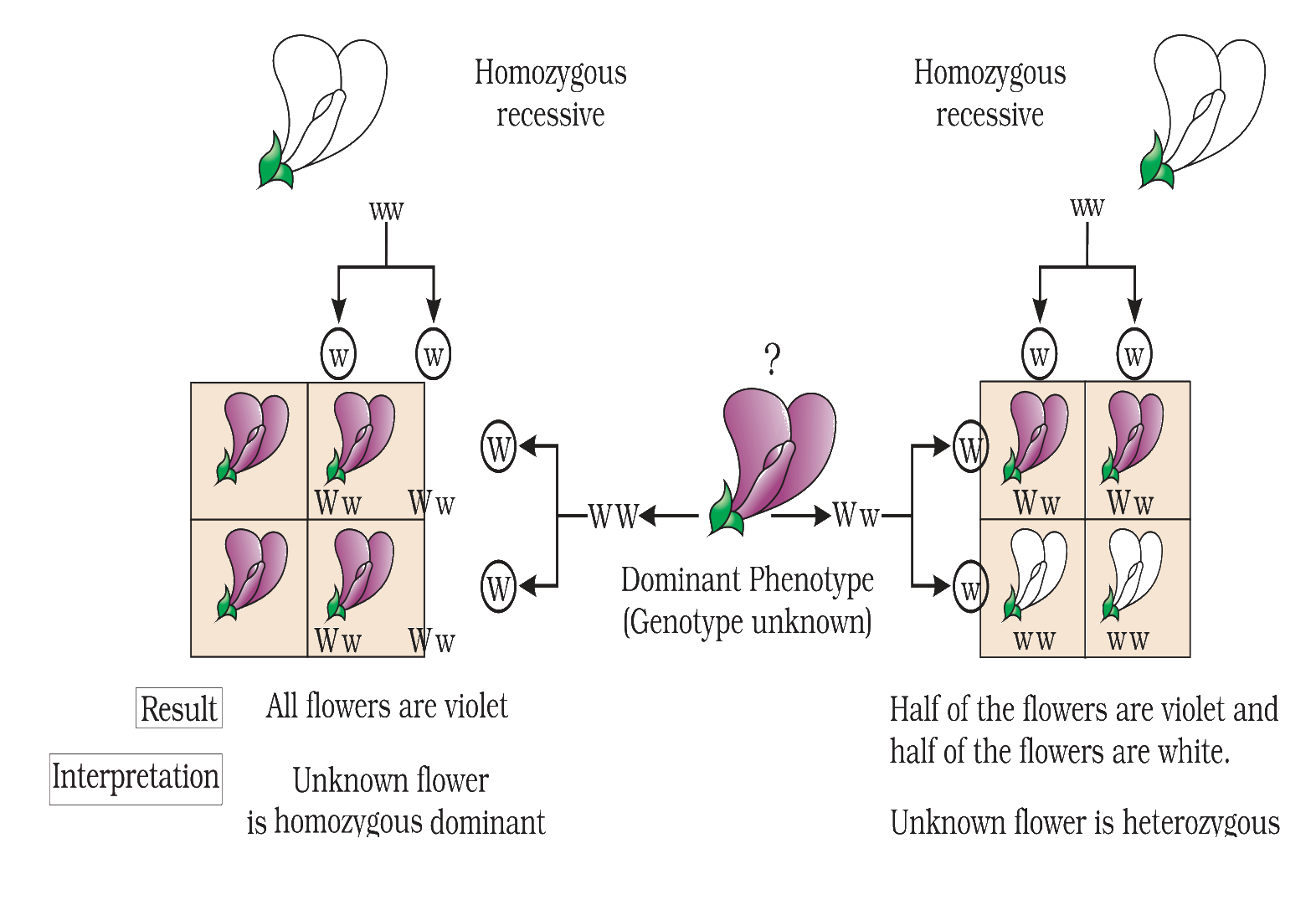
Figure 4.5 Diagrammatic representation of a test cross