
Match List-I with List-II:
| List-I Disease | List-II Part of the body the pathogen enters or lives in |
|---|---|
| A. Typhoid | I. Lymphatic vessels of the lower limbs |
| B. Amoebiasis | II. Small intestine |
| C. Malaria | III. Liver cells and red blood cells |
| D. Filariasis | IV. Large intestine |
Choose the correct answer from the options given below:
Answer & explanation
Correct answer: option 3
The correct answer is Option (3) → A-II, B-IV, C-III, D-I
Each pathogen settles in its own part of the body, and the symptoms of the disease come from that part. Two of these diseases are linked with the intestine, but not with the same part of it.
(A) Typhoid — this matches (II) Small intestine. Salmonella typhi enters the small intestine through contaminated food and water and then moves to other organs through blood.
(B) Amoebiasis — this matches (IV) Large intestine. Entamoeba histolytica is a protozoan parasite of the large intestine, which is why the stools carry excess mucous and blood clots.
(C) Malaria — this matches (III) Liver cells and red blood cells. Plasmodium first multiplies in the liver cells and then attacks the RBCs, which rupture.
(D) Filariasis — this matches (I) Lymphatic vessels of the lower limbs. Wuchereria lives here for many years and causes a slowly developing chronic inflammation (elephantiasis).
NCERT Extract:
Common Diseases in Humans – “… These pathogens generally enter the small intestine through food and water contaminated with them and migrate to other organs through blood.”
Common Diseases in Humans – “… Entamoeba histolytica is a protozoan parasite in the large intestine of human which causes amoebiasis (amoebic dysentery).”
Common Diseases in Humans – “… The parasites initially multiply within the liver cells and then attack the red blood cells (RBCs) resulting in their rupture.”
Common Diseases in Humans – “… Wuchereria (W. bancrofti and W. malayi), the filarial worms cause a slowly developing chronic inflammation of the organs in which they live for many years, usually the lymphatic vessels of the lower limbs and the disease is called elephantiasis or filariasis (Figure 7.2).”
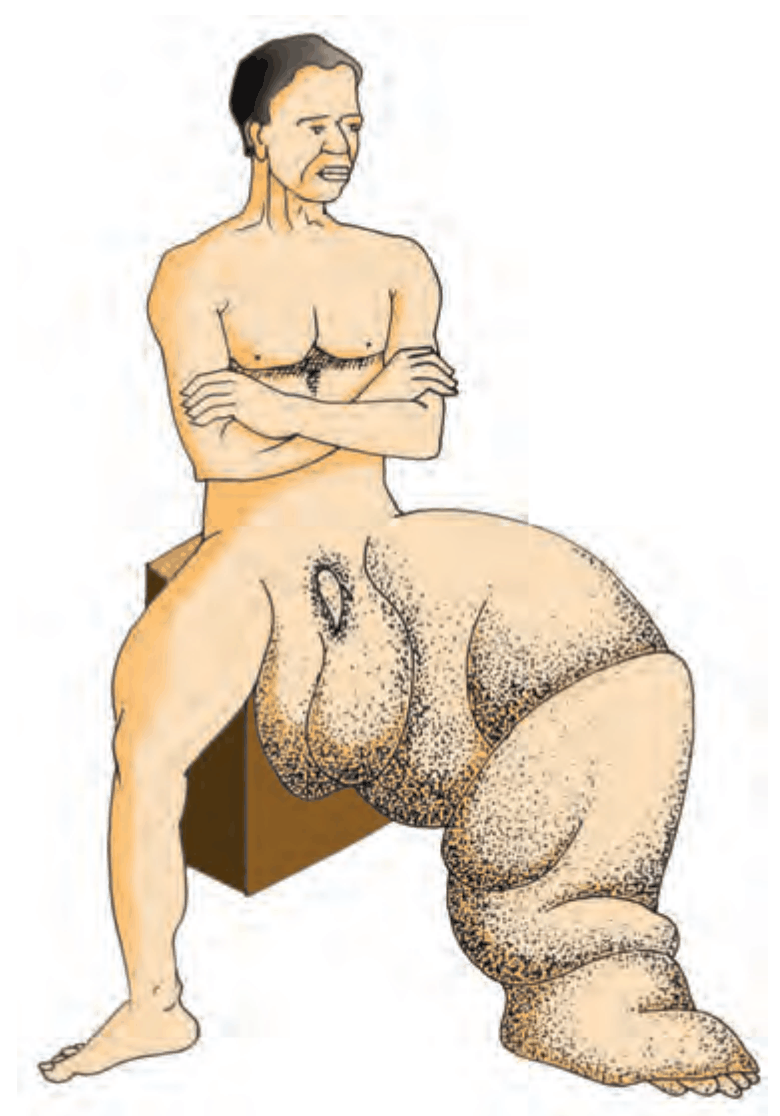
Figure 7.2 Diagram showing inflammation in one of the lower limbs due to elephantiasis