Arrange the following statements in correct sequence to explain India’s Telecommunications journey.
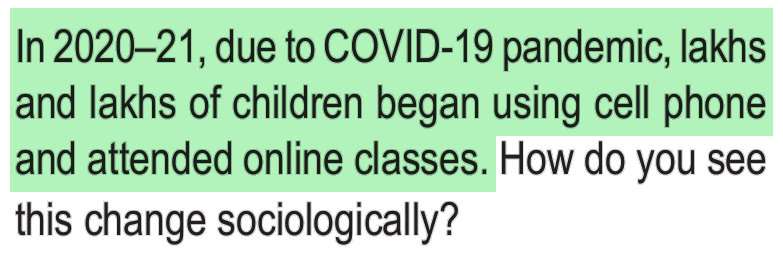
(A) Lakhs and lakhs of children began using cellphones and attended online classes.
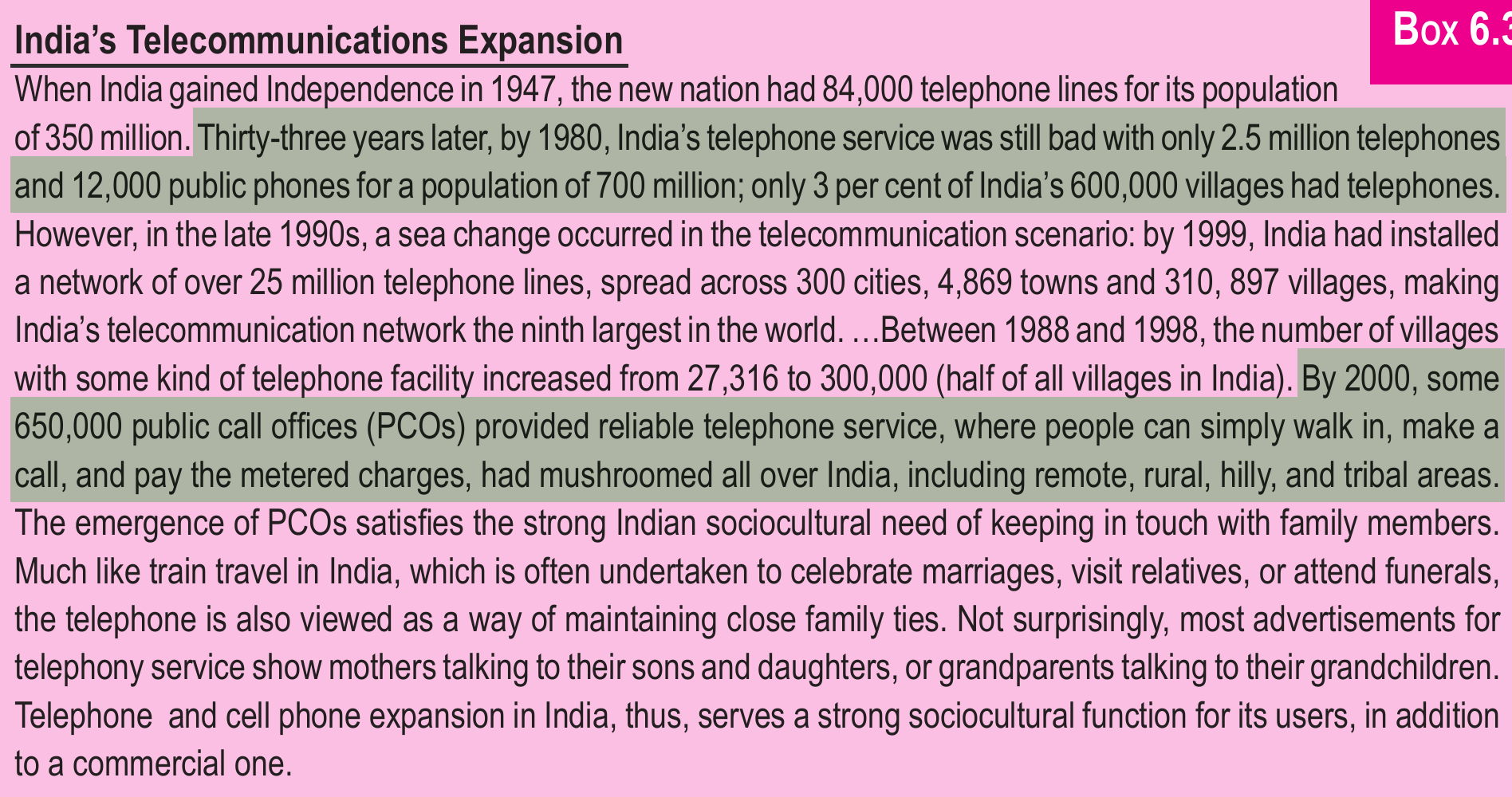
(B) Services expanded, some 650,000 public call offices (PCOs) provided reliable telephone service, where people can simply walk in, make a call, and pay the metered charges, had mushroomed all over India, including remote, rural, hilly, and tribal areas.
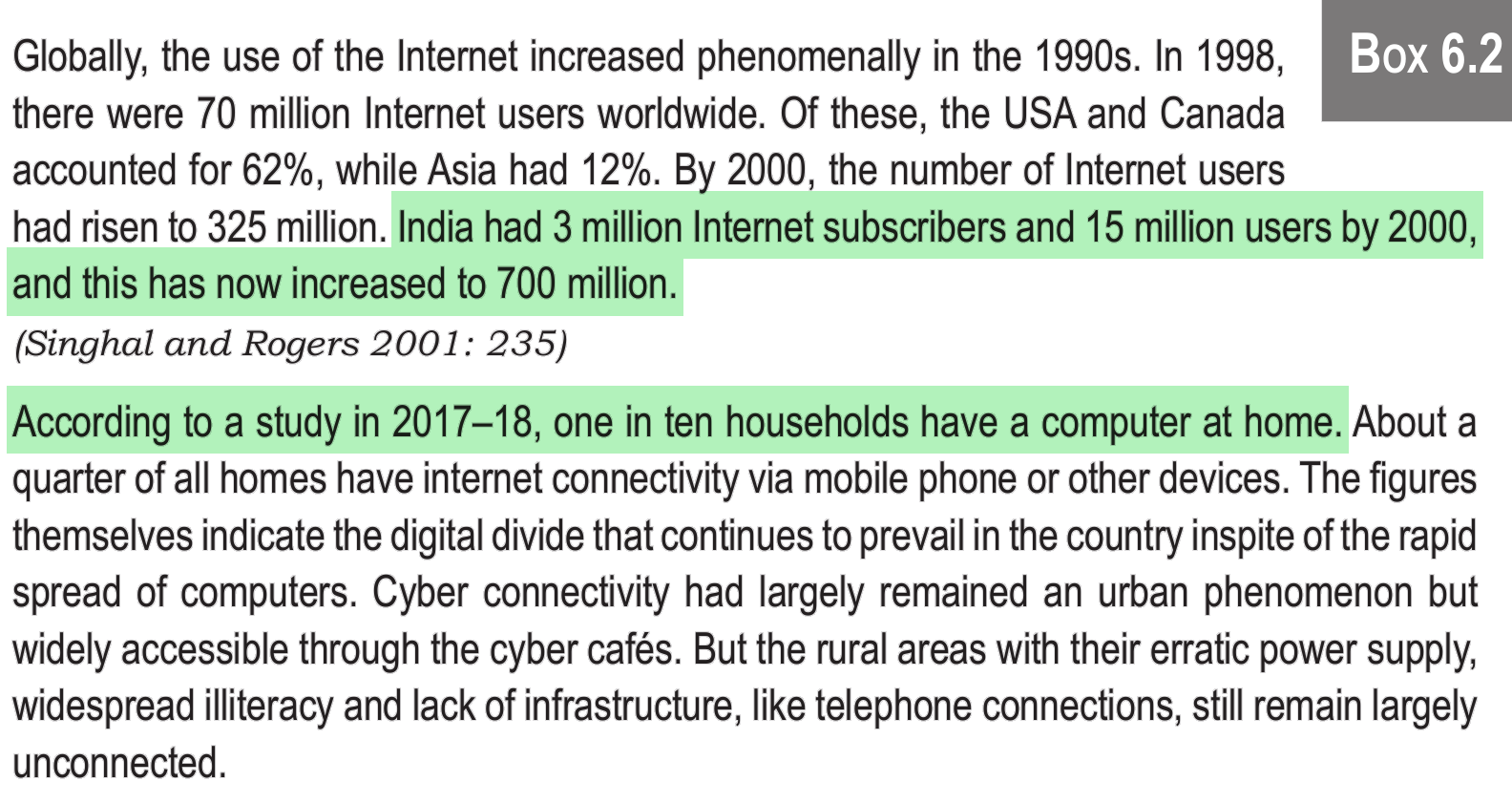
(C) In India, one in ten households had a computer at home, internet subscribers increased to 700 million.
(D) India’s telephone service was still bad with only 2.5 million telephones and 12,000 public phones for a population of 700 million; only 3 percent of India’s 600,000 villages had telephones.
Choose the correct answer from the options given below:
Answer & explanation
Correct answer: option 2
The correct answer is Option (2) → (D), (B), (C), (A)
(D) — 1980: India’s telephone service was still bad, with only 2.5 million telephones; only 3 per cent of villages had telephones.
(B) — by 2000: some 650,000 public call offices (PCOs) had mushroomed all over India.
(C) — 2017–18: one in ten households had a computer at home, and internet subscribers have since increased to 700 million.
(A) — 2020–21: during the COVID-19 pandemic, lakhs and lakhs of children began using cell phones and attended online classes.
NCERT: Social Change and Development in India — Chapter 6: Globalisation and Social Change (2025-26)
|