CUETMOCK
  • Pricing
  • Mentors
Log inStart freeStart free mocks→

First test, then trust

Try a free CUET mock test.

Join 5,00,000+ students who rehearsed exam day on the exact NTA screen before sitting CUET. On the web and on Android.

Start free mocks →Get the Android app
CUETMOCK

India's #1 CUET Mock Test Platform. Original NCERT-based questions on the exact NTA exam screen — trusted by 5,00,000+ students since CUET 2022.

Get it onGoogle PlayScan to download the CUETMOCK app

Mock tests

  • CUET mock test series
  • Browse all papers
  • Commerce mocks
  • Humanities (Arts) mocks
  • Science mocks
  • Languages & GAT mocks
  • Free practice questions
  • Pricing

Resources

  • CUET exam guide
  • CUET syllabus
  • Universities accepting CUET
  • Expert blogs
  • News & notifications
  • Webinars & counselling
  • CUET score calculator
  • How we estimate your rank
  • FAQs

Company

  • About us
  • Our leadership & team
  • Our toppers
  • Mentors
  • For schools
  • Contact us
  • Terms
  • Privacy
  • Refund policy

Talk to us

+91 7696 6630 56info@cuetmock.comWhatsApp us

Our other platforms

  • JEE Mock — For IIT-JEE aspirants
  • NEET Mock — For NEET aspirants

Newsletter

Exam updates, study material and offers — no spam.

© 2026 NYC Ventures Pvt. Ltd.

701-702, Royal Business Park, Zirakpur, Punjab - 140603

  • Terms of use
  • Privacy policy
  • Refund policy
  • Contact us

iCUETMOCK is an independent preparation platform, not affiliated with the National Testing Agency (NTA). Always check exam details on the official NTA website.

  • Home
  • Mock tests
  • CUET guide
  • Pricing
  • Log in
Home/Practice questions/History
HistoryModern India: Understanding Partition

Arrange the following events in the correct order of their occurrence…

Arrange the following events in the correct order of their occurrence:

A. Thousands killed in Amritsar on Independence Day
B. Tension grew due to the rule of music before the mosque.
C. Pakistan Resolution passed by Muslim League.
D. Riots in Calcutta by people armed with rods and lathis.
E. Meeting between Mahatma Gandhi and Abdul Gaffar Khan in NWFP.

Choose the correct answer from the options given below:

Answer & explanation+

Correct answer: option 4

The correct answer is Option (4) → B, E, C, D, A

(B) Tension grew due to the rule of music before the mosque. — 1920s and early 1930s, when Muslims were angered by “music-before-mosque”, the cow protection movement and the shuddhi efforts of the Arya Samaj.

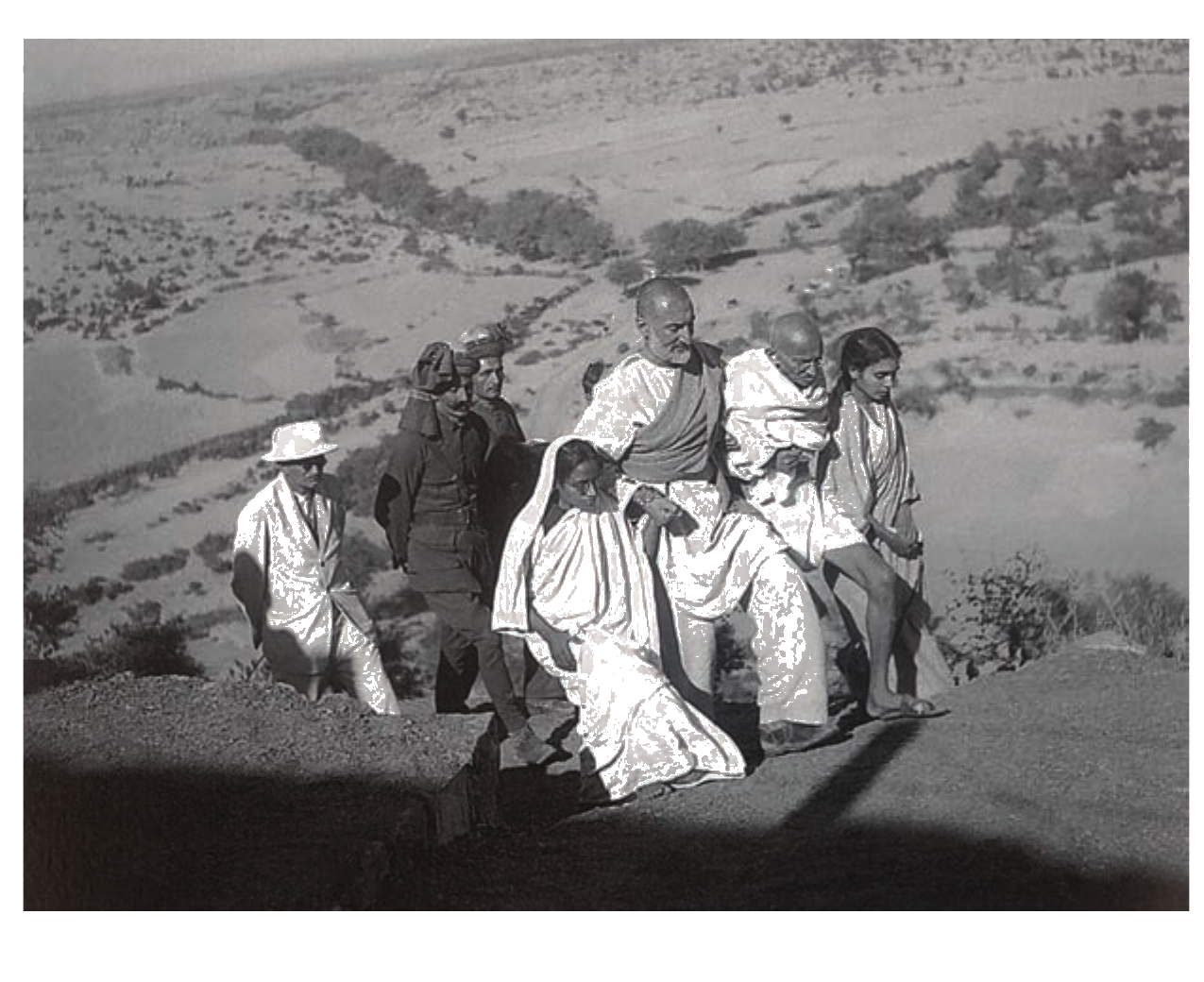
(E) Meeting between Mahatma Gandhi and Abdul Gaffar Khan in NWFP. — October 1938, when Mahatma Gandhi was in the NWFP with Khan Abdul Ghaffar Khan, the “Frontier Gandhi”.

(C) Pakistan Resolution passed by Muslim League. — 23 March 1940, when the League moved a resolution demanding a measure of autonomy for the Muslim-majority areas.

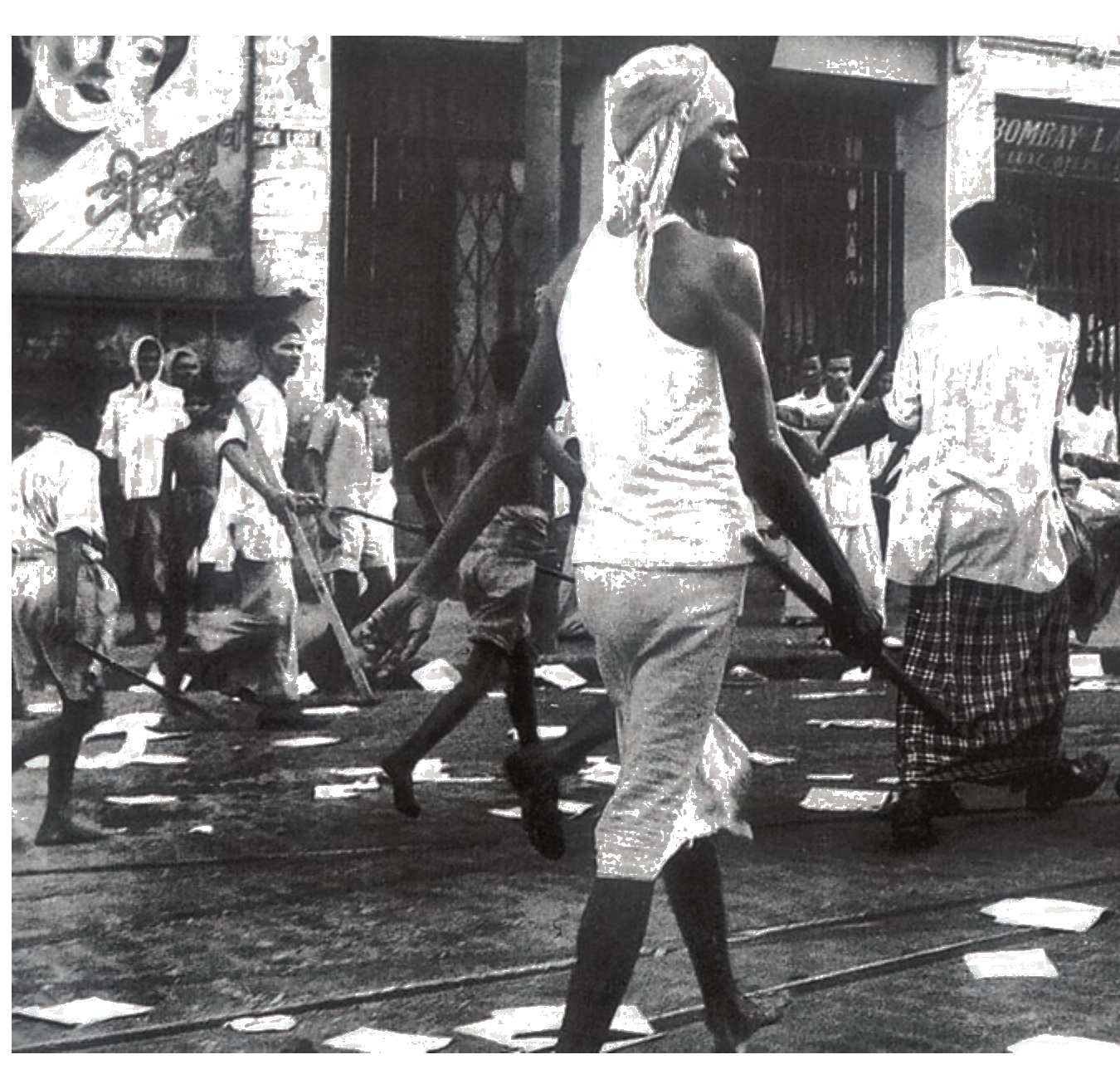
(D) Riots in Calcutta by people armed with rods and lathis. — August 1946, when rioters armed with iron rods and lathis took to the streets of Calcutta.

(A) Thousands killed in Amritsar on Independence Day — 15 August 1947; Amritsar district became the scene of bloodshed in 1947, the year of independence and Partition.

Note 1: The killings in Amritsar on Independence Day itself are not described in NCERT; the book says that Amritsar district became the scene of bloodshed later in 1947. Since India became independent on 15 August 1947, the latest of the five events, (A) comes last.

Note 2: This question is taken from the chapter ‘Understanding Partition’ which was there in the pre-rationalised NCERT and has been deleted from subsequent editions of NCERT, including the NCERT book (2026-27).


NCERT (Pre-rationalised): “We know that the joy of our country’s independence from colonial rule in 1947 was tarnished by the violence and brutality of Partition.…

3.1 Culminating point of a long history? … During the 1920s and early 1930s tension grew around a number of issues. Muslims were angered by ‘music-before-mosque’, by the cow protection movement, and by the efforts of the Arya Samaj to bring back to the Hindu fold (shuddhi) those who had recently converted to Islam.…

3.3 The ‘Pakistan’ Resolution … The Pakistan demand was formalised gradually. On 23 March 1940, the League moved a resolution demanding a measure of autonomy for the Muslim-majority areas of the subcontinent.…

3.7 Towards Partition … After withdrawing its support to the Cabinet Mission plan, the Muslim League decided on ‘Direct Action’ for winning its Pakistan demand. It announced 16 August 1946 as ‘Direct Action Day’. On this day, riots broke out in Calcutta, lasting several days and leaving several thousand people dead. By March 1947 violence spread to many parts of northern India.…

3.7 Towards Partition … The bloodbath continued for about a year from March 1947 onwards. One main reason for this was the collapse of the institutions of governance. Penderel Moon, an administrator serving in Bahawalpur (in present-day Pakistan) at the time, noted how the police failed to fire even a single shot when arson and killings were taking place in Amritsar in March 1947. Amritsar district became the scene of bloodshed later in the year when there was a complete breakdown of authority in the city.…”

NCERT extract

Fig. 14.7 Mahatma Gandhi in the NWFP, October 1938 with Khan Abdul Ghaffar Khan (who came to be known as Frontier Gandhi), Sushila Nayar and Amtus Salem

NCERT extract

Fig. 14.8 Rioters armed with iron rods and lathis on the streets of Calcutta, August 1946

Advertisement

Practise more on Modern India: Understanding Partition

Chapter-wise mocks on the real NTA exam screen, with solutions and your rank. Your first mocks are free.

Start free mocks →

Advertisement

Next questions

  1. Which of the following statements about the distribution of India’s workforce by sector are correct?(A) The primary sector employs the larg…Economics · Indian Economic Development: Employment - Growth, Informalisation and Other Issues
  2. The line chart given below shows production of rice by two companies A and B in 5 years. J1 = The average production of rice by A in years…General Aptitude Test · Quantitative Reasoning
  3. The particular solution of the differential equation displaystyledy/dx+3y/x= 0, y(1) = 1 isMaths. Section A · Differential Equations
  4. Which of the following country was the India's largest trading partner in FY 2022-23?General Aptitude Test · Current Affairs
  5. Who was the President of the Congress Party at the time of Nehru's demise?Political Science · Politics in India Since Independence: Challenges to and Restoration of the Congress System
  6. A building style used arches and domes on gateways, as at Vijayanagara, and grew continually through interaction with local building practi…History · Medieval India: An Imperial Capital: Vijayanagara
  7. A number arrangement machine, when given an input line of numbers, rearranges them step by step following a particular rule. An illustratio…General Aptitude Test · Verbal Reasoning
  8. A molal solution of sodium chloride has a density of 1.21 g mL–1. The molarity of this solution is:Chemistry · Physical: Solutions
  9. Match List - I with List - II. List - IList - II (A) tan^-1√3-sec^-1(-2) (I) (3π)/4 (B) cot^-1≤ft((-1)/(√3)) (II) -(π)/3 (C) cos^-1≤ft(-dis…Maths. Section B1 · Inverse Trigonometric Functions
  10. The ‘knot’ is a unit used to measure which of the following?General Aptitude Test · General Knowledge