After industrialization in 1920 in England, the proportion of dark winged and white winged moths reversed because of:
Answer & explanation
Correct answer: option 2
The correct answer is Option (2) → The tree trunks became dark due to soot.
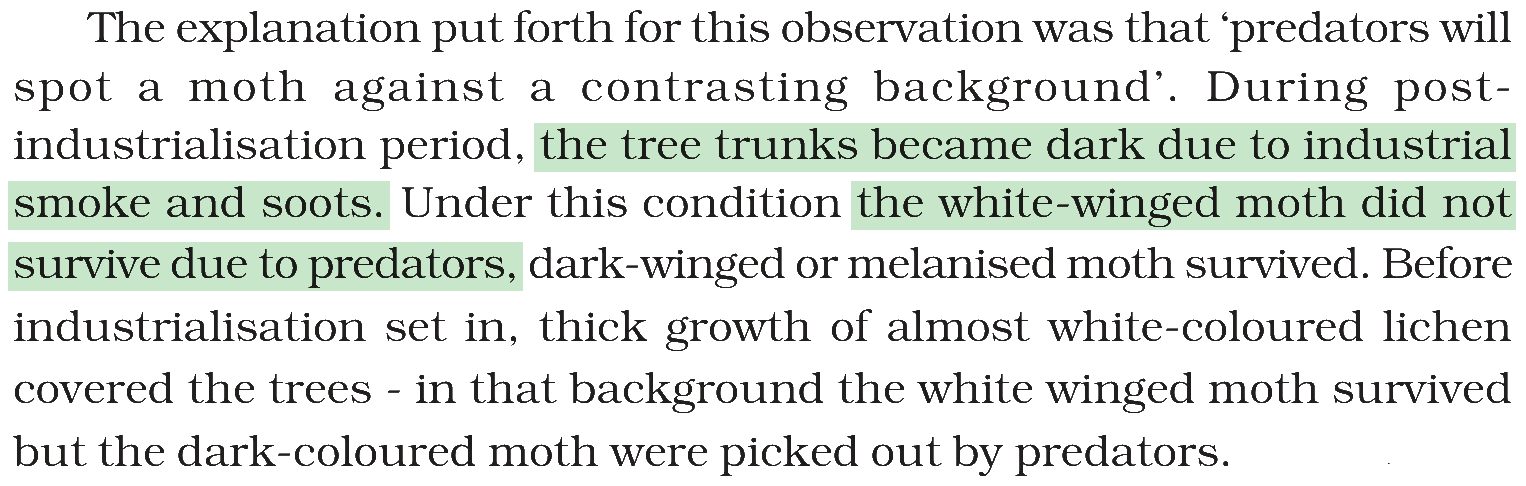
This is industrial melanism in England. In the 1850s, before industrialisation, white-winged moths were more common than dark-winged ones. By 1920, in the same area, the proportion had reversed.
Option (1) The tree trunks became light in color. — Incorrect. The change was the other way round. Before industrialisation the trunks were light, covered with whitish lichens. After it they became dark.
Option (2) The tree trunks became dark due to soot. — Correct. Smoke and soot from factories darkened the tree trunks. Predators spot a moth against a contrasting background, so the white moths were picked out and eaten. The dark moths blended with the trunks, survived and left more offspring. This is natural selection.
Option (3) The moths' wings became dark due to soot and smoke. — Incorrect. Soot did not paint the moths. The dark colour (melanism) is inherited; dark moths were already present in small numbers. What changed was which kind survived.
Option (4) Dark colored moths were easily spotted by predators. — Incorrect. This is reversed. On the dark trunks it was the white moths that stood out and were eaten, not the dark ones.
NCERT Extract:
What Are the Evidences for Evolution? – …