Match List-I with List-II
|
List-I |
List-II |
|
(A) Liquidity Ratio |
(I) Receivable Turnover Ratio |
|
(B) Solvency Ratio |
(II) Quick Ratio |
|
(C) Activity (or Turnover) Ratio |
(III) Earning Per Share Ratio |
|
(D) Profitability Ratio |
(IV) Debt to Equity Ratio |
Choose the correct answer from the options given below:
Answer & explanation
Correct answer: option 4
The correct answer is Option (4) → (A)-(II), (B)-(IV), (C)-(I), (D)-(III)
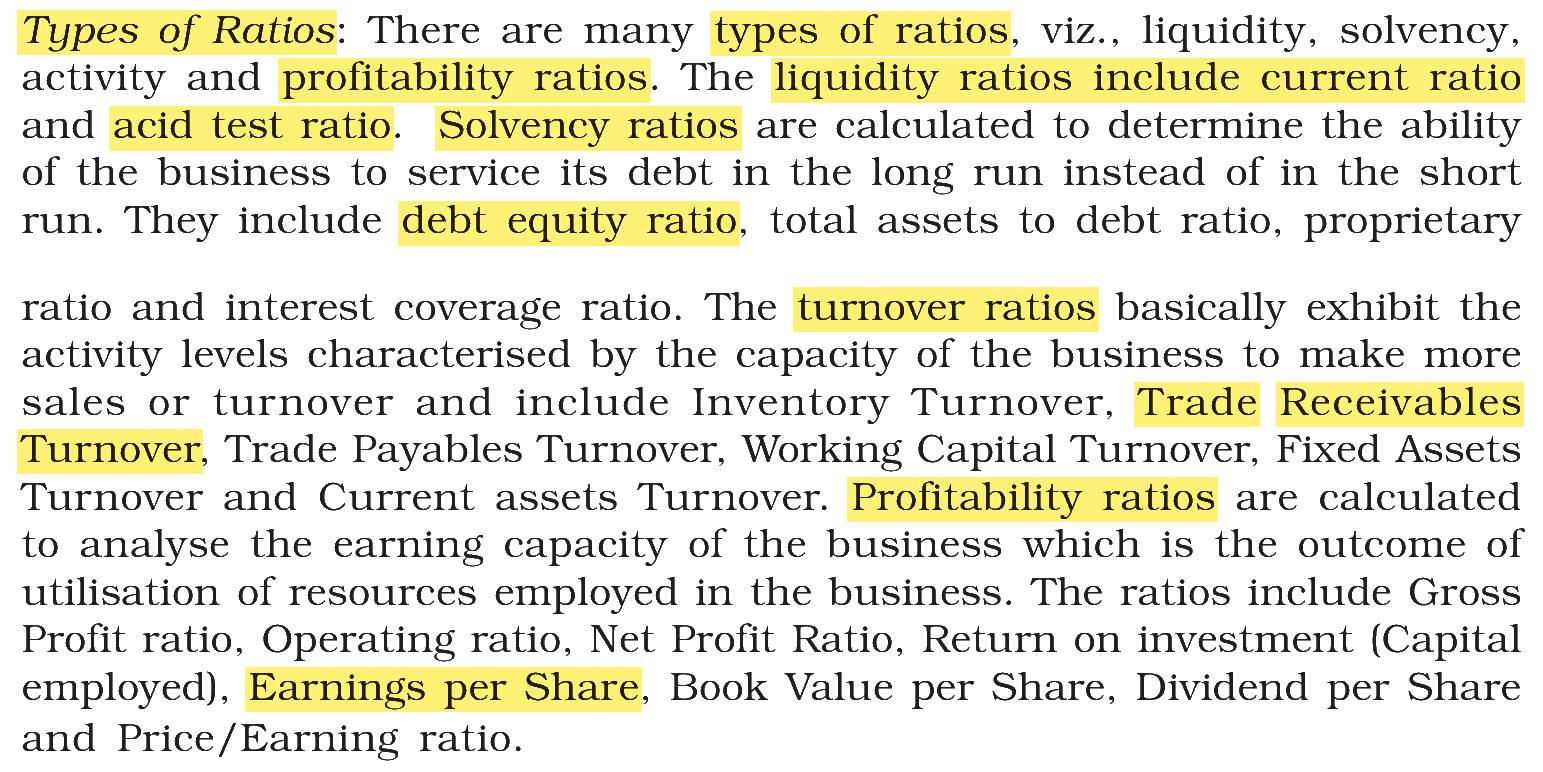
In the functional classification, ratios are grouped by what they measure: short-term paying ability, long-term paying ability, efficiency of operations and earning capacity.
(A) Liquidity Ratio — this matches (II) Quick Ratio. Liquidity ratios measure the ability to meet current obligations; the quick (acid test) ratio compares quick assets with current liabilities.
(B) Solvency Ratio — this matches (IV) Debt to Equity Ratio. Solvency ratios judge the long-term position, and debt to equity compares long-term debt with shareholders’ funds.
(C) Activity (or Turnover) Ratio — this matches (I) Receivable Turnover Ratio. Activity ratios show how efficiently resources are used; the receivables turnover ratio shows how fast debtors are collected against credit revenue from operations.
(D) Profitability Ratio — this matches (III) Earning Per Share Ratio. Earnings per share relates profit to the number of equity shares, so it measures the earning capacity of the business.
NCERT (2026-27 edition):
|