Consider the following statements about unity of command and unity of direction:
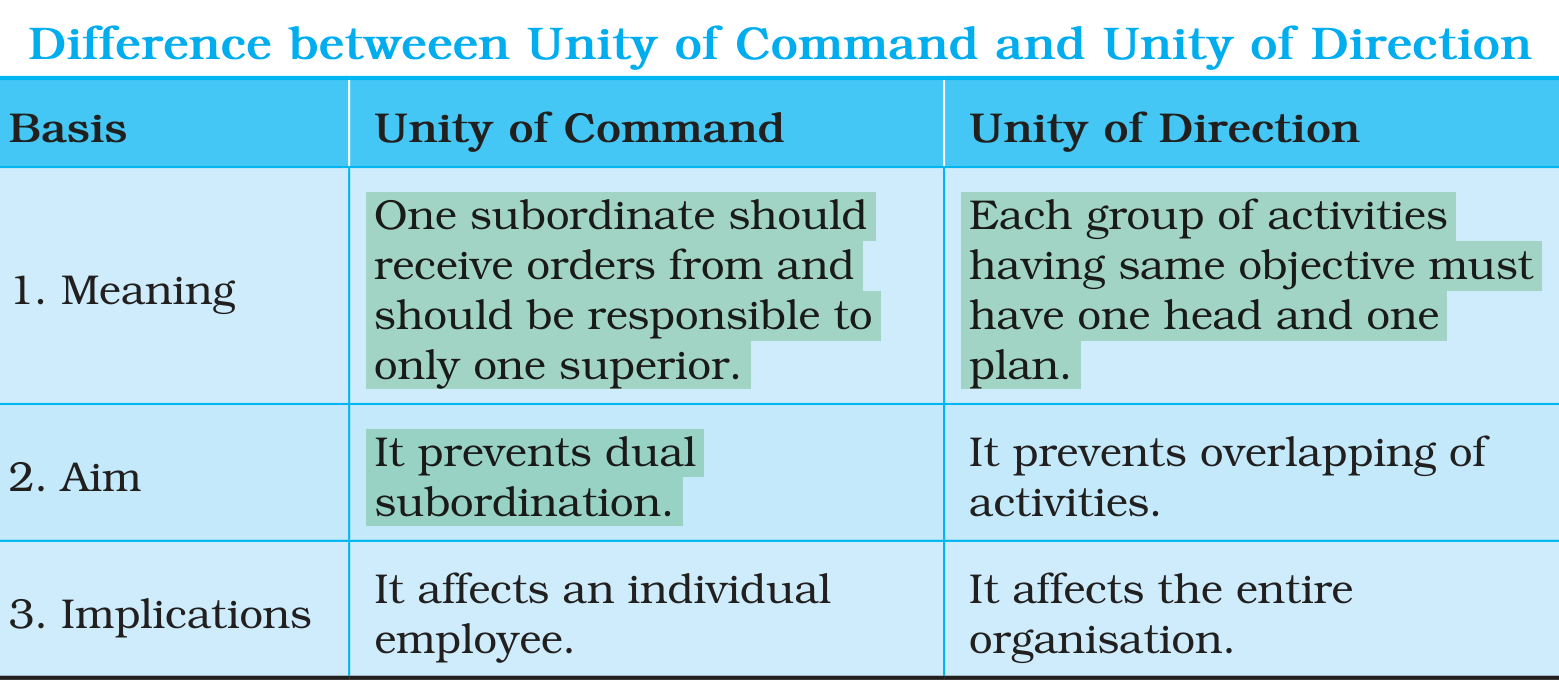
(A) Unity of command means that one subordinate should receive orders from and be responsible to only one superior.
(B) Unity of direction aims to prevent dual subordination.
(C) Unity of command affects the entire organisation.
(D) Unity of direction means that each group of activities having the same objective must have one head and one plan.
(E) Unity of command aims to prevent dual subordination.
Which of the statements given above are correct?
Choose the correct answer from the options given below:
Answer & explanation
Correct answer: option 1
The correct answer is Option (1) → (A), (D) and (E) only
(A) Unity of command means that one subordinate should receive orders from and be responsible to only one superior. — Correct. This is the meaning of unity of command: one boss for every employee.
(B) Unity of direction aims to prevent dual subordination. — Incorrect. Preventing dual subordination is the aim of unity of command. Unity of direction aims to prevent overlapping of activities.
(C) Unity of command affects the entire organisation. — Incorrect. Unity of command affects an individual employee. It is unity of direction that affects the entire organisation.
(D) Unity of direction means that each group of activities having the same objective must have one head and one plan. — Correct. This is the meaning of unity of direction.
(E) Unity of command aims to prevent dual subordination. — Correct. With only one superior, an employee never gets clashing orders from two bosses. So dual subordination is avoided.
NCERT (2026-27 Edition):
|