In case of dissolution of a partnership firm, Match List-I with List-II.
| LIST-I | LIST-II | ||
|---|---|---|---|
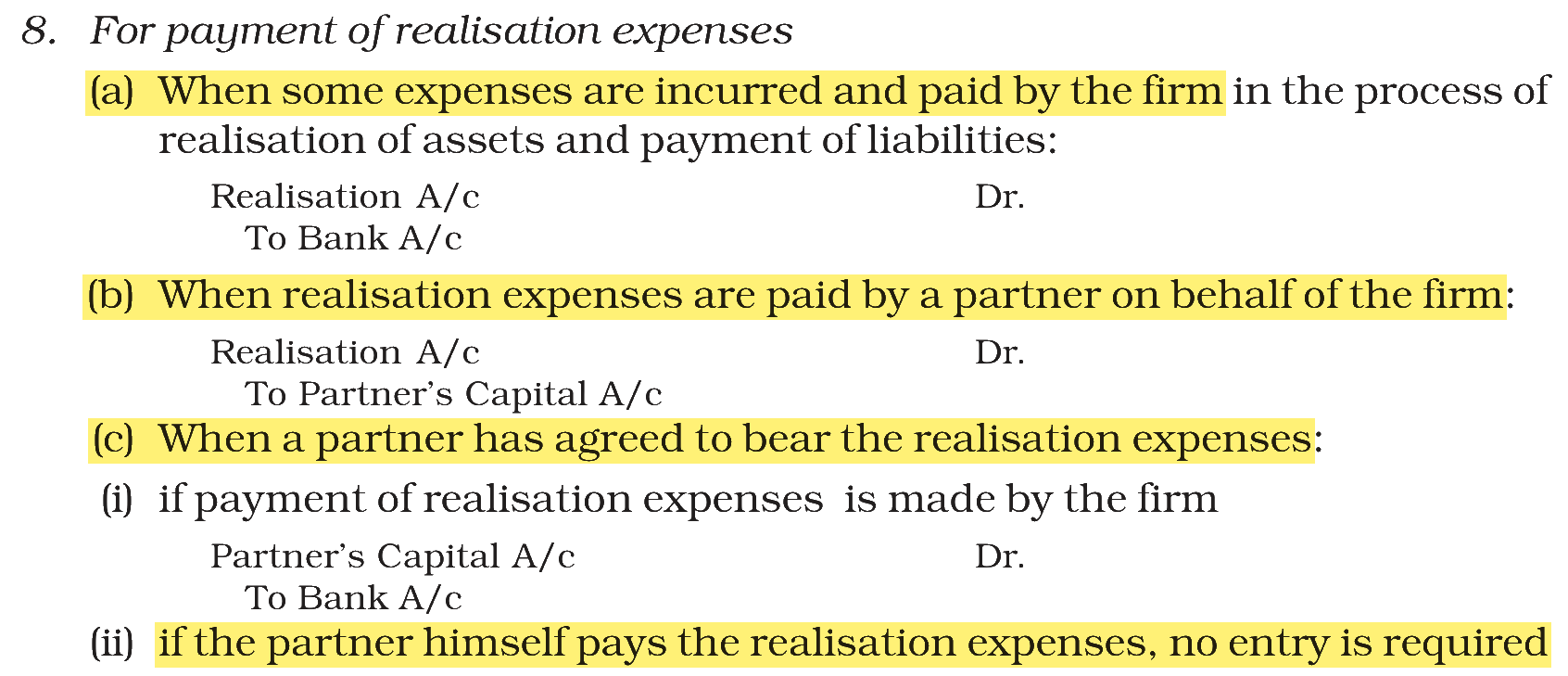
| (A) | Realisation expenses are incurred and paid by the firm. | (I) | Partner's Capital A/c Dr. To Bank A/c |
| (B) | Realisation expenses are paid by a partner on behalf of the firm. | (II) | Realisation A/c Dr. To Bank A/c |
| (C) | Partner himself pays the realisation expenses. | (III) | No Entry |
| (D) | When a partner has agreed to bear the realisation expenses and payment is made by the firm. | (IV) | Realisation A/c Dr. To Partner's Capital A/c |
Choose the correct answer from the options given below:
Answer & explanation
Correct answer: option 3
The correct answer is Option (3) → (A) - (II), (B) - (IV), (C) - (III), (D) - (I)
On dissolution, realisation expenses are a cost of winding up the firm, so they belong in the Realisation Account unless a partner has agreed to bear them himself. The entry then depends on who bears the expense and who actually pays it.
(A) Realisation expenses are incurred and paid by the firm. — this matches (II) Realisation A/c Dr. To Bank A/c. The firm bears the cost and pays it from its own bank, so Realisation is debited and Bank credited.
(B) Realisation expenses are paid by a partner on behalf of the firm. — this matches (IV) Realisation A/c Dr. To Partner’s Capital A/c. The cost is still the firm’s, but the partner paid it, so the firm owes him that amount and his capital account is credited.
(C) Partner himself pays the realisation expenses. — this matches (III) No Entry. When a partner has agreed to bear the expenses and pays them himself, no cash of the firm moves and nothing is owed, so the firm records nothing.
(D) When a partner has agreed to bear the realisation expenses and payment is made by the firm. — this matches (I) Partner’s Capital A/c Dr. To Bank A/c. The expense is the partner’s, but the firm paid it, so it is charged to his capital account, not to the Realisation Account.
NCERT (2026-27 edition):
|