Using the given information, calculate the Revenue Deficit:
| S.No | Items | Amount ₹ (in crore) |
| 1. | Tax revenue (net of states' share) | 790 |
| 2. | Major subsidies | 150 |
| 3. | Defence expenditure | 90 |
| 4. | Non-tax revenue | 140 |
| 5. | Interest Payments | 360 |
| 6. | Receipt from PSU disinvestment | 135 |
Answer & explanation
Correct answer: option 4
The correct answer is Option (4) → 330 crore
Note: The given answer is as per the official NTA Answer Key. However, the figures give a revenue surplus and not a revenue deficit, as explained below.
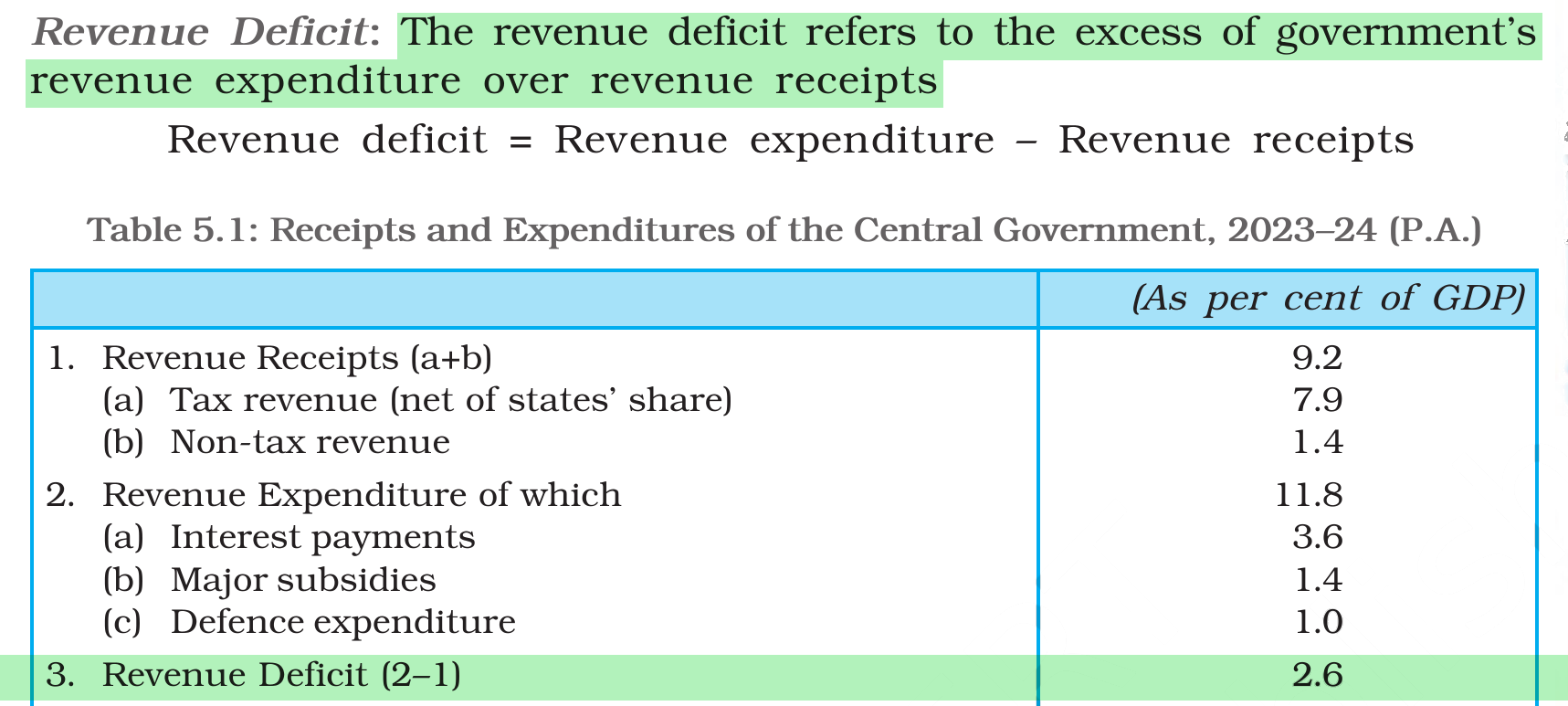
On the revenue side of its budget the government collects tax and non-tax revenue and spends on items that create no asset and reduce no liability, here subsidies, defence and interest payments. When this revenue expenditure is greater than the revenue receipts, the gap is the revenue deficit. The receipt from PSU disinvestment is a capital receipt, so it stays out.
Given:
Tax revenue (net of states’ share) = Rs. 790 crore
Non-tax revenue = Rs. 140 crore
Major subsidies = Rs. 150 crore
Defence expenditure = Rs. 90 crore
Interest payments = Rs. 360 crore
The working:
Revenue receipts = 790 + 140 = Rs. 930 crore
Revenue expenditure = 150 + 90 + 360 = Rs. 600 crore
Revenue deficit = Revenue expenditure − Revenue receipts = 600 − 930 = −330
Receipts exceed expenditure, so the budget shows a revenue surplus of Rs. 330 crore, which is Option (4).
NCERT: Introductory Macroeconomics — Chapter 5: Government Budget and the Economy (2025-26)
|