Match List-I with List-II:
| List-I Authors | List-II Books | ||
| (A) | G.L. Possehl | (I) | Understanding Harappa |
| (B) | Shereen Ratnagar | (II) | The Indus Civilization |
| (C) | S.N. Roy | (III) | Early Indus Civilisation |
| (D) | Ernest Mackay | (IV) | The Story of Indian Archaeology |
Choose the correct answer from the options given below:
Answer & explanation
Correct answer: option 1
The correct answer is Option (1) → (A) - (II), (B) - (I), (C) - (IV), (D) - (III)
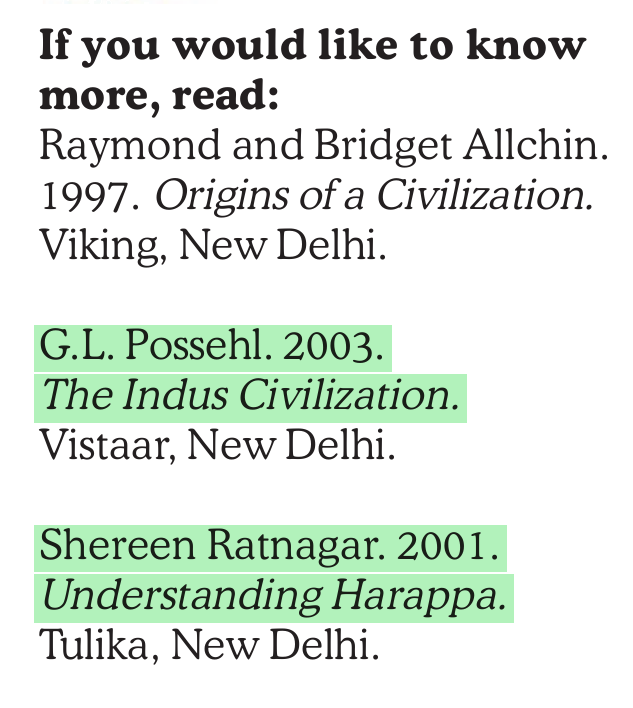
(A) G.L. Possehl — this matches (II) The Indus Civilization. Possehl wrote The Indus Civilization (2003).
(B) Shereen Ratnagar — this matches (I) Understanding Harappa (2001), a book on the Harappan civilisation by Shereen Ratnagar.
(C) S.N. Roy — this matches (IV) The Story of Indian Archaeology. In it Roy wrote that after the discovery of the Indus valley civilisation in 1924, “Marshall left India three thousand years older than he had found her.”
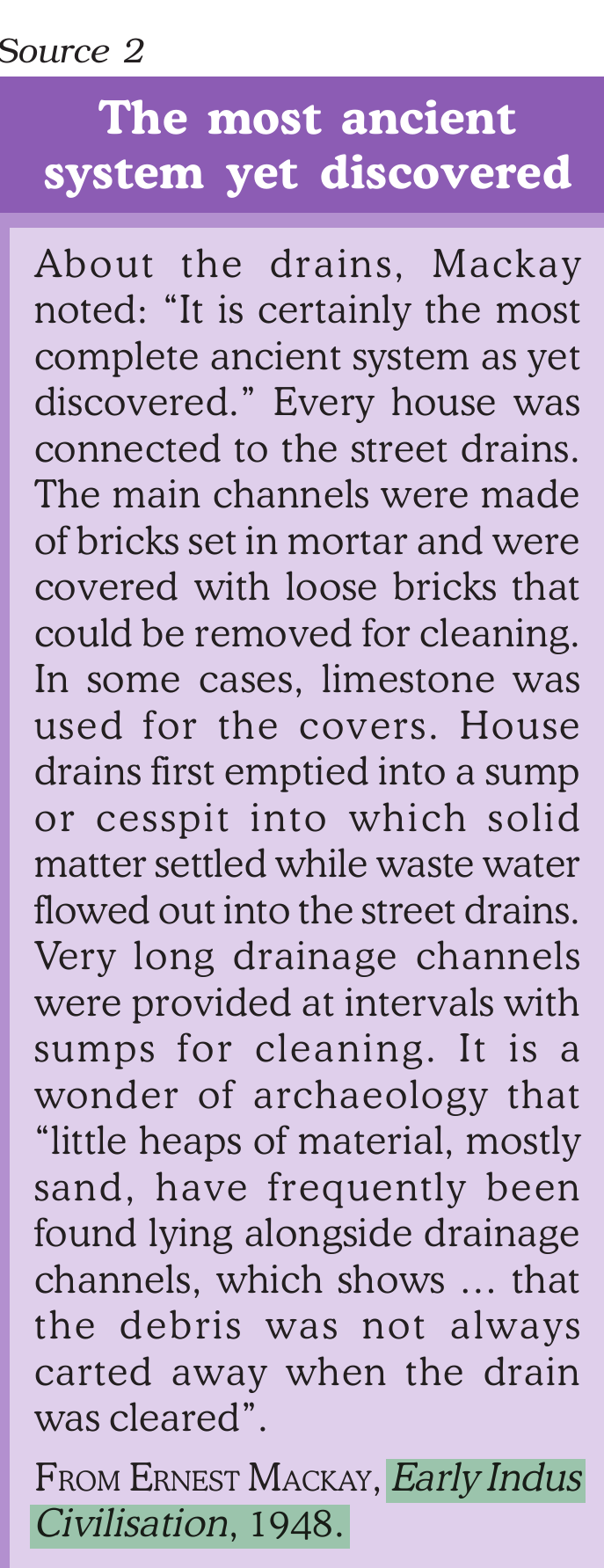
(D) Ernest Mackay — this matches (III) Early Indus Civilisation (1948). Mackay’s description of Mohenjodaro’s drains comes from this work.
Tip: Items (A) and (B) come from the reading list at the end of the chapter. NTA sets questions even from the end-of-chapter boxes – reading lists and timelines included – so give them a read too.
NCERT (2025-26): “10.2 A new old civilisation … Based on these finds, in 1924, John Marshall, Director-General of the ASI, announced the discovery of a new civilisation in the Indus valley to the world. As S.N. Roy noted in The Story of Indian Archaeology, ‘Marshall left India three thousand years older than he had found her.’ This was because similar, till-then-unidentified seals were found at excavations at Mesopotamian sites.…”
|