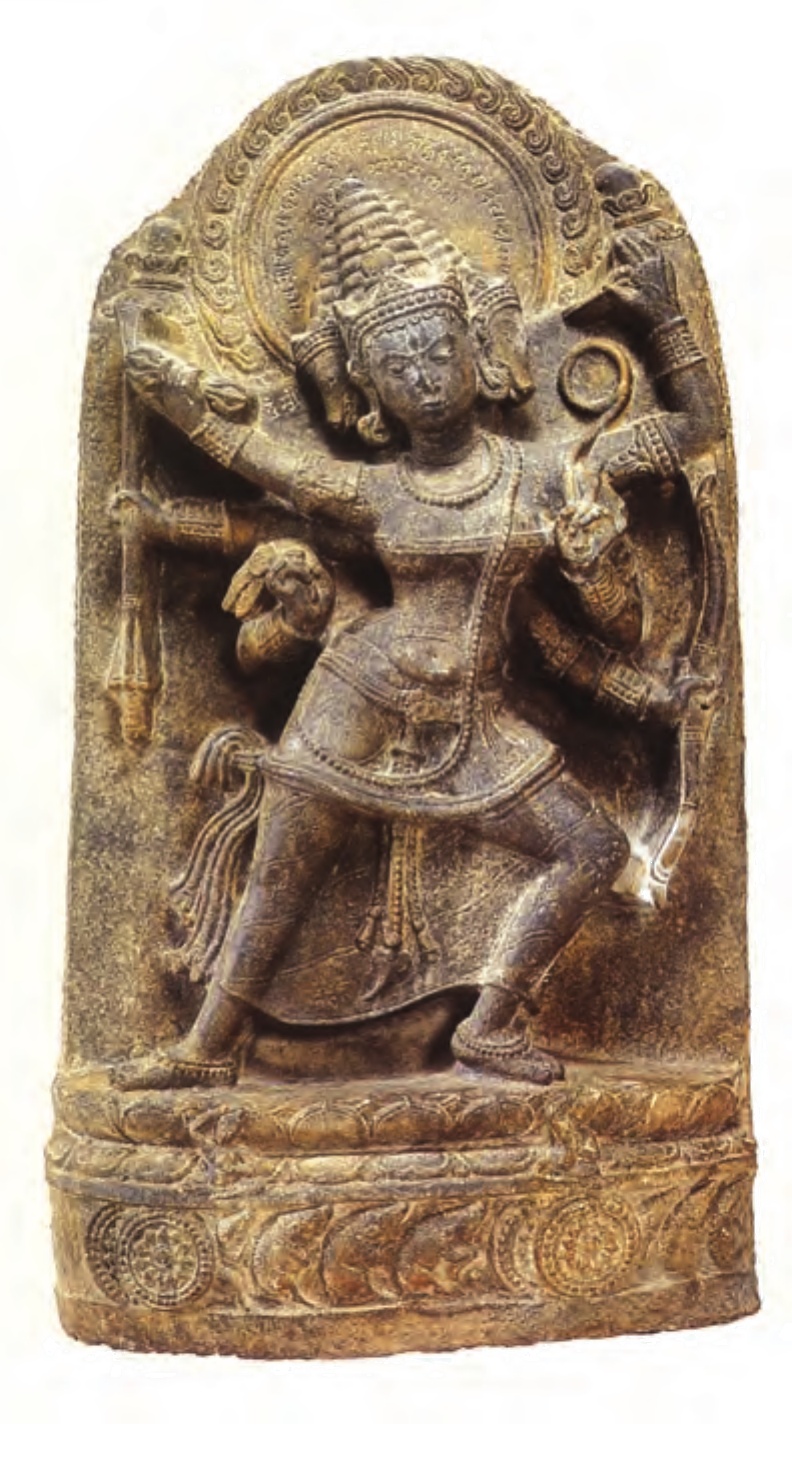
Sculpture of a Buddhist goddess ‘Marichi’ was found in __________.
Answer & explanation
Correct answer: option 1
The correct answer is Option (1) → Bihar
The sculpture of Marichi, a Buddhist goddess of about the tenth century, comes from Bihar. It is shown as an example of the integration of different religious beliefs and practices, the same process by which local goddesses were taken into the Puranic framework as wives of the major gods.
Tip: The answer to this question is printed only under the sculpture. Study each picture with the lines printed under it, as closely as the paragraphs; NTA does take questions from captions.
NCERT (2025-26): “1.1 The integration of cults … Such instances of integration are evident amongst goddess cults as well. Worship of the goddess, often simply in the form of a stone smeared with ochre, was evidently widespread. These local deities were often incorporated within the Puranic framework by providing them with an identity as a wife of the principal male deities – sometimes they were equated with Lakshmi, the wife of Vishnu, in other instances, with Parvati, the wife of Shiva.”
Fig. 6.3 Sculpture of a Buddhist goddess, Marichi (c. tenth century, Bihar), an example of the process of integration of different religious beliefs and practices |