
In honey bees, males do not have father because:
Answer & explanation
Correct answer: option 3
The correct answer is Option (3) → Males produce sperms by mitosis
Honey bees follow the haplodiploid sex-determination system. A fertilised egg has 32 chromosomes and grows into a female, either a queen or a worker. An unfertilised egg has 16 chromosomes and grows into a male, called a drone. So a male is haploid. He has a mother but no father.
(1) Males develop from fertilised eggs — Incorrect. A fertilised egg grows into a female. A male grows from an unfertilised egg. If he grew from a fertilised egg, he would have a father.
(2) Males produce sperms by meiosis — Incorrect. Meiosis halves the chromosome number. A male is already haploid, so he cannot halve it again.
(3) Males produce sperms by mitosis — Correct. A male is haploid, so he makes his sperms by mitosis. Every sperm keeps the same 16 chromosomes. A male has no father because he comes from an unfertilised egg. When his sperm fertilises an egg, it gives a daughter. So he can have a grandfather and grandsons, but no sons.
(4) Males are diploid — Incorrect. This is reversed. Females are diploid (32) and males are haploid (16).
Note: In the original NTA paper, Option (1) reads “Males develop by parthenogenesis”. That statement is also correct, because honey bee males do develop from unfertilised eggs. It has been replaced with “Males develop from fertilised eggs”, for the benefit of students and to make sure the question has only one correct answer, Option (3), as given in the NTA Answer Key.
NCERT Extract:
Sex Determination in Honey Bee –
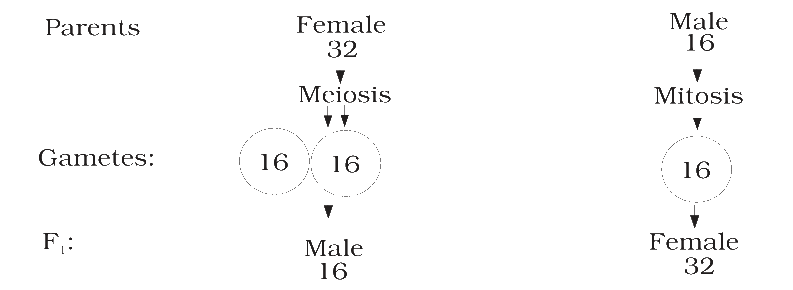
Figure 4.13 Sex determination in honey bee