In India, why are the children of slum-dwellers deprived of education?
Answer & explanation
Correct answer: option 1
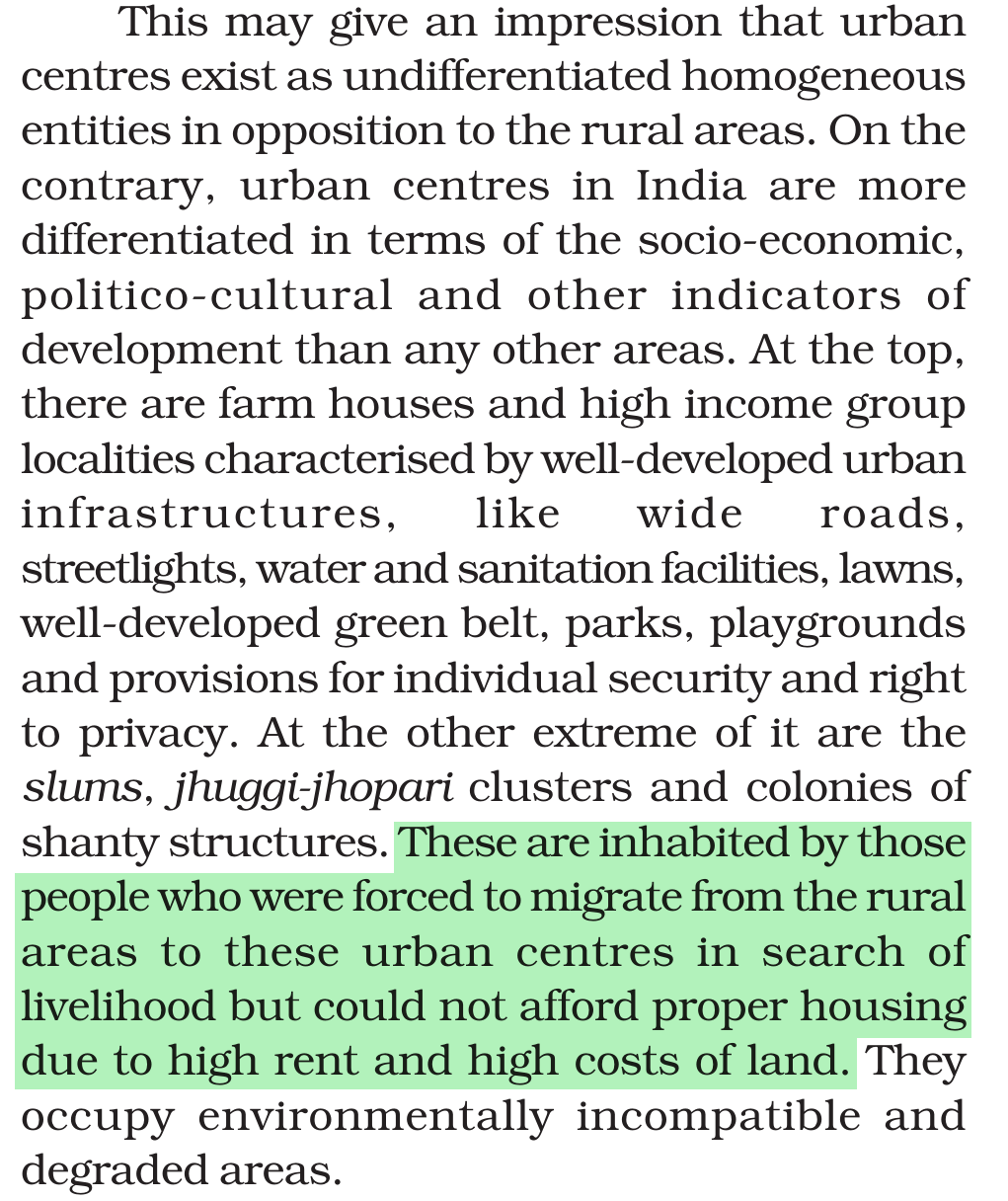
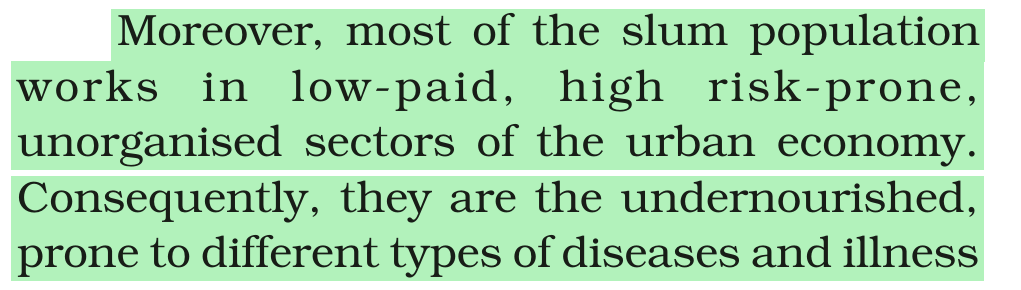
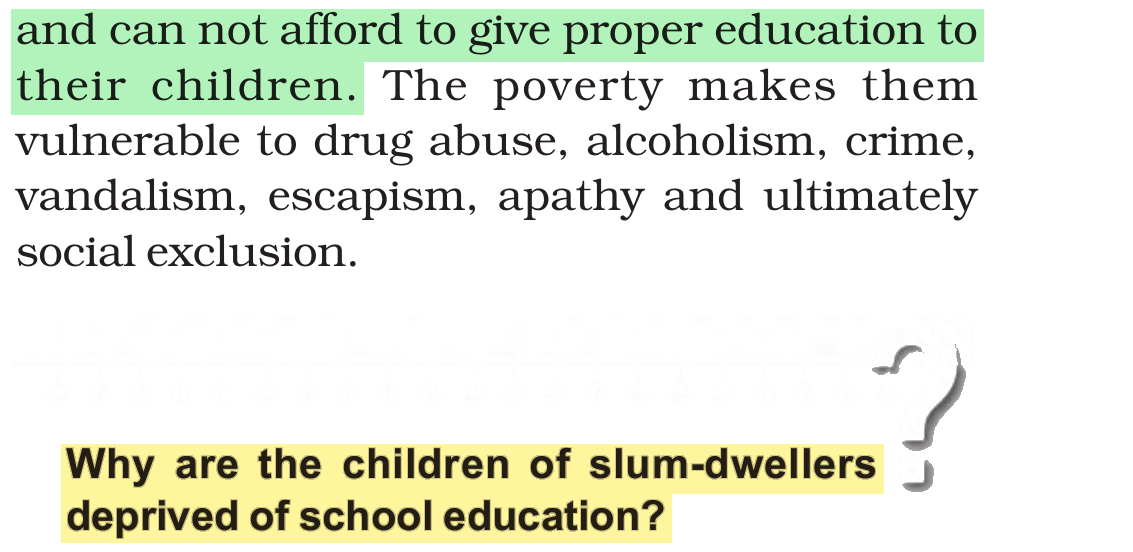
The correct answer is Option (1) → The slum dwellers are poor migrants from rural areas who work in low paid unorganized sectors of urban economy. Hence they are poor and unable to give proper education to their children.
Option (1) The slum dwellers are poor migrants from rural areas who work in low paid unorganized sectors of urban economy. Hence they are poor and unable to give proper education to their children. — Correct. Slum dwellers are people forced to migrate from rural areas in search of a livelihood. In the city most of them find work only in low-paid, high risk-prone, unorganised sectors, so their earnings are small and uncertain and the family stays poor and undernourished. Whatever they earn goes on food and shelter, so they cannot afford to give proper education to their children; the poverty passes on to the next generation.
Option (2) The children of these slum dwellers are unwilling to go to school for study. — Incorrect. It blames the children’s wish, while the cause is the family’s poverty.
Option (3) The educational institutions are not willing to admit children of slum dwellers as they can be a bad influence on other children of the school. — Incorrect. The children miss school because their parents cannot pay for it, not because schools refuse them.
Option (4) Getting employment is the prime objective of these slum dwellers. Hence, they are not interested in educating their children. — Incorrect. The children lose out through poverty, not a lack of interest.
Note: This is NCERT’s own question, printed beside the section on slums: ‘Why are the children of slum-dwellers deprived of school education?’ NTA dropped only the word ‘school’; the answer is in the paragraph just before it.
NCERT: India - People and Economy — Chapter 9: Geographical Perspective on Selected Issues and Problems, Problems of Slums; the book question box (2025-26)
|