Match the List-I with List-II
List-I
(A) General Reserve
(B) Sacrificing Ratio
(C) Increase in value of Asset
(D) Increase in value of Liability
List-II
(I) Old Share - New Share
(II) Credit to Revaluation A/c
(III) Debit to Revaluation A/c
(IV) Accumulated Profit
Choose the correct answer from the options given below:
Answer & explanation
Correct answer: option 2
The correct answer is Option (2) → (A) - (IV), (B) - (I), (C) - (II), (D) - (III)
Each item is a term met when a firm is reconstituted on admission: what a reserve is, how the sacrifice of an old partner is measured, and which side of the Revaluation Account a change in value goes to.
(A) General Reserve — this matches (IV) Accumulated Profit. A general reserve is profit kept back from earlier years and not yet distributed, so it is an accumulated profit of the old partners.
(B) Sacrificing Ratio — this matches (I) Old Share - New Share. A partner’s sacrifice is the share of profit he gives up, that is, his old share minus his new share.
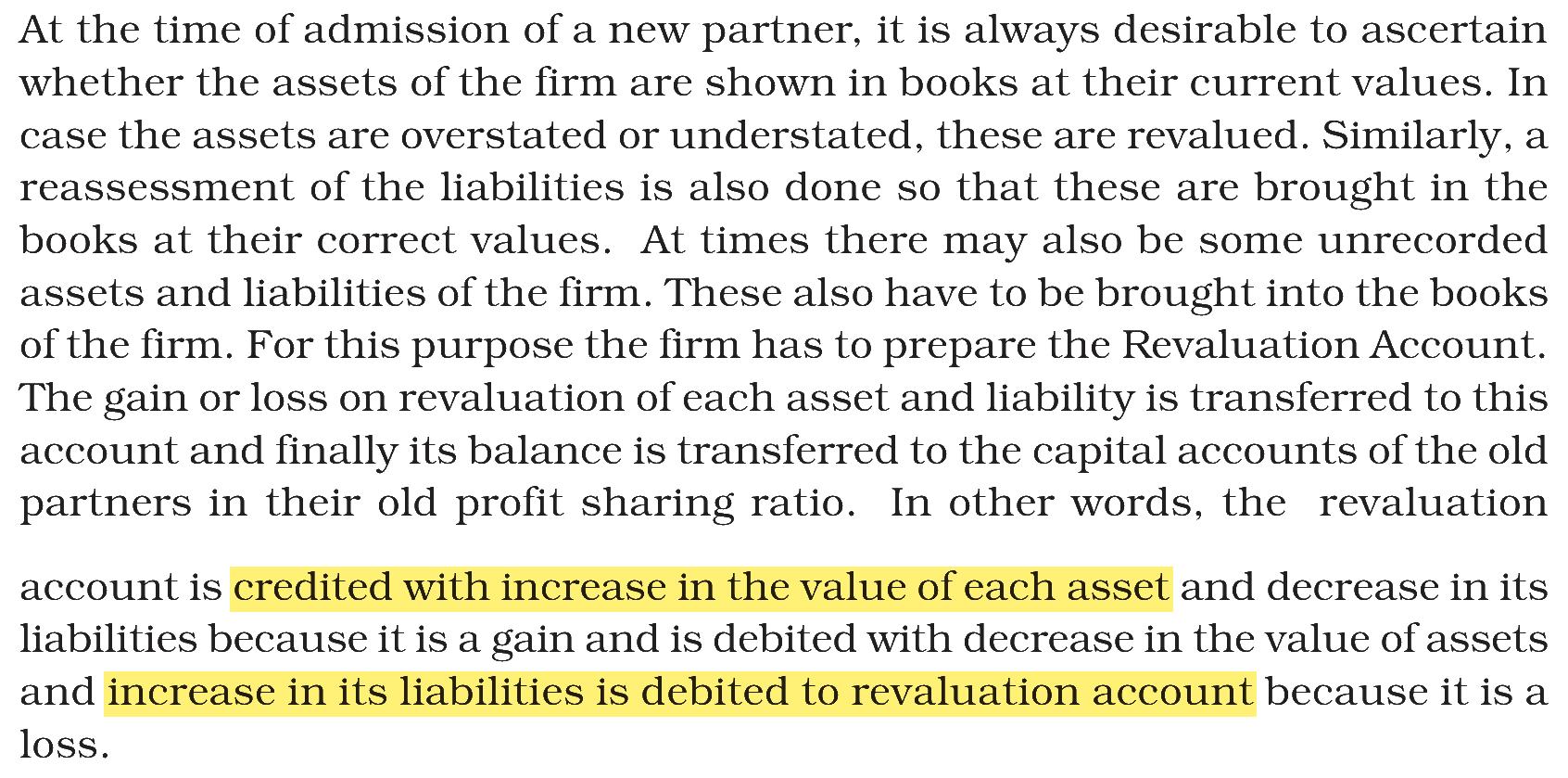
(C) Increase in value of Asset — this matches (II) Credit to Revaluation A/c. A rise in the value of an asset is a gain to the old partners, and gains are credited to the Revaluation Account.
(D) Increase in value of Liability — this matches (III) Debit to Revaluation A/c. A higher liability means the firm owes more, which is a loss, so it is debited to the Revaluation Account.
NCERT (2026-27 edition): NCERT (2026-27 edition): NCERT (2026-27 edition):
|