
Antibody is represented by:
Answer & explanation
Correct answer: option 2
The correct answer is Option (2) → H2L2
An antibody is a protein made by B-lymphocytes against a pathogen. Each antibody molecule has four peptide chains: two short light (L) chains and two long heavy (H) chains. So it is written as H2L2.
(1) H1L1 — Incorrect. This shows only two chains. An antibody has four.
(2) H2L2 — Correct. Two heavy chains and two light chains.
(3) H1L2 — Incorrect. An antibody has two heavy chains, not one.
(4) H3L1 — Incorrect. An antibody has two chains of each kind, not three heavy and one light.
Note: A similar question was also asked in CUET (UG) 2026 on 15-05-2026 (Slot 1), and in CUET (UG) 2025 on 26-05-2025 (Slot 2).
NCERT Extract:
Acquired Immunity – “… The B-lymphocytes produce an army of proteins in response to pathogens into our blood to fight with them. These proteins are called antibodies. The T-cells themselves do not secrete antibodies but help B cells to produce them. Each antibody molecule has four peptide chains, two small called light chains and two longer called heavy chains. Hence, an antibody is represented as H2L2.”
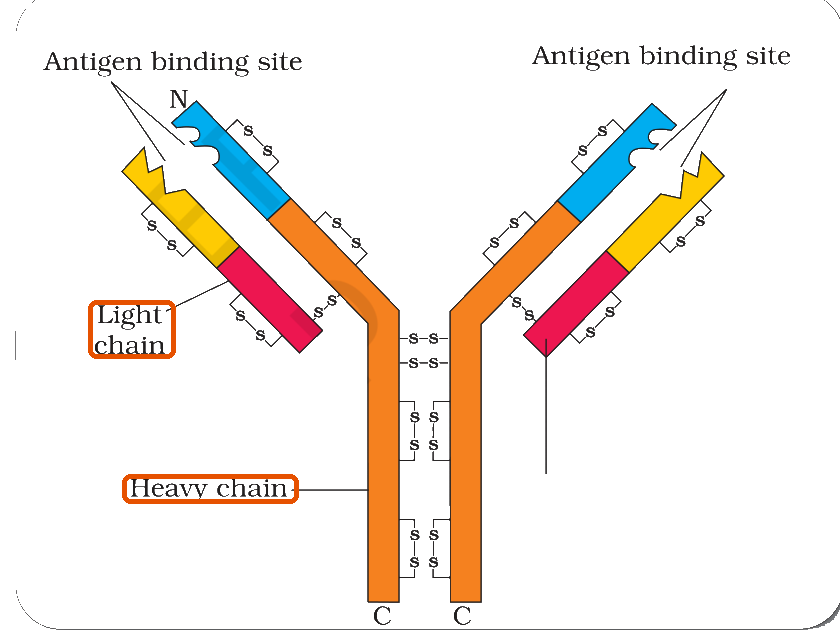
Figure 7.4 Structure of an antibody molecule