
The decreasing order of the reactivity of following alkyl halides towards Williamson ether synthesis is
(A) 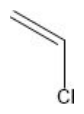
(B) (CH3)2CHCl
(C) (CH3)3CCl
(D) CH3Cl
Choose the correct answer from the options given below:
Answer & explanation
Correct answer: option 3
The correct answer is Option (3) → (D), (B), (C), (A)
In the Williamson synthesis, an alkyl halide reacts with a sodium alkoxide. The alkoxide ion attacks the carbon carrying the halogen in an SN2 reaction:
\( \displaystyle \ce{R-X + R'-ONa -> R-O-R' + NaX} \)
Three factors decide how well an alkyl halide works:
Steric hindrance in SN2: the nucleophile attacks from the back of the C–X bond, so the fewer the alkyl groups on that carbon, the faster the reaction: CH3X > 1° > 2° > 3°.
Elimination: the alkoxide is also a strong base. With a tertiary halide, it removes a β-hydrogen and gives mainly an alkene, so very little ether forms.
Vinyl halides: when the halogen is on a C=C carbon, the C–X bond has partial double bond character through resonance and the carbon is sp2. Such halides do not undergo SN2 at all, so they are the least reactive.
Combining these:
methyl halide > 2° halide > 3° halide > vinyl halide
\( \displaystyle \ce{CH3Cl} > \ce{(CH3)2CHCl} > \ce{(CH3)3CCl} > \ce{CH2=CHCl} \)
Matching the given compounds:
(D) \( \ce{CH3Cl} \): chloromethane (methyl halide)
(B) \( \ce{(CH3)2CHCl} \): 2-chloropropane (2°)
(C) \( \ce{(CH3)3CCl} \): 2-chloro-2-methylpropane (3°)
(A) \( \ce{CH2=CHCl} \): chloroethene, vinyl chloride
Shortcut: Options (3) and (4) both start with the methyl halide (D) and end with the vinyl halide (A). The 2° halide reacts faster than the 3° halide in SN2, so (B) comes before (C): Option (3).