
Which one of the followings is not a feature of the Double-helix structure of DNA?
Answer & explanation
Correct answer: option 1
The correct answer is Option (1) → The two chains are coiled in a left-handed fashion.
In the double helix model of Watson and Crick, two polynucleotide chains twist round each other like a spiral stair.
(1) The two chains are coiled in a left-handed fashion. — Not a feature of the double helix. The two chains are coiled in a right-handed fashion. The pitch of the helix is 3.4 nm, with about 10 base pairs in each turn.
(2) The bases in two strands are paired through hydrogen bond forming base pairs (bp). — A feature of the double helix. Adenine pairs with thymine by two hydrogen bonds, and guanine pairs with cytosine by three.
(3) The two chains have antiparallel polarity, which means, if one chain has the polarity 5′ → 3′, the other has 3′ → 5′. — A feature of the double helix. The two strands run in opposite directions.
(4) It is made of two polynucleotide chains, where the backbone is constituted by sugar-phosphate, and the bases project inside. — A feature of the double helix. The sugar-phosphate backbone is on the outside and the bases face inwards.
NCERT Extract:
Structure of Polynucleotide Chain – “… (i) It is made of two polynucleotide chains, where the backbone is constituted by sugar-phosphate, and the bases project inside. (ii) The two chains have anti-parallel polarity. It means, if one chain has the polarity 5’ 3’ , the other has 3’ 5’ . (iii) The bases in two strands are paired through hydrogen bond (H-bonds) forming base pairs (bp). Adenine forms two hydrogen bonds with Thymine from opposite strand and vice-versa. Similarly, Guanine is bonded with Cytosine with three H-bonds. As a result, always a purine comes opposite to a pyrimidine. This generates approximately uniform distance between the two strands of the helix (Figure 5.2). (iv) The two chains are coiled in a right-handed fashion.”
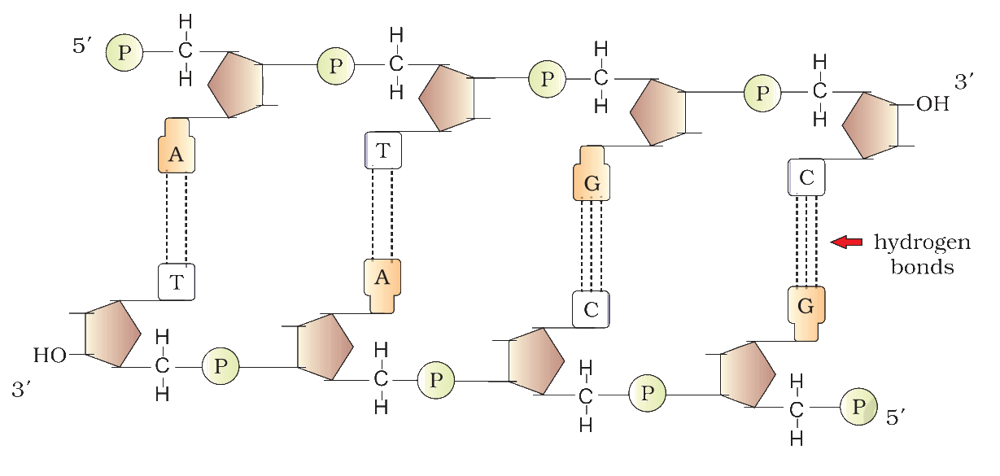
Figure 5.2 Double stranded polynucleotide chain