Nation X produces two goods; rice and cloth. A consumer buys 100 kg of rice and 10 pieces of cloth in a year. Suppose, in the year 2000, the price of rice was Rs 10/kg and a piece of cloth was Rs 100. Now suppose the prices of a kg rice and a piece of cloth have gone up to Rs 18 and Rs 120 in the year 2005. In the given example, the Consumer Price Index of the current year vis-a-vis the base year will be equal to ________.
Answer & explanation
Correct answer: option 3
The correct answer is Option (3) → 150
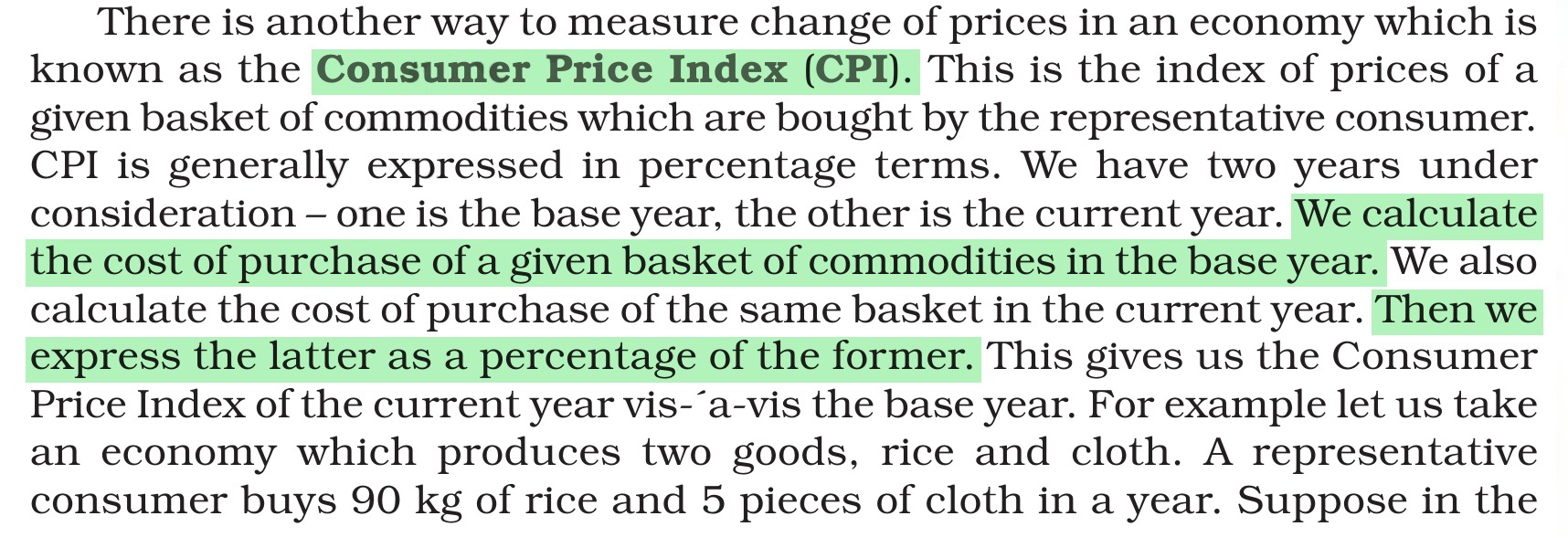
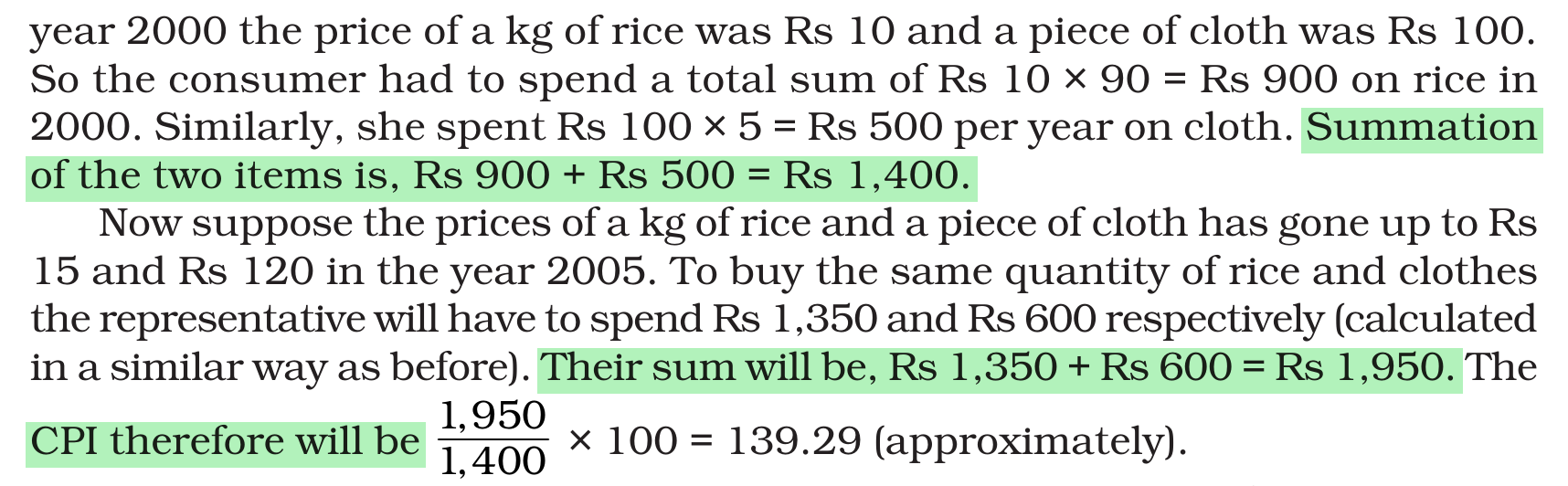
Prices of different goods rise by different amounts, so to see how much dearer living has become we price the same basket of goods in two years. The Consumer Price Index (CPI) is the cost of that basket at current-year prices taken as a percentage of its cost at base-year prices; the quantities stay fixed and only the prices change.
Given:
Quantities bought: rice = 100 kg, cloth = 10 pieces
Base year (2000) prices: rice = Rs. 10 per kg, cloth = Rs. 100 per piece
Current year (2005) prices: rice = Rs. 18 per kg, cloth = Rs. 120 per piece
The formula:
CPI = (Cost of the basket at current prices ÷ Cost of the basket at base year prices) × 100
Cost of the basket in the base year:
(100 × 10) + (10 × 100) = 1,000 + 1,000 = Rs. 2,000
Cost of the same basket in the current year:
(100 × 18) + (10 × 120) = 1,800 + 1,200 = Rs. 3,000
Consumer Price Index of the current year, taking the base year as 100:
CPI = (3,000 ÷ 2,000) × 100 = 150, which is Option (3)
NCERT: Introductory Macroeconomics — Chapter 2: National Income Accounting (2025-26)
|