Match List-I with List-II
List-I
(A) Feature of a Company
(B) Interest on Calls-in-Arrear
(C) Private company
(D) Interest on Calls-in-Advance
List-II
(I) Not exceeding 12% p.a.
(II) Restricts the right to transfer its shares
(III) Perpetual Succession
(IV) Not exceeding 10% p.a.
Choose the correct answer from the options given below:
Answer & explanation
Correct answer: option 4
The correct answer is Option (4) → (A) - (III), (B) - (IV), (C) - (II), (D) - (I)
Two of the pairs are basic features of companies, and two are the interest limits that Table F of the Companies Act, 2013 sets when the Articles are silent.
(A) Feature of a Company — this matches (III) Perpetual Succession. A company is an artificial person created by law, so it goes on existing whatever happens to its members.
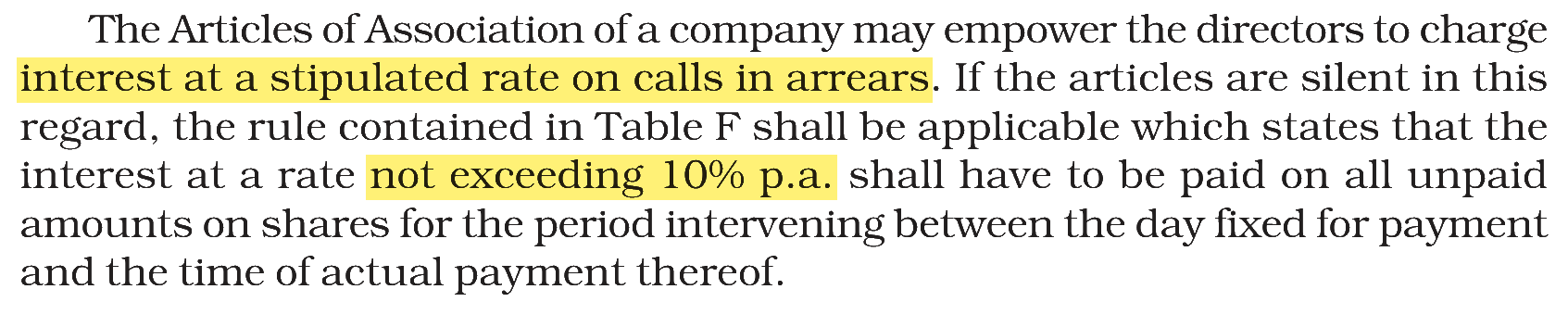
(B) Interest on Calls-in-Arrear — this matches (IV) Not exceeding 10% p.a. Table F allows the company to charge interest at a rate not exceeding 10% p.a. on calls not paid on time.
(C) Private company — this matches (II) Restricts the right to transfer its shares. A private company's Articles restrict the right of its members to transfer their shares.
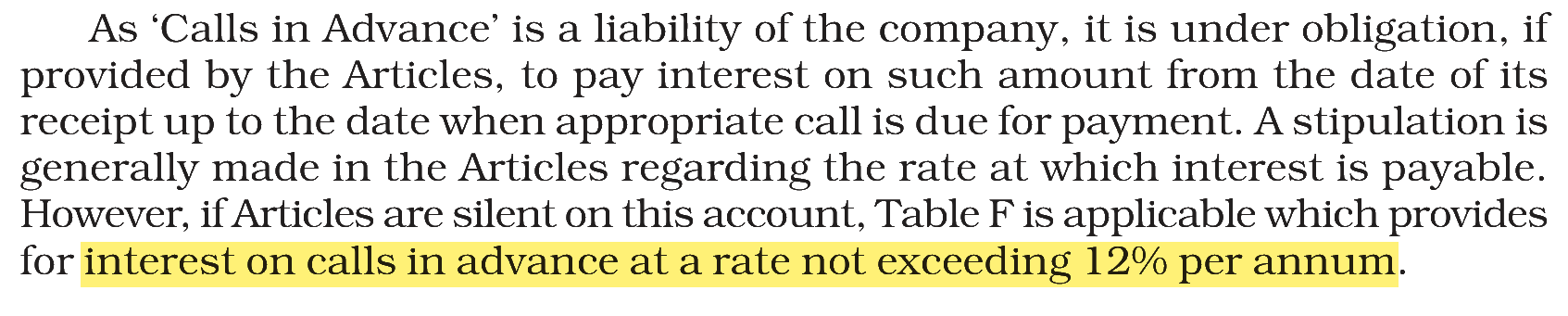
(D) Interest on Calls-in-Advance — this matches (I) Not exceeding 12% p.a. Table F lets the company pay interest at a rate not exceeding 12% p.a. on money received before it is called. The 10% and 12% are often swapped; the company pays more on money it receives early than it charges on money paid late.
NCERT (2026-27 edition):
NCERT (2026-27 edition):
NCERT (2026-27 edition):
NCERT (2026-27 edition):
|