The maximum retail price concept is an example of which of the following pricing?
Answer & explanation
Correct answer: option 2
The correct answer is Option (2) → Price ceiling
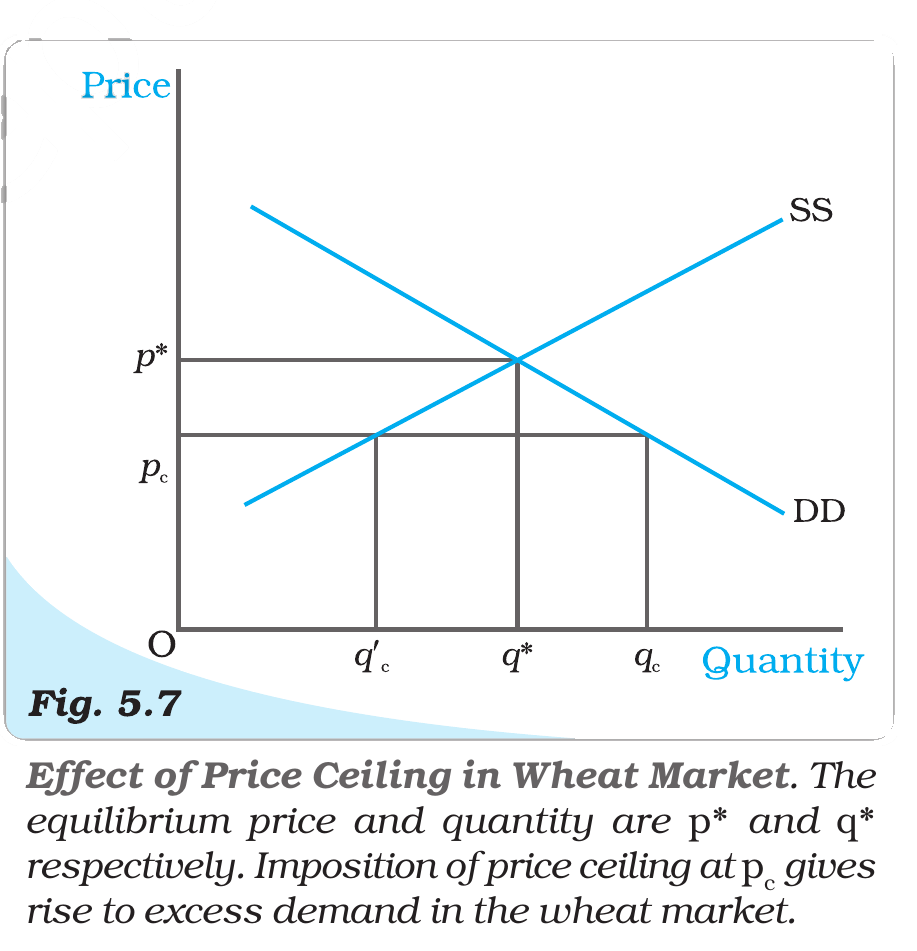
When the market price of a necessary good is too high for many people, the government may fix an upper limit on it, usually below the market price, and no seller may charge more. Such a limit is a price ceiling. The maximum retail price printed on a packet works the same way: it is the highest price at which the good may be sold.
A ceiling set below the equilibrium price gives rise to excess demand, which is why goods sold at fixed low prices are often rationed.
Why the other options are incorrect
Option (1) Price floor — Incorrect. A price floor is a lower limit below which the price may not fall, such as a minimum support price for farmers, so it works in the opposite direction to a maximum price.
Option (3) Per unit price — Incorrect. The price per unit is just the price of one unit of a good, whatever it is; it is not a limit set by the government on that price.
Option (4) Minimum price — Incorrect. A minimum price is another name for a price floor, the lowest price allowed, not the highest.
NCERT (2025-26): “5.2.1 Price Ceiling … It is not very uncommon to come across instances where government fixes a maximum allowable price for certain goods. The government-imposed upper limit on the price of a good or service is called price ceiling. Price ceiling is generally imposed on necessary items like wheat, rice, kerosene, sugar and it is fixed below the market-determined price since at the market-determined price some section of the population will not be able to afford these goods.… …When the government imposes price ceiling at pc which is lower than the equilibrium price level, there will be an excess demand for wheat in the market at that price.… Hence, though the intention of the government was to help the consumers, it could end up creating shortage of wheat.…”
|