In case of dissolution of a partnership firm, Match the LIST-I with LIST-II.
| LIST-I | LIST-II | ||
|---|---|---|---|
| A. | Payment of outstanding bill for electricity expenses | I. | Partners' Capital A/c will be credited |
| B. | Transfer of General Reserve | II. | Partners' Capital A/c will be debited |
| C. | Transfer of Profit & Loss A/c (Dr. balance) | III. | Realisation A/c will be credited |
| D. | Cash sale of machinery | IV. | Cash/Bank A/c will be credited |
Choose the correct answer from the options given below:
Answer & explanation
Correct answer: option 1
The correct answer is Option (1) → A-IV, B-I, C-II, D-III
On dissolution, the sale of assets and the payment of liabilities pass through the Realisation Account and Cash/Bank, while accumulated profits and losses belong to the partners and go to their capital accounts.
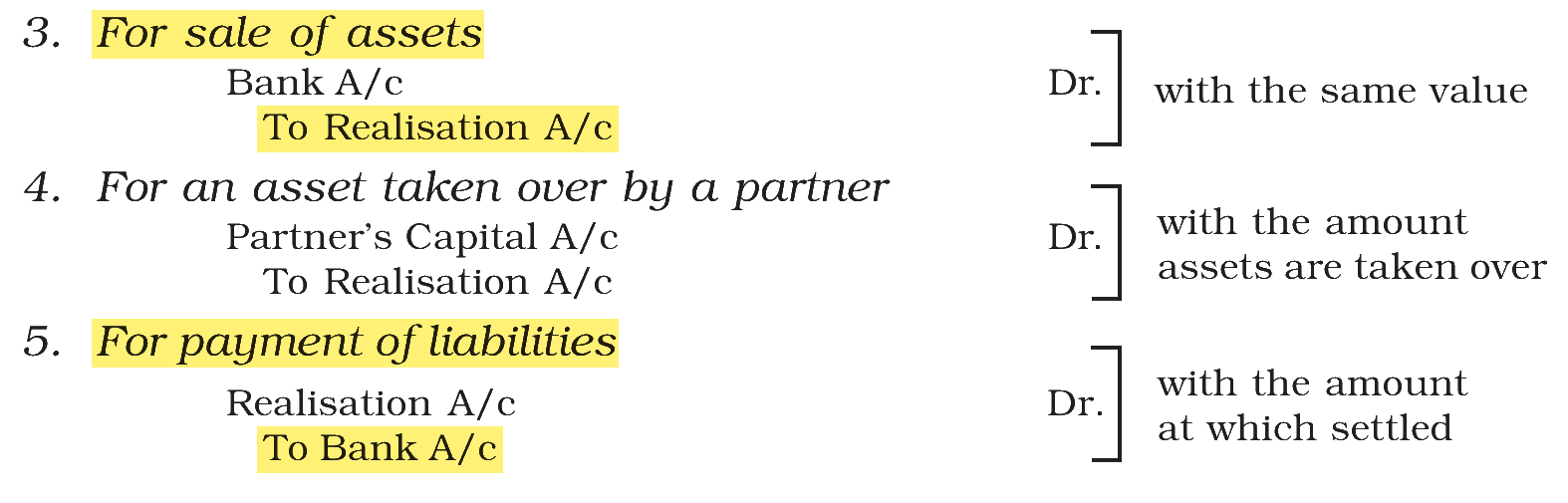
(A) Payment of outstanding bill for electricity expenses — this matches (IV) Cash/Bank A/c will be credited. The bill is a liability transferred to the Realisation Account; paying it debits Realisation A/c and credits Cash/Bank, since cash goes out.
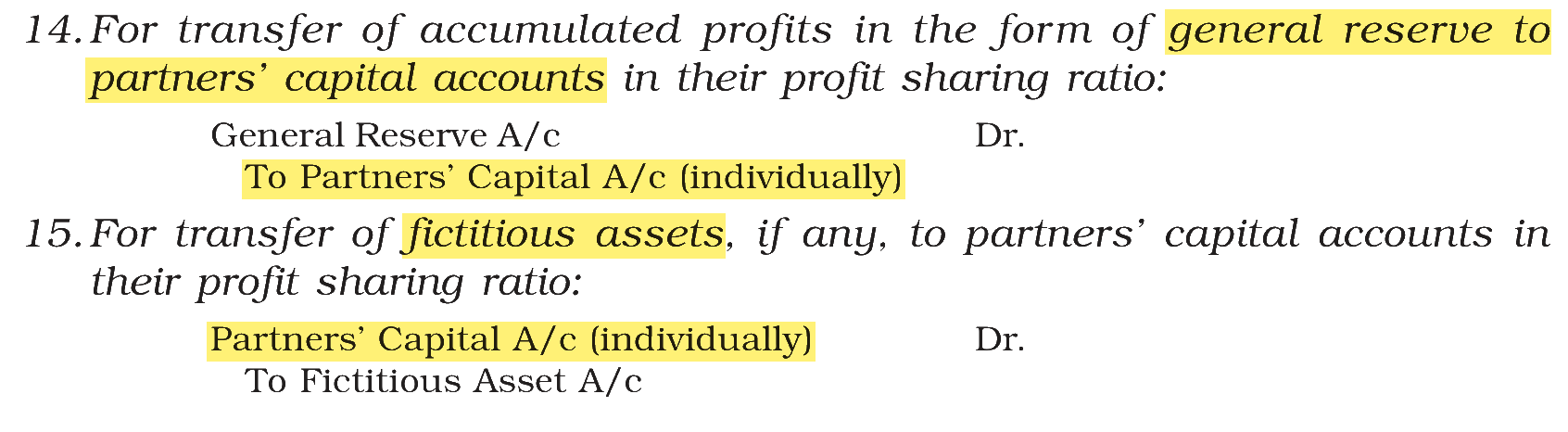
(B) Transfer of General Reserve — this matches (I) Partners’ Capital A/c will be credited. A reserve is accumulated profit, so it is credited to the partners in their profit sharing ratio.
(C) Transfer of Profit & Loss A/c (Dr. balance) — this matches (II) Partners’ Capital A/c will be debited. A debit balance is an accumulated loss, written off like a fictitious asset by debiting the partners.
(D) Cash sale of machinery — this matches (III) Realisation A/c will be credited. Cash/Bank is debited with the proceeds and Realisation A/c is credited, as the asset’s book value already sits on its debit side.
NCERT (2026-27 edition):
|