Match List-I with List-II
| List-I | List-II |
| (Concepts of Financial management) | (Computation) |
| (A) Net Working Capital | (I) Debt/Equity |
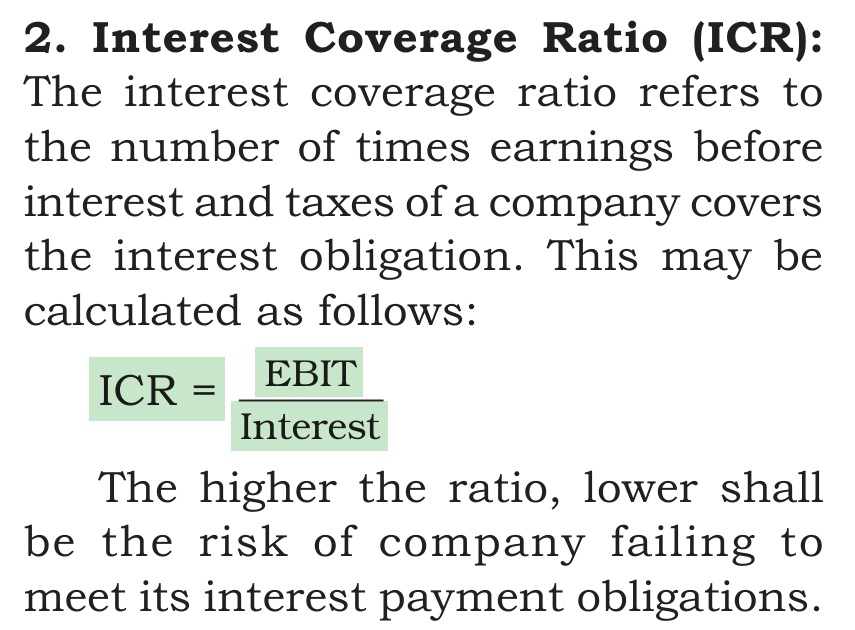
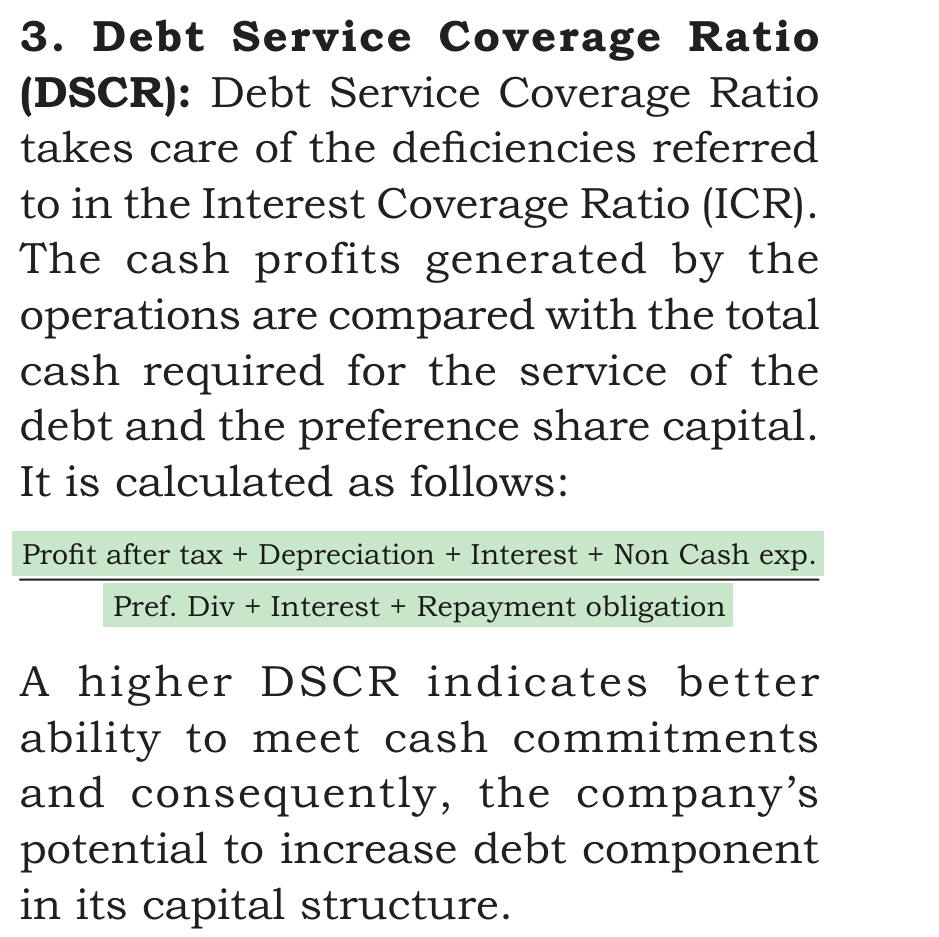
| (B) Financial Leverage | (II) (Profit after tax + Depreciation + Interest + Non Cash exp.) / (Pref. Div + Interest + Repayment obligation) |
| (C) Interest Coverage Ratio | (III) Current Assets-Current Liabilities |
| (D) Debt Service Coverage Ratio | (IV) EBIT/Interest |
Choose the correct answer from the options given below:
Answer & explanation
Correct answer: option 3
The correct answer is Option (3) → (A) - (III), (B) - (I), (C) - (IV), (D) - (II)
(A) Net Working Capital — this matches (III) Current Assets-Current Liabilities. Net working capital is the part of current assets that is left after paying all short-term dues.
(B) Financial Leverage — this matches (I) Debt/Equity. Financial leverage is the proportion of debt in the total capital. It is measured by comparing debt with equity.
(C) Interest Coverage Ratio — this matches (IV) EBIT/Interest. This ratio shows how many times the interest charge is covered by the earnings before interest and tax.
(D) Debt Service Coverage Ratio — this matches (II) (Profit after tax + Depreciation + Interest + Non Cash exp.) / (Pref. Div + Interest + Repayment obligation). It compares the cash profits with all the payments due to lenders and preference shareholders, so it shows whether the firm can meet them.
NCERT (2026-27 Edition): “Some part of current assets is usually financed through short-term sources, i.e., current liabilities. The rest is financed through long-term sources and is called net working capital. Thus, NWC = CA – CL (i.e. Current Assets - Current Liabilities.) …” “The proportion of debt in the overall capital is also called financial leverage.” “Capital Structure … Capital structure refers to the mix between owners and borrowed funds. These shall be referred as equity and debt in the subsequent text. It can be calculated as debt-equity ratio”
|