Arrange the following steps in sequence for estimating GNPMP in a particular year through the income method.
(A) Adding consumption of fixed capital and Net Indirect Taxes.
(B) Classify the economy into primary, secondary and tertiary sectors.
(C) Estimation of Factor income within domestic territory.
(D) Adding Net factor income from abroad.
Choose the correct answer from the options given below:
Answer & explanation
Correct answer: option 3
The correct answer is Option (3) → (B), (C), (A), (D)
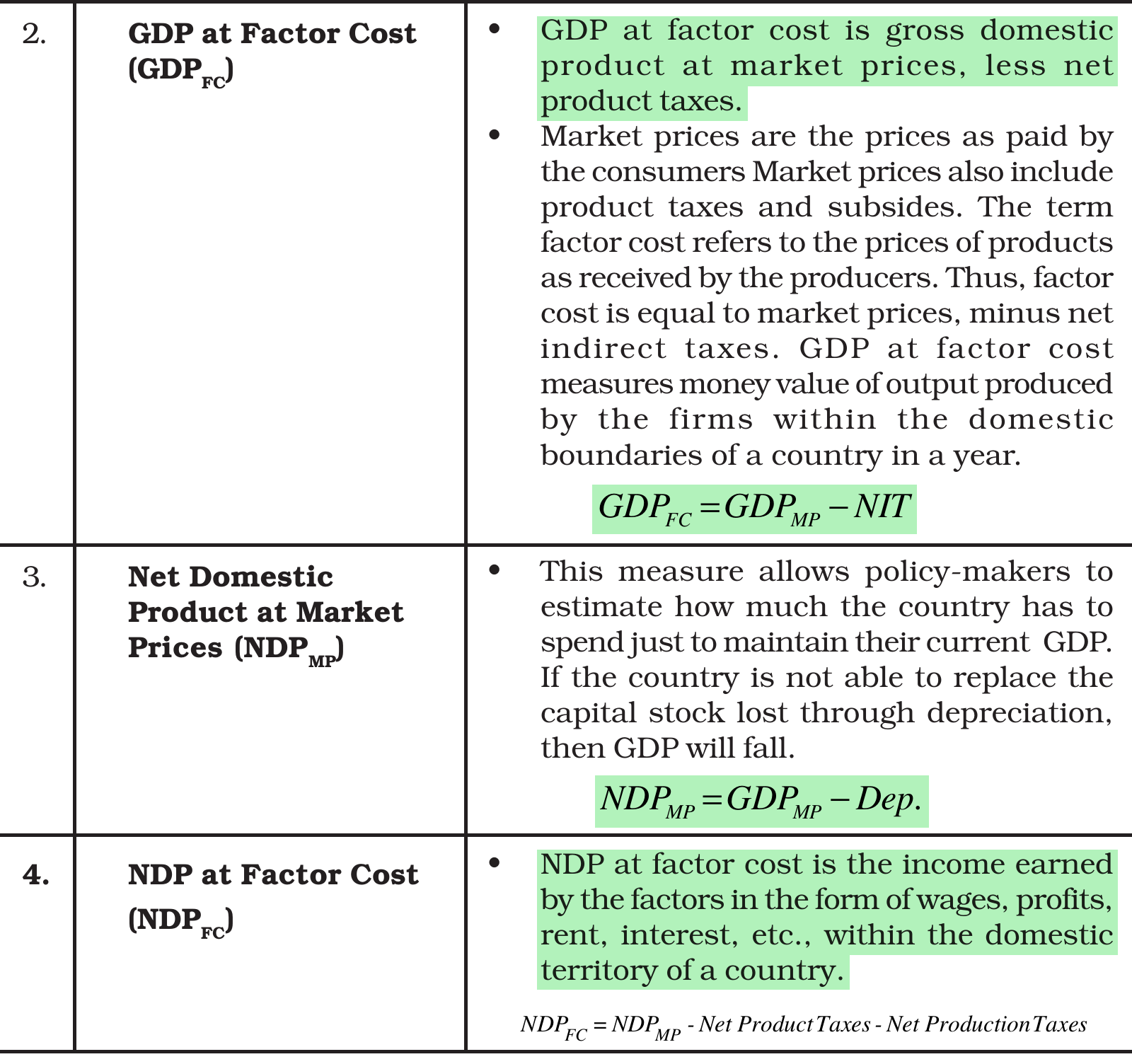
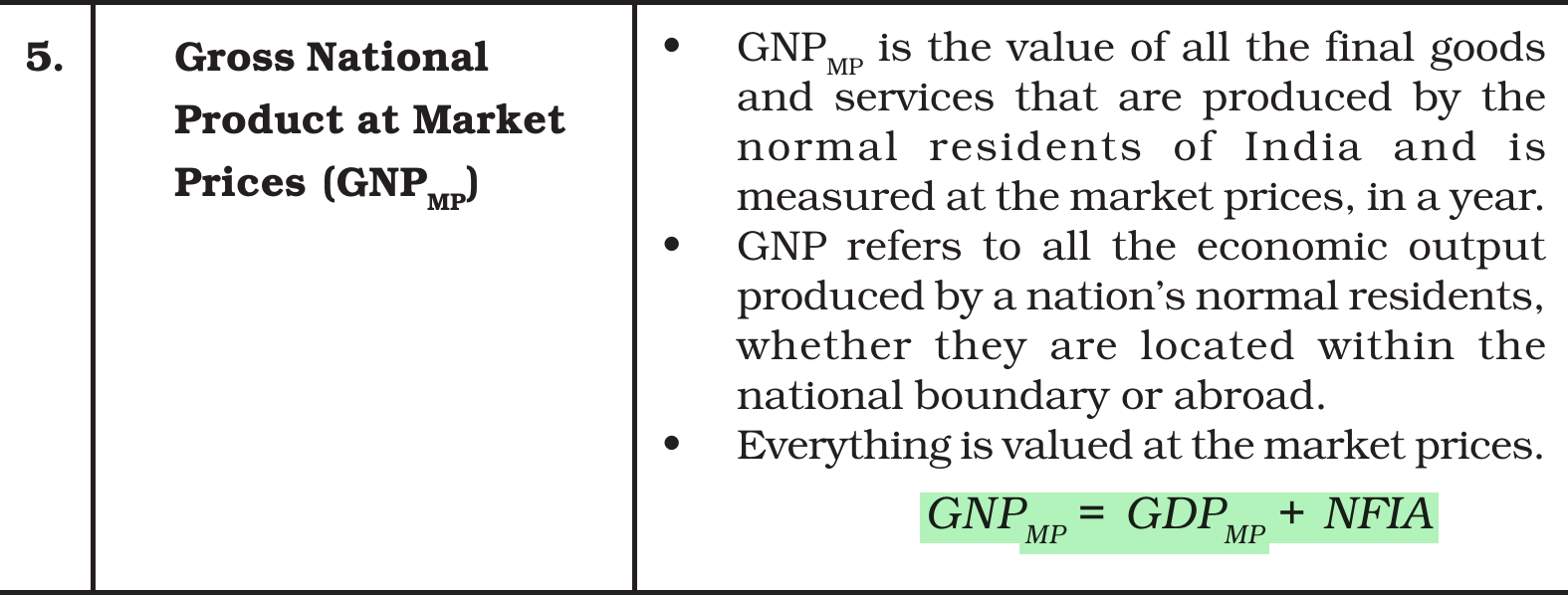
By the income method, production is measured by the factor incomes (wages, rent, interest and profits) earned in it. GNP at market prices is then built up from them step by step:
(B) Classify the economy into primary, secondary and tertiary sectors. — First the producing units are grouped into sectors, so that the income of each sector can be estimated.
(C) Estimation of Factor income within domestic territory. — Adding the factor incomes paid by all producers within the domestic territory gives NDP at factor cost.
(A) Adding consumption of fixed capital and Net Indirect Taxes. — Adding depreciation (consumption of fixed capital) turns net into gross. Adding net indirect taxes turns factor cost into market prices. This gives GDP at market prices.
(D) Adding Net factor income from abroad. — Adding net factor income from abroad turns domestic into national, which gives GNP at market prices.
Note: The first step, classifying the producing units into primary, secondary and tertiary sectors, is not in any of the NCERT books (2026-27, 2025-26, 2023-24 or pre-rationalised); it is the usual first step of the income method in national accounts.
NCERT (2026-27): Introductory Macroeconomics — Chapter 2: National Income Accounting, Table 2.4: Basic National Income Aggregates (rows 2 to 5)
|