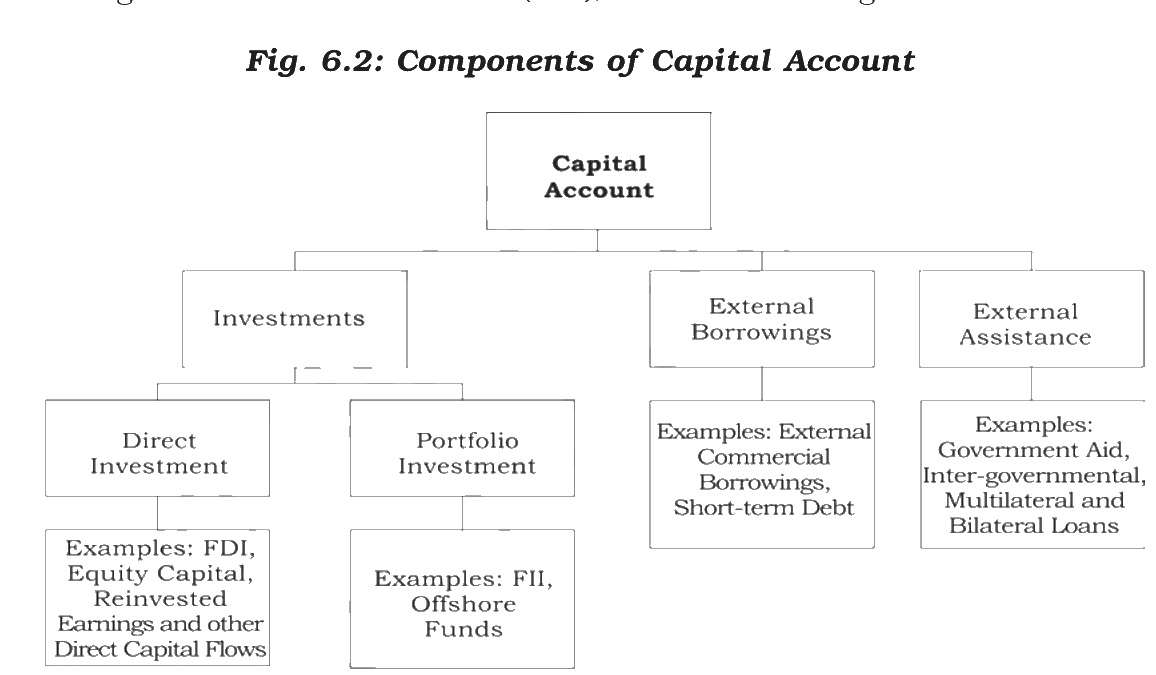
Country Z buys far more goods from abroad than it sells. Its imports of oil and machinery keep rising, while its exports grow slowly. Its citizens working abroad send money home to their families, but this covers only a small part of the gap. Foreign firms have set up new plants in Z, and Z’s companies have borrowed from banks abroad. Even so, the money coming into Z during the year is less than the money going out. Z follows a fixed exchange rate, and its central bank has stepped in to meet the shortfall.
In Country Z’s balance of payments, the money sent home by its citizens working abroad and the new plants set up by foreign firms are recorded, respectively, as:
Answer & explanation
Correct answer: option 4
The correct answer is Option (4) → transfer payments in the current account; direct investment in the capital account
Money sent home by workers abroad is a remittance, a transfer payment in the current account. New plants set up by foreign firms are direct investment in the capital account.
NCERT (2026-27): “6.1.1 Current Account … Transfer payments are the receipts which the residents of a country get for ‘free’, without having to provide any goods or services in return. They consist of gifts, remittances and grants. They could be given by the government or by private citizens living abroad.”
|