
Statement I: The edges of the infundibulum possess finger-like projections called fimbriae.
Statement II: Each fallopian tube is about 10-12 cm long and extends from the periphery of each ovary to the uterus.
Answer & explanation
Correct answer: option 3
The correct answer is Option (3) → Both statements I and II are correct.
The oviducts (fallopian tubes), uterus and vagina are the female accessory ducts. Each fallopian tube has three parts, from the ovary towards the uterus: infundibulum, ampulla and isthmus, which joins the uterus.
Statement I: The edges of the infundibulum possess finger-like projections called fimbriae. — True. The infundibulum is the funnel-shaped part closest to the ovary. Its fimbriae help to collect the ovum after ovulation.
Statement II: Each fallopian tube is about 10-12 cm long and extends from the periphery of each ovary to the uterus. — True. This is the book’s length and position of the tube.
So both statements are correct.
NCERT Extract:
The Female Reproductive System – “… The oviducts (fallopian tubes), uterus and vagina constitute the female accessory ducts. Each fallopian tube is about 10-12 cm long and extends from the periphery of each ovary to the uterus (Figure 2.3b), the part closer to the ovary is the funnel-shaped infundibulum. The edges of the infundibulum possess finger-like projections called fimbriae, which help in collection of the ovum after ovulation.”
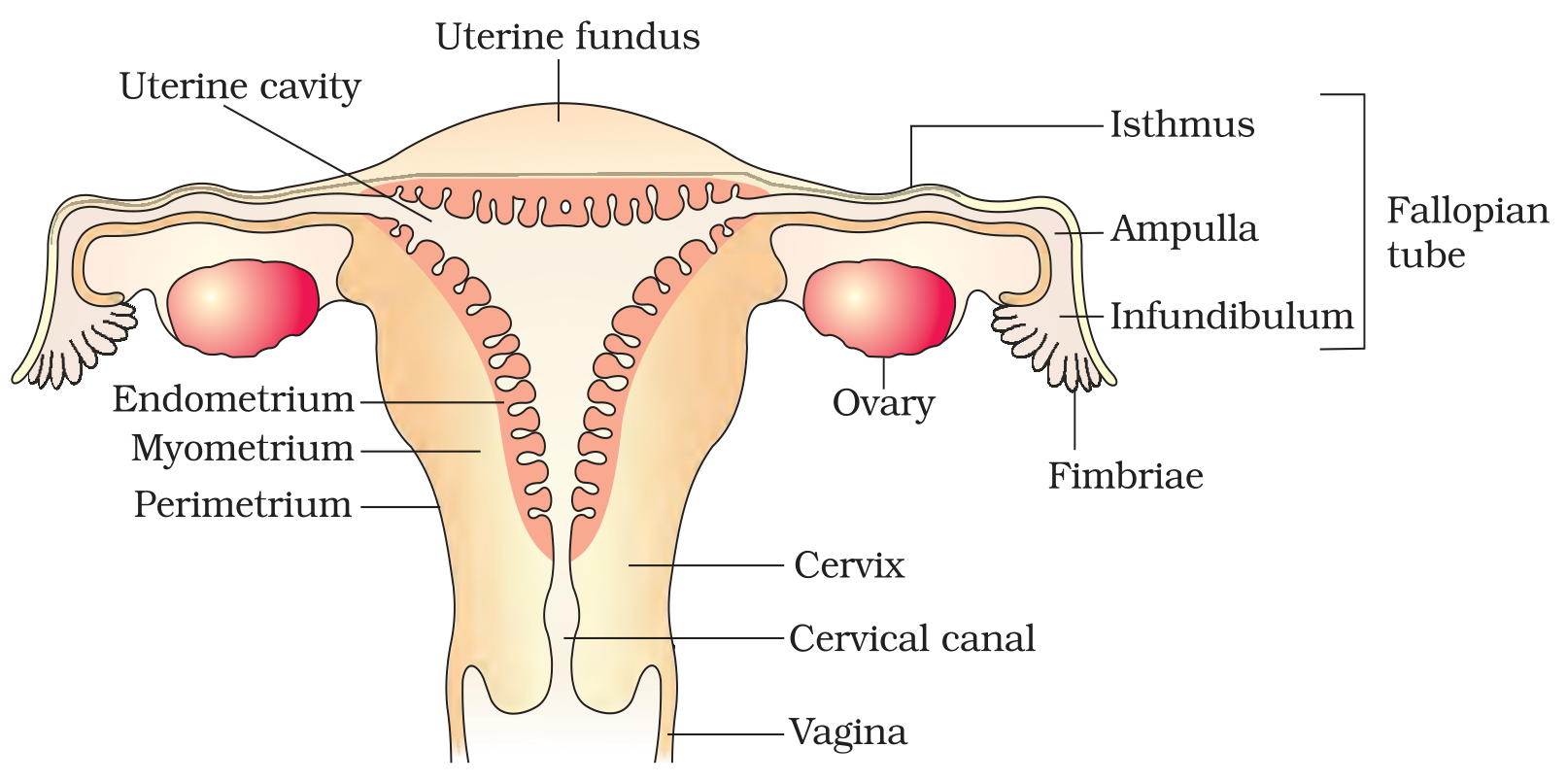
Figure 2.3 (b) Diagrammatic sectional view of the female reproductive system