
Which of the following is true about Drosophila melanogaster?
Answer & explanation
Correct answer: option 4
The correct answer is Option (4) → All of these
Morgan tested the chromosomal theory of inheritance on the fruit fly Drosophila melanogaster. NCERT lists several reasons why the fly suited such studies: it is easy to grow in the laboratory, it breeds fast, and it gives many offspring.
Option (1) They could be grown on simple synthetic medium in the laboratory. — Correct statement, but it is only one of the correct points, so on its own it is not the answer. The flies could be grown on simple synthetic medium in the laboratory, which makes them easy to keep.
Option (2) They complete their life cycle in about two weeks. — Correct statement, but it is only one of the correct points, so on its own it is not the answer. They complete their life cycle in about two weeks, so many generations can be studied quickly.
Option (3) A single mating could produce a large number of progeny flies. — Correct statement, but it is only one of the correct points, so on its own it is not the answer. A single mating could produce a large number of progeny flies, giving enough offspring to count ratios.
All three statements are true, so the answer is “All of these”.
NCERT Extract:
Chromosomal Theory of Inheritance – “… Morgan worked with the tiny fruit flies, Drosophila melanogaster (Figure 4.10), which were found very suitable for such studies. They could be grown on simple synthetic medium in the laboratory. They complete their life cycle in about two weeks, and a single mating could produce a large number of progeny flies. Also, there was a clear differentiation of the sexes – the male and female flies are easily distinguishable.”
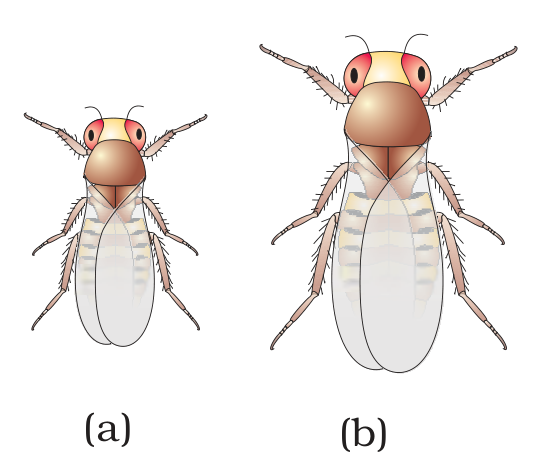
Figure 4.10 Drosophila melanogaster (a) Male (b) Female