Match the LIST-I with LIST-II
| LIST-I | LIST-II | ||
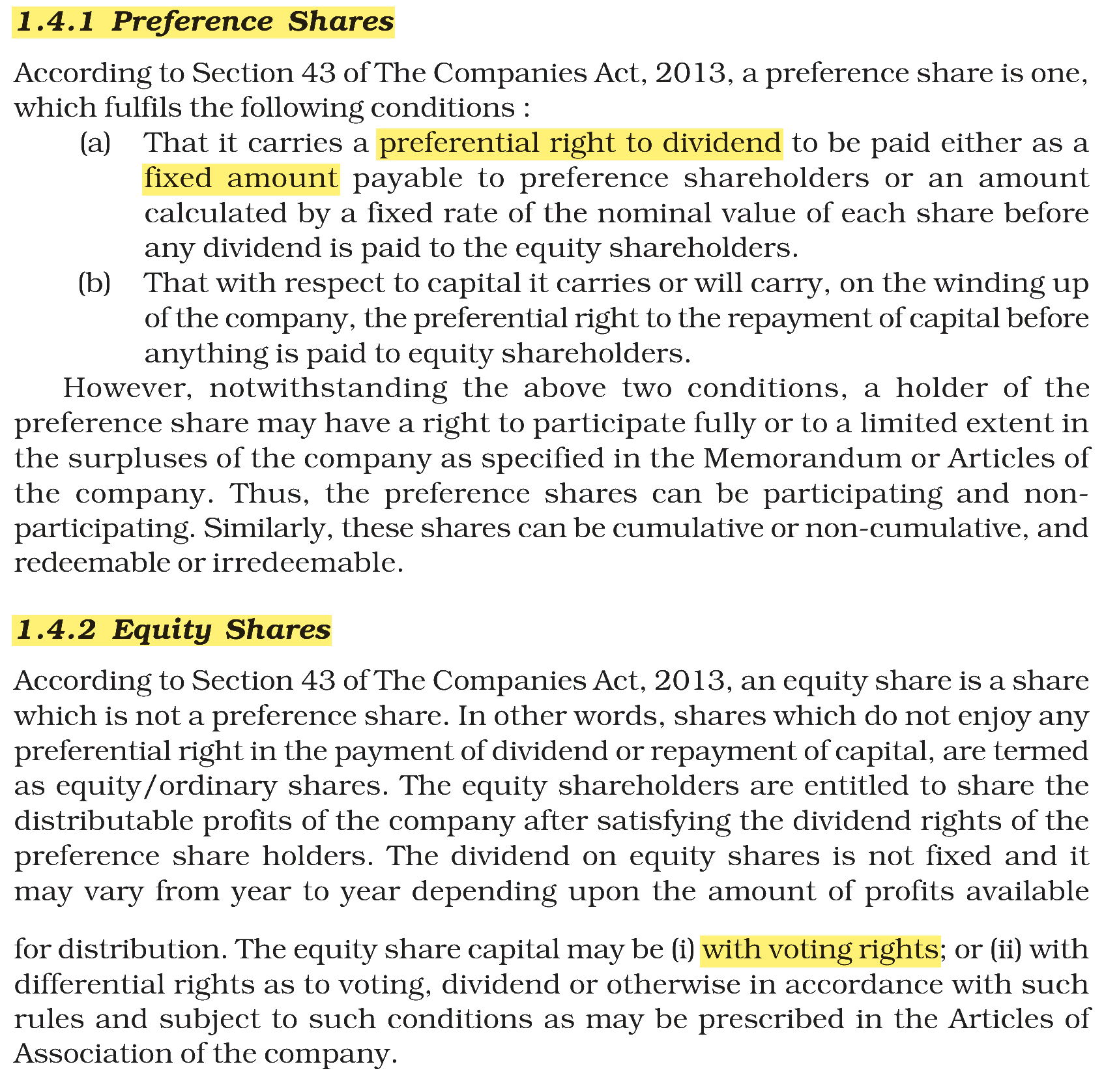
| A. | Equity Shares | I. | Company which is not a subsidiary of private company |
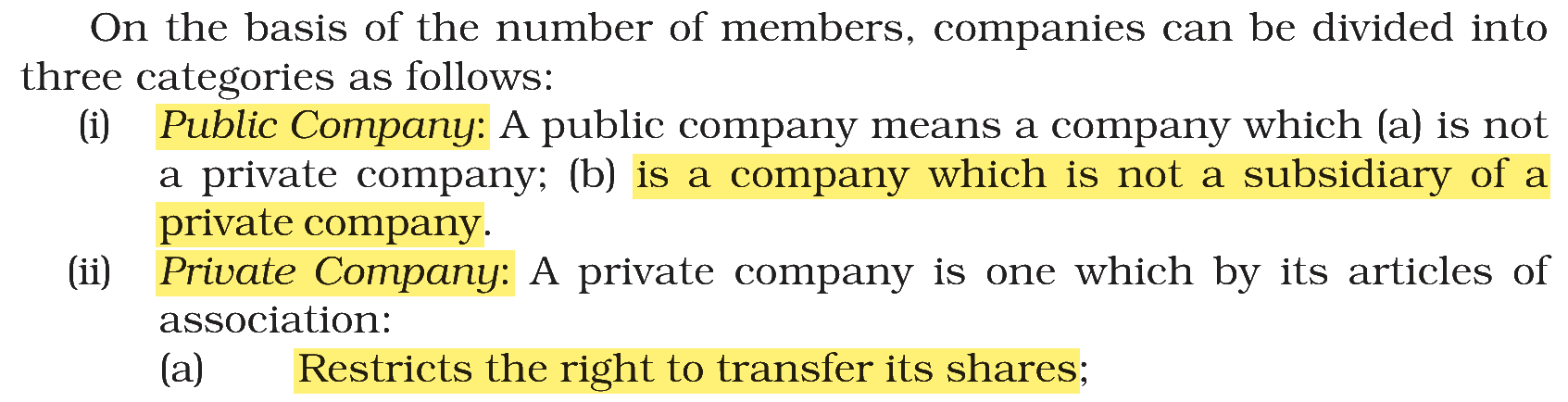
| B. | Preference Shares | II. | Owner of company and enjoy voting rights |
| C. | Public Company | III. | Restricts the right to transfer its shares |
| D. | Private Company | IV. | Carry fixed dividend + Preferential rights |
Choose the correct answer from the options given below:
Answer & explanation
Correct answer: option 1
The correct answer is Option (1) → A-II, B-IV, C-I, D-III
List-I has two classes of shares and two kinds of companies by number of members; each List-II entry is the mark of one of them.
(A) Equity Shares — this matches (II) Owner of company and enjoy voting rights. Equity shareholders are the real owners of the company: they bear the risk, share what is left after preference dividend and normally carry voting rights.
(B) Preference Shares — this matches (IV) Carry fixed dividend + Preferential rights. A preference share carries a preferential right to a fixed dividend and to the repayment of capital on winding up, before anything is paid to equity shareholders.
(C) Public Company — this matches (I) Company which is not a subsidiary of private company. Any company that does not fall within the private-company limits, and is not controlled as a subsidiary by a private company, counts as public.
(D) Private Company — this matches (III) Restricts the right to transfer its shares. A private company’s articles restrict the transfer of its shares and limit its members to 200, so its shares are not freely traded.
NCERT (2026-27 edition):
NCERT (2026-27 edition):
|