
Why was Drosophila melanogaster used for studies in Genetics?
(A) They could be cultured easily in the monastery
(B) They showed many contrasting traits
(C) The generation time was one year
(D) There was clear differentiation of sexes
(E) Very few progeny were produced in a single mating
Choose the correct answer from the options given below:
Answer & explanation
Correct answer: option 1
The correct answer is Option (1) → (B) and (D) only
(A) They could be cultured easily in the monastery — False. The monastery was where Mendel grew his pea plants. Drosophila is grown on a simple synthetic medium in the laboratory.
(B) They showed many contrasting traits — True. The flies have many types of hereditary variations that can be seen with a low-power microscope.
(C) The generation time was one year — False. Drosophila completes its life cycle in about two weeks, which is why it suits genetics.
(D) There was clear differentiation of sexes — True. The male and female flies are easily told apart.
(E) Very few progeny were produced in a single mating — False. A single mating gives a large number of progeny.
NCERT Extract:
Chromosomal Theory of Inheritance – “… Morgan worked with the tiny fruit flies, Drosophila melanogaster (Figure 4.10), which were found very suitable for such studies. They could be grown on simple synthetic medium in the laboratory. They complete their life cycle in about two weeks, and a single mating could produce a large number of progeny flies. Also, there was a clear differentiation of the sexes – the male and female flies are easily distinguishable. Also, it has many types of hereditary variations that can be seen with low power microscopes.”
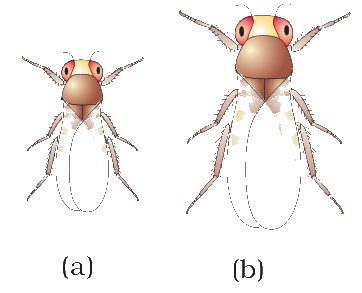
Figure 4.10 Drosophila melanogaster (a) Male (b) Female