Choose the correct answer from the following options:
(A) English East India Company acquired Diwani of Bengal in 1765
(B) Regulating Act was passed by the British Parliament in 1773
(C) Permanent Settlement was introduced by Lord Dalhousie
(D) Land of Santhals was demarcated as Damin-i-koh
(E) Permanent Settlement was introduced in Bombay
Choose the correct answer from the options given below:
Answer & explanation
Correct answer: option 3
The correct answer is Option (3) → (A), (B) and (D) only
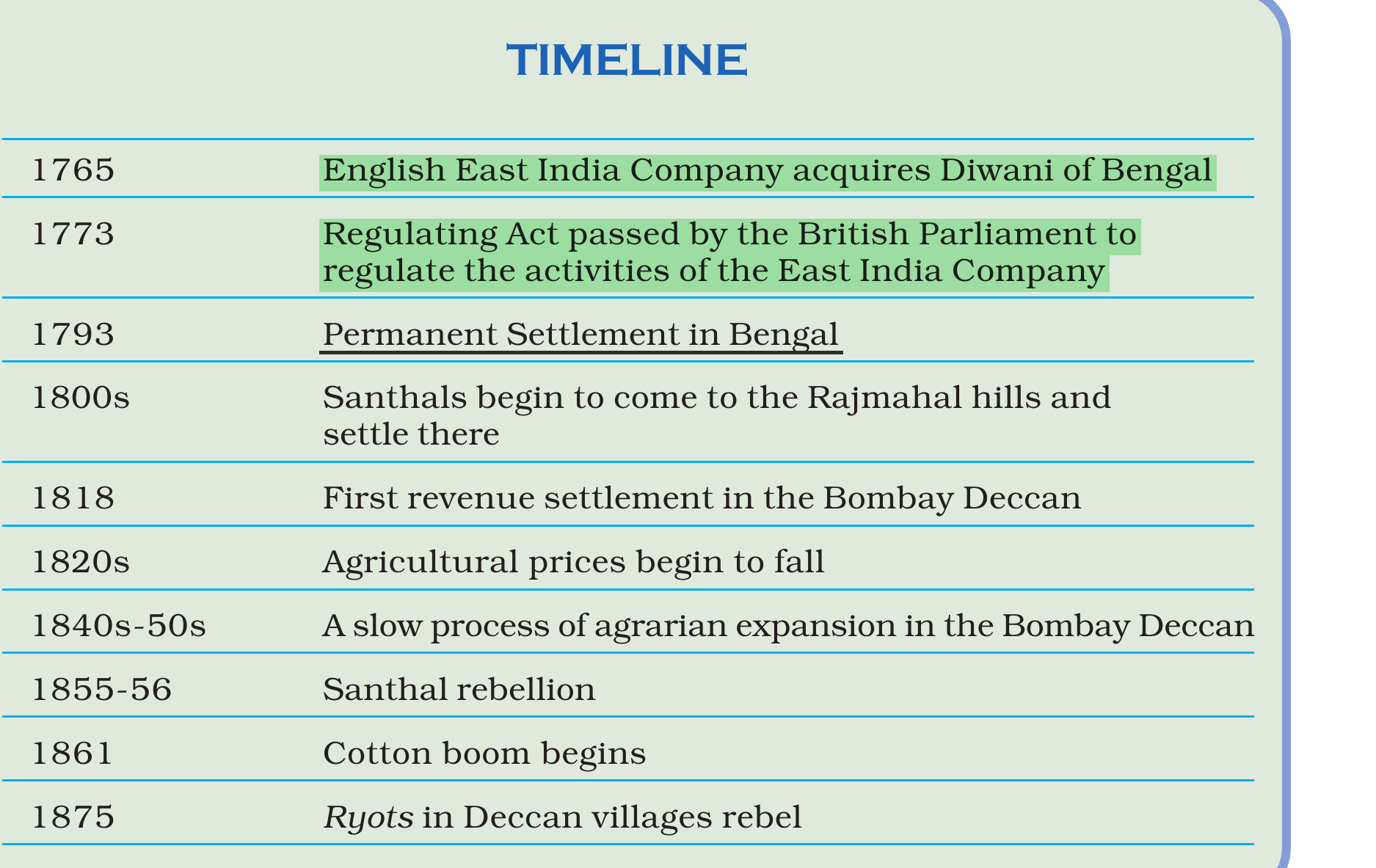
A. English East India Company acquired Diwani of Bengal in 1765 Correct. The English East India Company acquired the Diwani of Bengal in 1765.
B. Regulating Act was passed by the British Parliament in 1773 Correct. The British Parliament passed the Regulating Act in 1773 to regulate the activities of the East India Company.
C. Permanent Settlement was introduced by Lord Dalhousie Incorrect. The Permanent Settlement came into operation in 1793, when Charles Cornwallis was the Governor General of Bengal.
D. Land of Santhals was demarcated as Damin-i-koh Correct. The Santhals were persuaded to settle in the foothills of Rajmahal, and by 1832 a large area of land was demarcated as Damin-i-Koh and declared to be the land of the Santhals.
E. Permanent Settlement was introduced in Bombay Incorrect. The Permanent Settlement was introduced in Bengal. In the Bombay Deccan the British introduced a different system, the ryotwari settlement, in which the revenue was settled directly with the ryot.
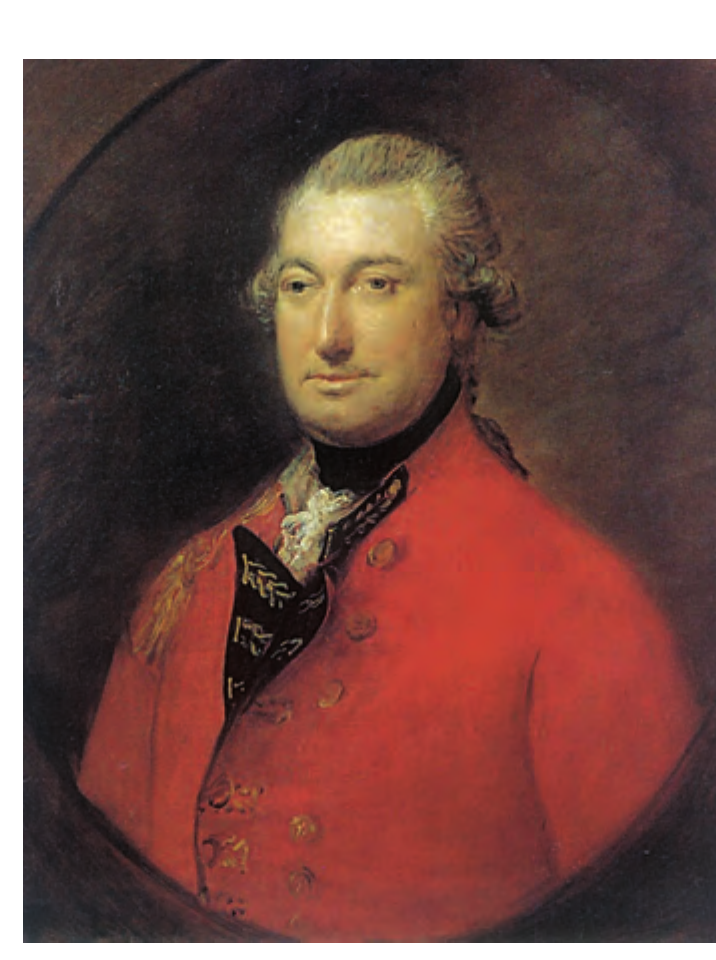
NCERT (2025-26): “1.3 Why zamindars defaulted on payments … He was the commander of the British forces during the American War of Independence and the Governor General of Bengal when the Permanent Settlement was introduced there in 1793. 2.2 The Santhals: Pioneer settlers … The Santhals were given land and persuaded to settle in the foothills of Rajmahal. By 1832 a large area of land was demarcated as Damin-i-Koh. This was declared to be the land of the Santhals. They were to live within it, practise plough agriculture, and become settled peasants.…”
Fig. 9.3 Charles Cornwallis (1738-1805), painted by Thomas Gainsborough, 1785
Timeline, ‘Colonialism and the Countryside’ |