Match List-I with List-II
| List-I | List-II | ||
|---|---|---|---|
| (A) | Dissolution expenses of Rs. 7,800 were paid by partner. | (I) | Realisation A/c …..Dr To Bank A/c |
| (B) | When a creditor accepts a fixed asset in payment of his dues. | (II) | No Entry |
| (C) | There was an outstanding bill for repairs which had to be paid. | (III) | Bank A/c …….Dr To Realisation A/c |
| (D) | There was an unrecorded investment sold. | (IV) | Realisation A/c … Dr To Partner's Capital Account |
Choose the correct answer from the options given below so that all items are matched:
Answer & explanation
Correct answer: option 2
The correct answer is Option (2) → (A) - (IV), (B) - (II), (C) - (I), (D) - (III)
On dissolution, assets and outside liabilities are closed through the Realisation Account. In each case ask what the firm pays or receives, and to whom.
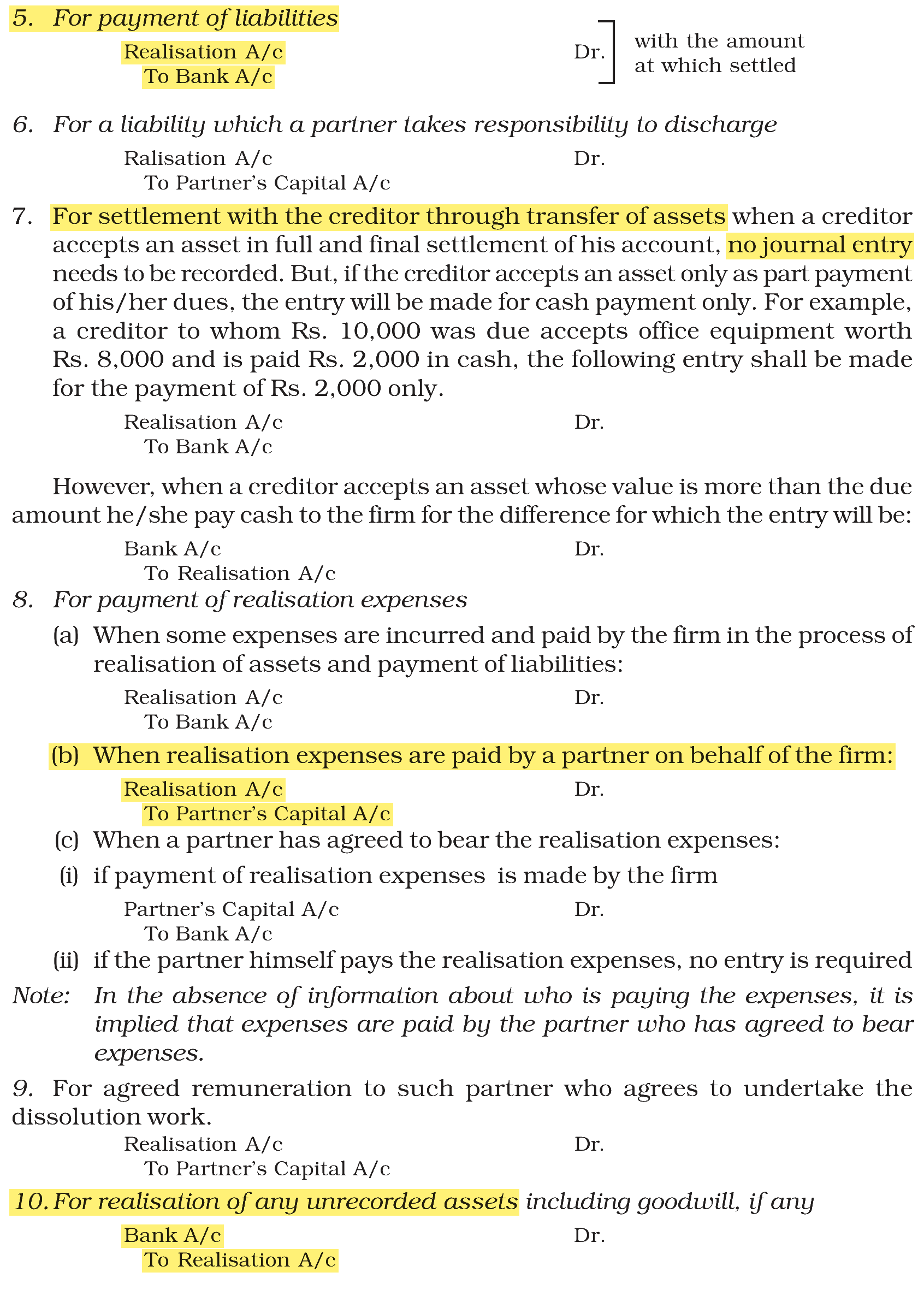
(A) Dissolution expenses of Rs. 7,800 were paid by partner. — this matches (IV) Realisation A/c Dr. To Partner’s Capital Account. The expense is the firm’s, but the partner paid it, so the firm now owes him and his capital account is credited.
(B) When a creditor accepts a fixed asset in payment of his dues. — this matches (II) No Entry. The asset and the creditor are both already in the Realisation Account, so settling one against the other needs no further entry.
(C) There was an outstanding bill for repairs which had to be paid. — this matches (I) Realisation A/c Dr. To Bank A/c. A liability paid in cash on dissolution is debited to the Realisation Account.
(D) There was an unrecorded investment sold. — this matches (III) Bank A/c Dr. To Realisation A/c. The asset was never in the books, so the cash it fetches is a gain credited to the Realisation Account.
NCERT (2026-27 edition):
|