Match List-I with List-II
| List-I | List-II |
| (A) MPS | (I) \( C/Y \) |
| (B) MPC | (II) \( \bar C+cY \) |
| (C) APC | (III) \( 1-c \) |
| (D) Consumption function (C) | (IV) \( \Delta C/\Delta Y \) |
Choose the correct answer from the options given below:
Answer & explanation
Correct answer: option 4
The correct answer is Option (4) → (A)-(III), (B)-(IV), (C)-(I), (D)-(II)
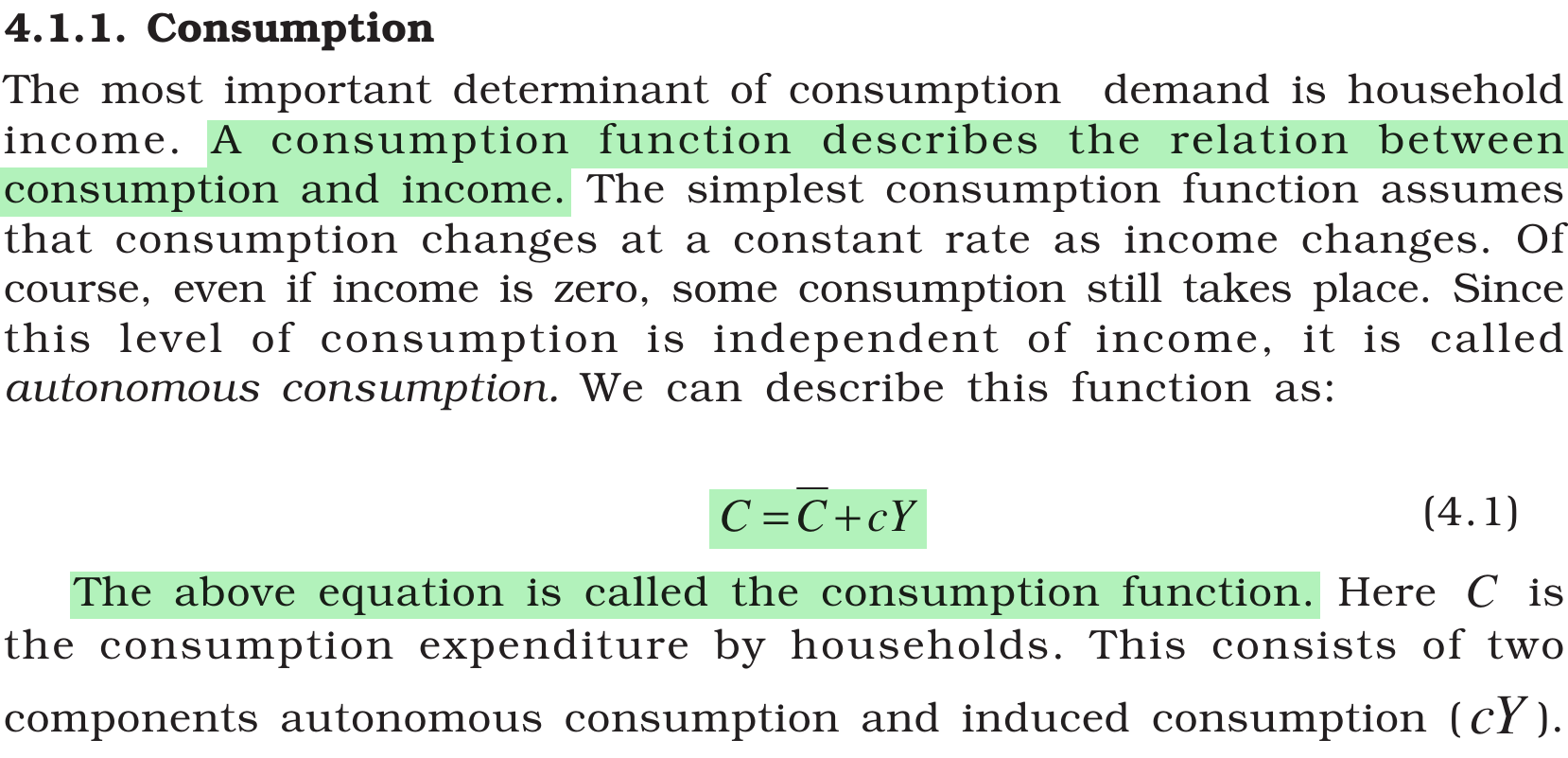
Consumption depends on income. Here c is the marginal propensity to consume, the share of extra income that is spent.
| List-I | List-II | Reason |
|---|---|---|
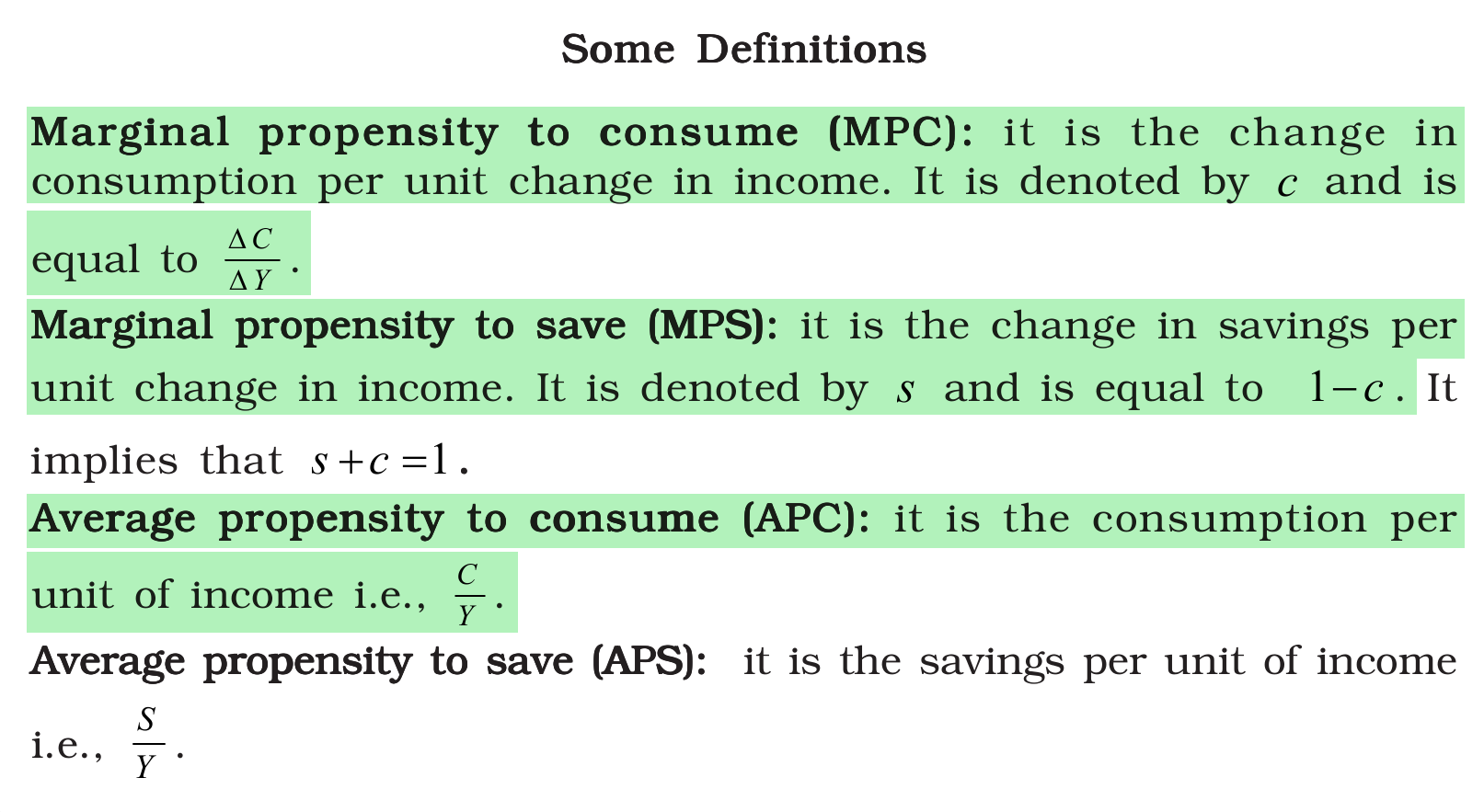
| (A) MPS | (III) \( 1-c \) | Extra income is either consumed or saved. So the marginal propensity to save is 1 minus c. |
| (B) MPC | (IV) \( \Delta C/\Delta Y \) | The marginal propensity to consume is the change in consumption per unit change in income. |
| (C) APC | (I) \( C/Y \) | The average propensity to consume is consumption per unit of income. |
| (D) Consumption function (C) | (II) \( \bar C+cY \) | Consumption has a part that does not depend on income (\( \bar C \)) and a part that depends on income (cY). |
NCERT (2026-27): Introductory Macroeconomics — Chapter 4: Determination of Income and Employment
|