
Identify the compositional arrangements of the graphic print "Whirlpool".
(A) Different shades of Brown and Red have been used.
(B) It is a representation of Earth and Sky.
(C) Each colour blends into the other to create a powerful web of design.
(D) It is a composition created out of various shades of Blue colours.
(E) The technique which had been used is viscosity printing.
Choose the correct answer from the options given below:
Answer & explanation
Correct answer: option 2
The correct answer is Option (2) → (C), (D), (E) only
Given staements about the compositional arrangements of the graphic print "Whirlpool":
(A) Different shades of Brown and Red have been used.
(B) It is a representation of Earth and Sky.
(C) Each colour blends into the other to create a powerful web of design. (Correct)
(D) It is a composition created out of various shades of Blue colours. (Correct)
(E) The technique which had been used is viscosity printing. (Correct)
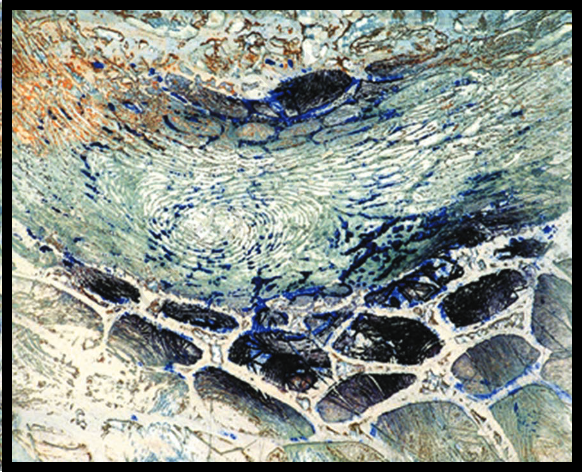
Whirl pool: This was a print made by India’s celebrated printmaker Krishna Reddy in 1963. It is a captivating composition created out of various shades of blues. Each colour blends into the other to create a powerful web of design. It is the result of a new technique in printmaking that he developed along with a well-known printmaker, Stanley William Hayter, in the famous studio called ‘Atelier 17’. This method came to be known as ‘viscosity printing’, in which different colours are applied on the same metal printing plate. Each colour is mixed with linseed oil in varied concentration to ensure that colours do not run into each other. The print’s subject matter, dealing with water current, aptly captures the technique based on understanding how water and oil behave with each other. This celebrated print is in the collection of the Metropolitan Museum of Art in New York, USA.