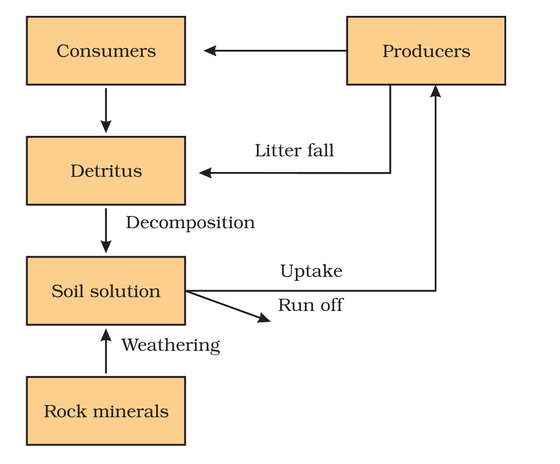
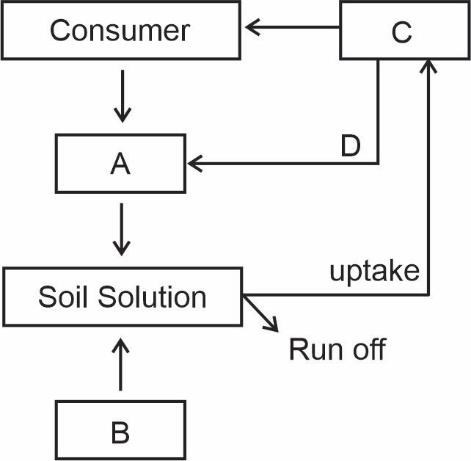
Given below is a simplified model of phosphorus cycle in terrestrial ecosystem with four blanks. Identify the blanks A, B, C and D.
Answer & explanation
Correct answer: option 4
The correct answer is Option (4) → A: Detritus, B: Rock minerals, C: Producers, D: Litter fall
The phosphorus cycle is a sedimentary cycle: its reservoir is rock, not the air.
B = Rock minerals. Rock is the natural store of phosphorus. Weathering releases phosphates into the soil solution.
C = Producers. Plants take up phosphate from the soil solution through their roots (uptake), and consumers get it by eating them.
D = Litter fall. Dead leaves and parts of plants fall to the ground and join the detritus.
A = Detritus. Dead plants and animals and their wastes form detritus. Decomposition by bacteria returns the phosphorus to the soil solution.
Only option (4) puts all four in these places.
Note: This question is from the topic “Phosphorus Cycle” in Chapter 14, Ecosystem, of the pre-rationalised NCERT book. This portion is not in the present NCERT book, where the chapter is now Chapter 12, Ecosystem. The extract below is from the pre-rationalised edition.
NCERT Extract (Pre-rationalised edition, Chapter 14, Ecosystem):
Ecosystem – Phosphorus Cycle – “… Phosphorus is a major constituent of biological membranes, nucleic acids and cellular energy transfer systems. Many animals also need large quantities of this element to make shells, bones and teeth. The natural reservoir of phosphorus is rock, which contains phosphorus in the form of phosphates. When rocks are weathered, minute amounts of these phosphates dissolve in soil solution and are absorbed by the roots of the plants (Figure 14.7). Herbivores and other animals obtain this element from plants. The waste products and the dead organisms are decomposed by phosphate-solubilising bacteria releasing phosphorus. Unlike carbon cycle, there is no respiratory release of phosphorus into atmosphere.”