
Immunity & Cancer
Read the following passage carefully and answer the given questions.
If the pathogens succeed in gaining entry to our body, specific antibodies and cells serve to kill these pathogens. The B-lymphocytes produce an army of proteins in response to pathogens into our blood to fight with them. The T-cells themselves do not secrete antibodies but help B cells to produce them. The principle of immunisation or vaccination is based on the property of ‘memory’ of the immune system. In vaccination, a preparation of antigenic proteins of pathogen or inactivated/weakened pathogen (vaccine) are introduced into the body. The antibodies produced in the body against these antigens would neutralise the pathogenic agents during actual infection. The exaggerated response of the immune system to certain antigens present in the environment is called allergy. The human immune system consists of lymphoid organs, tissues, cells and soluble molecules like antibodies. Cancer causing viruses called oncogenic viruses have genes called viral oncogenes. Furthermore, several genes called cellular oncogenes (c-onc) or proto oncogenes have been identified in normal cells which, when activated under certain conditions, could lead to oncogenic transformation of the cells.
An antibody is represented by:
Answer & explanation
Correct answer: option 1
The correct answer is Option (1) → H2L2
Each antibody molecule has four peptide chains: two long heavy chains (H) and two small light chains (L).
(1) H2L2 — Correct. Two heavy and two light chains.
(2) H2L1 — Incorrect. This has only one light chain.
(3) H1L2 — Incorrect. This has only one heavy chain.
(4) H1L1 — Incorrect. This is only half of an antibody.
Note 1: This passage is taken from NCERT as it is. Most CUET (UG) questions come straight from NCERT, so study the book line by line, including figures and their titles.
Note 2: A similar question was also asked in CUET (UG) 2026 on 19-05-2026 (Slot 2), and in CUET (UG) 2025 on 26-05-2025 (Slot 2).
NCERT Extract:
Acquired Immunity – “… The B-lymphocytes produce an army of proteins in response to pathogens into our blood to fight with them. These proteins are called antibodies. The T-cells themselves do not secrete antibodies but help B cells to produce them. Each antibody molecule has four peptide chains, two small called light chains and two longer called heavy chains. Hence, an antibody is represented as H2L2.”
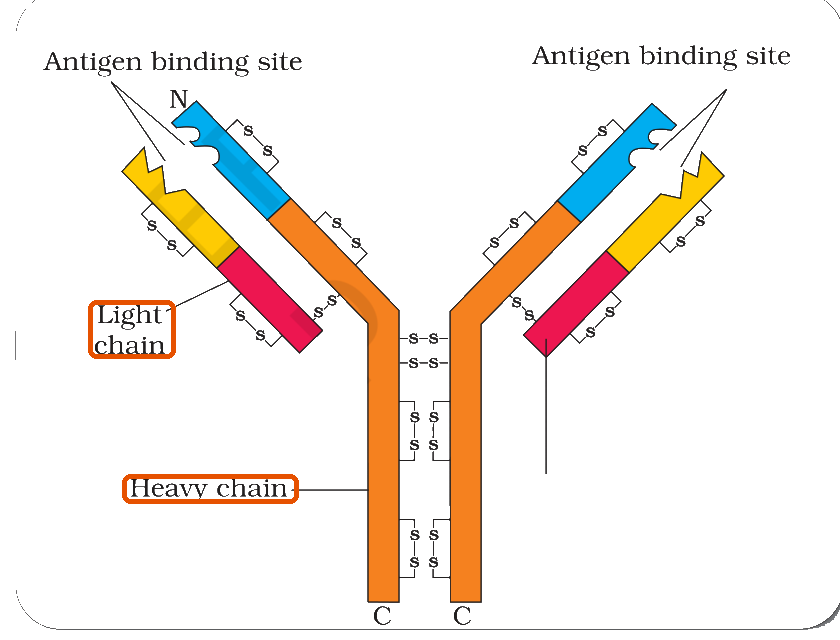
Figure 7.4 Structure of an antibody molecule