Match List-I with List-II
| List-I | List-II | ||
| (A) | British introduced Railways in India | (I) | 1932 |
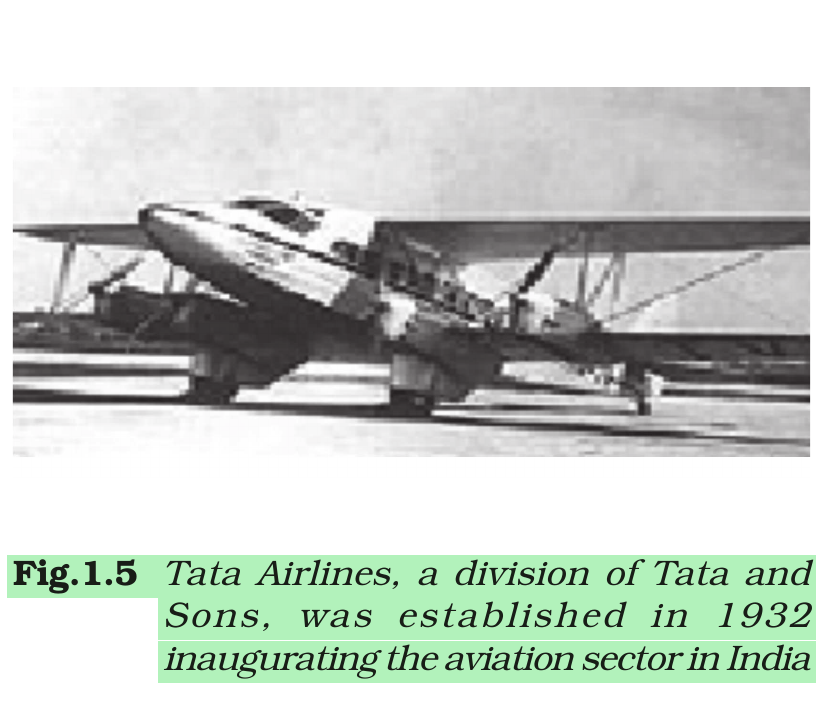
| (B) | Tata Airlines, a division of Tata & sons, inaugurating the aviation sector in India | (II) | 1907 |
| (C) | Second stages of demographic transition began after | (III) | 1850 |
| (D) | Tata Iron and Steel Company incorporated | (IV) | 1921 |
Choose the correct answer from the options given below:
Answer & explanation
Correct answer: option 1
The correct answer is Option (1) → A-III, B-I, C-IV, D-II
All four dates come from India under British rule, before independence.
| List-I | List-II | Reason |
|---|---|---|
| (A) British introduced Railways in India | (III) 1850 | The British introduced the railways in 1850. It is considered one of their most important contributions. |
| (B) Tata Airlines, a division of Tata & sons, inaugurating the aviation sector in India | (I) 1932 | Tata Airlines was set up in 1932, and it began the aviation sector in India. |
| (C) Second stages of demographic transition began after | (IV) 1921 | Before 1921, India was in the first stage of demographic transition. The second stage began after 1921. |
| (D) Tata Iron and Steel Company incorporated | (II) 1907 | The Tata Iron and Steel Company (TISCO) was incorporated in 1907, when iron and steel industries began to come up. |
NCERT (2026-27): “1.8 Infrastructure … The British introduced the railways in India in 1850 and it is considered as one of their most important contributions. The railways affected the structure of the Indian economy in two important ways. On the one hand it enabled people to undertake long distance travel and thereby break geographical and cultural barriers while, on the other hand, it fostered commercialisation of Indian agriculture which adversely affected the self-sufficiency of the village economies in India.… 1.6 Demographic Condition Various details about the population of British India were first collected through a census in 1881. Though suffering from certain limitations, it revealed the unevenness in India’s population growth. Subsequently, every ten years such census operations were carried out. Before 1921, India was in the first stage of demographic transition. The second stage of transition began after 1921. However, neither the total population of India nor the rate of population growth at this stage was very high.… 1.4 Industrial Sector … During the second half of the nineteenth century, modern industry began to take root in India but its progress remained very slow. Initially, this development was confined to the setting up of cotton and jute textile mills. The cotton textile mills, mainly dominated by Indians, were located in the western parts of the country, namely, Maharashtra and Gujarat, while the jute mills dominated by the foreigners were mainly concentrated in Bengal. Subsequently, the iron and steel industries began coming up in the beginning of the twentieth century. The Tata Iron and Steel Company (TISCO) was incorporated in 1907.…”
|