Match List-I with List-II in the context of the Government Budget:
| List-I | List-II |
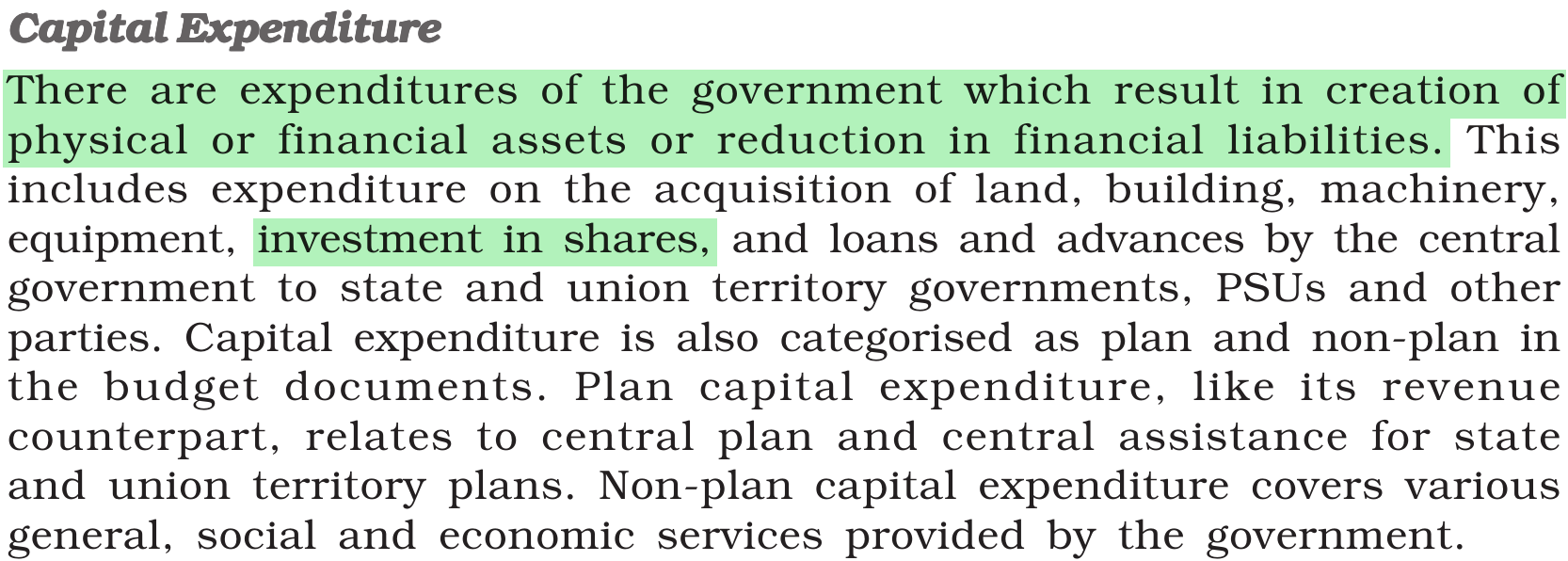
| (A) Purchase of stocks of a private company by the Central government | (I) Capital receipts |
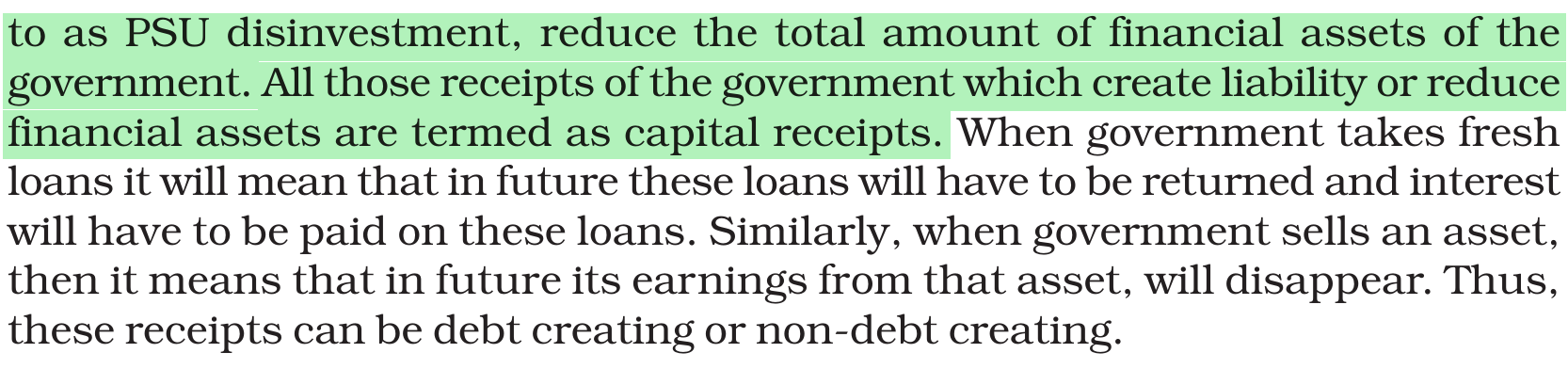
| (B) Sale of equity of a public sector enterprise to private sector | (II) Revenue receipts |
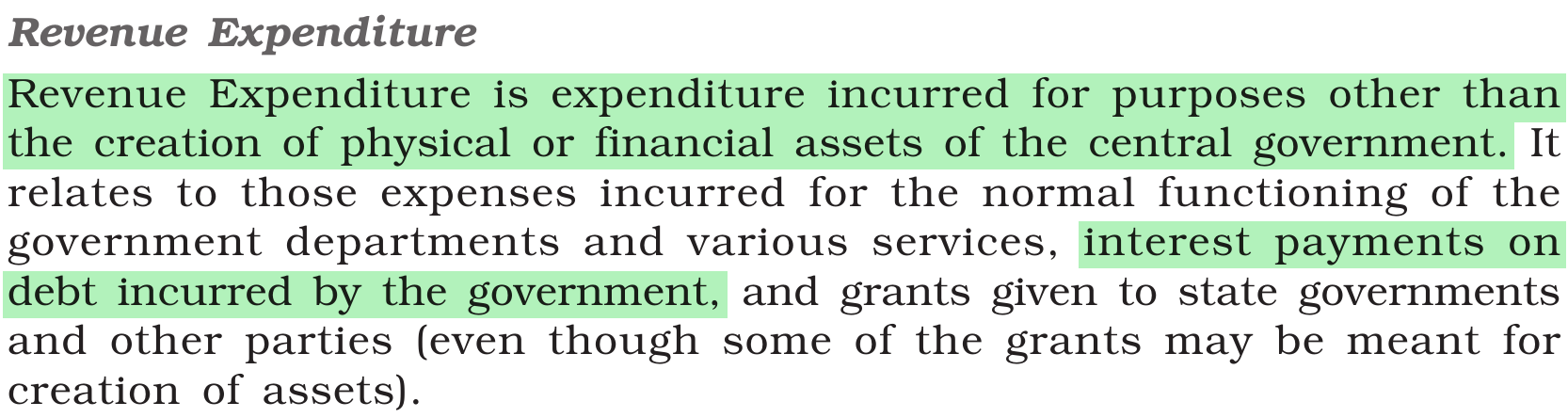
| (C) Payment of interest by the government on loans from financial institutions | (III) Capital expenditure |
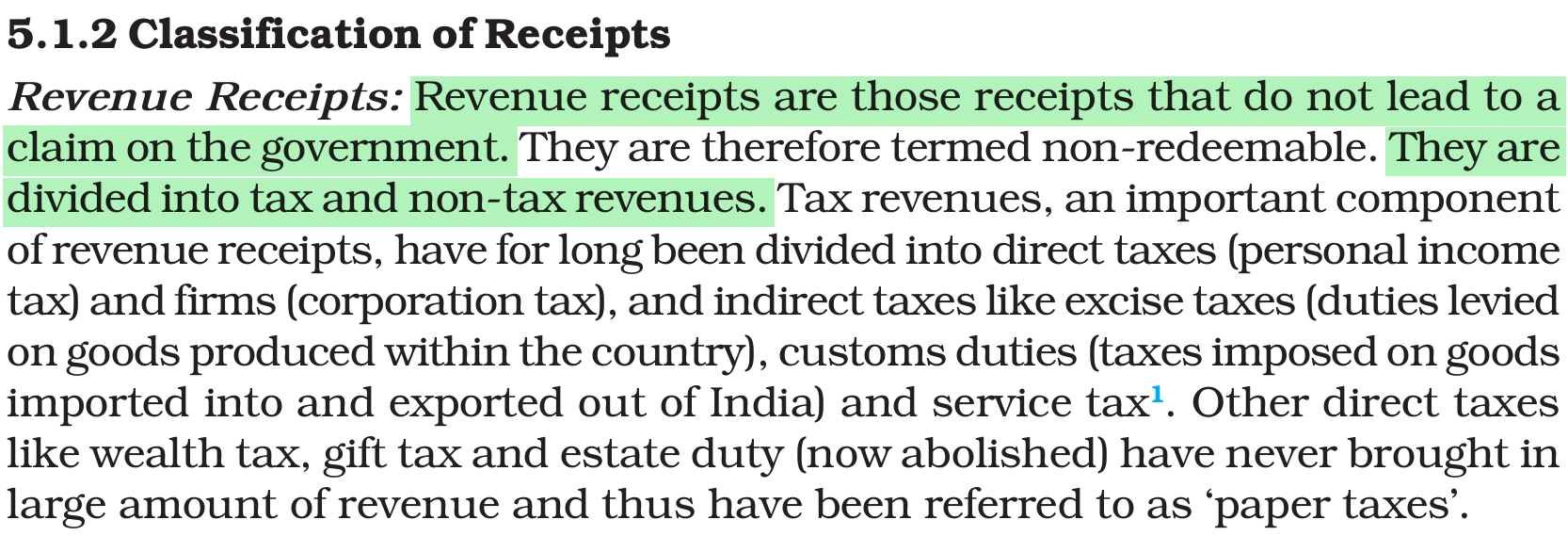
| (D) Stamp duty received by the government on property transactions in the country | (IV) Revenue expenditure |
Choose the correct answer from the options given below:
Answer & explanation
Correct answer: option 2
The correct answer is Option (2) → (A)-(III), (B)-(I), (C)-(IV), (D)-(II)
Budget items are sorted by what they do to the government’s assets and liabilities. A capital receipt creates a liability or reduces financial assets, and a revenue receipt does neither. Capital expenditure creates physical or financial assets, and revenue expenditure does not.
| List-I | List-II | Reason |
|---|---|---|
| (A) Purchase of stocks of a private company by the Central government | (III) Capital expenditure | The government gets shares for its money, so a financial asset is created. |
| (B) Sale of equity of a public sector enterprise to private sector | (I) Capital receipts | This is disinvestment: the government sells its shares in a public sector enterprise. It reduces the government’s financial assets. |
| (C) Payment of interest by the government on loans from financial institutions | (IV) Revenue expenditure | Interest payments on debt create no asset for the government. |
| (D) Stamp duty received by the government on property transactions in the country | (II) Revenue receipts | Stamp duty is a tax. It creates no claim on the government and reduces no asset. |
NCERT (2026-27): Introductory Macroeconomics — Chapter 5: Government Budget and the Economy
|