Match List-I with List-II:
| List-I | List-II | ||
|---|---|---|---|
| (A) | Net income from compensation of employees | (I) | Transfer payments |
| (B) | Shipping and insurance services | (II) | Portfolio investment |
| (C) | Gifts, remittances and grants | (III) | Net factor income |
| (D) | Offshore funds | (IV) | Net non-factor income |
Choose the correct answer from the options given below:
Answer & explanation
Correct answer: option 1
The correct answer is Option (1) → (A) - (III), (B) - (IV), (C) - (I), (D) - (II)
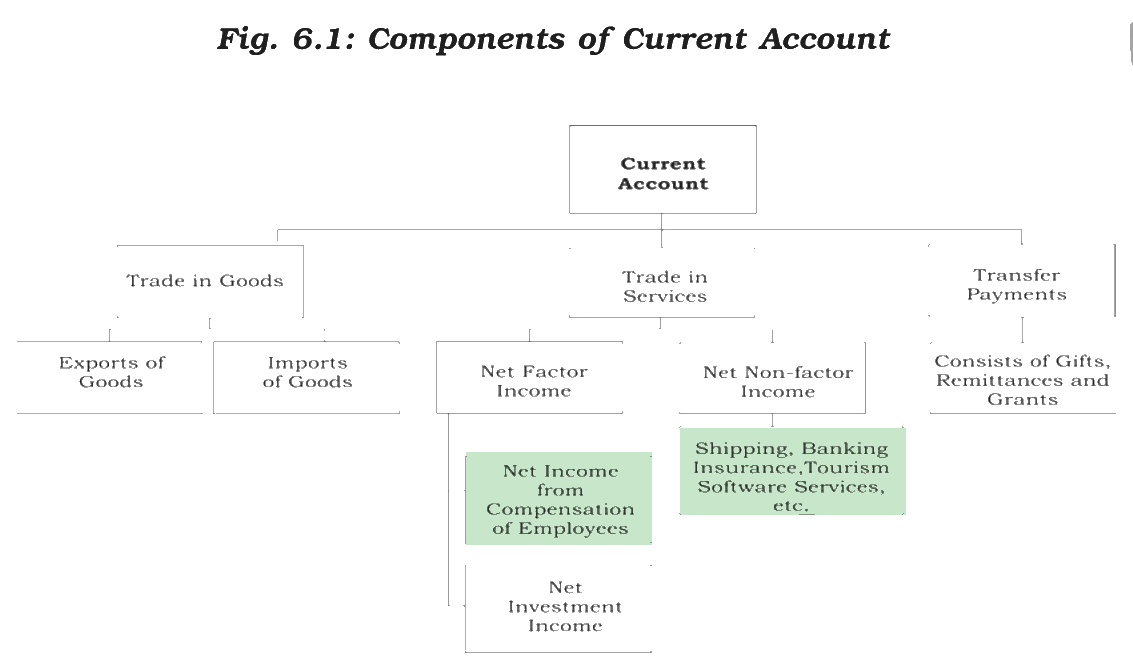
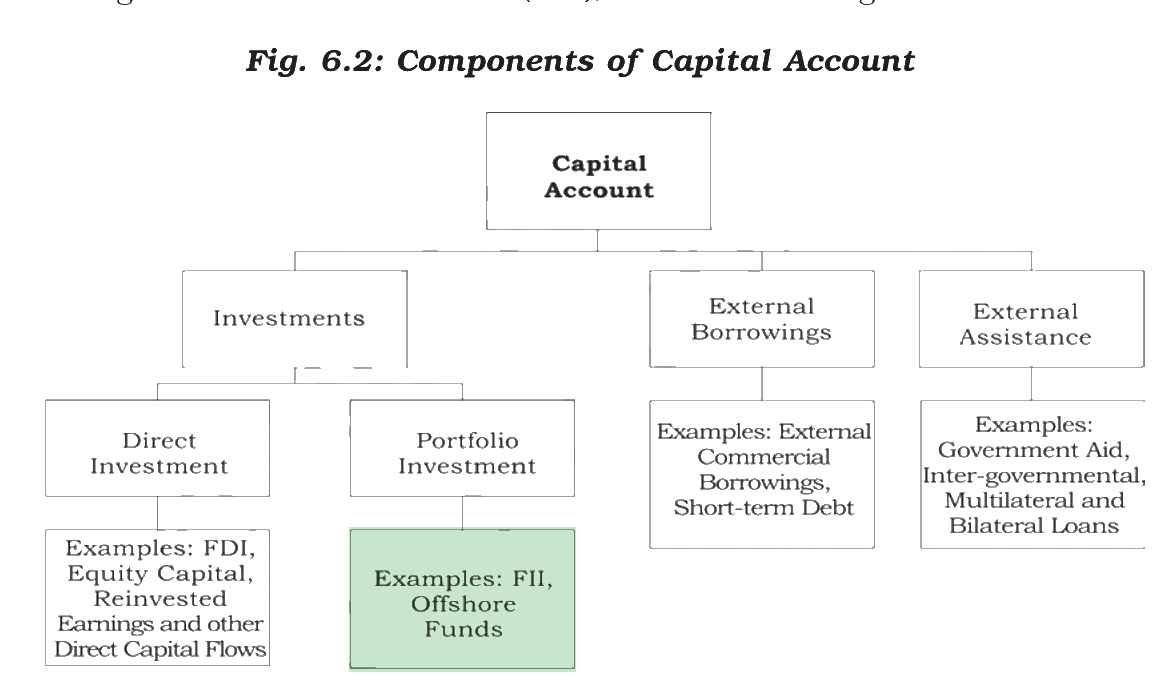
The current account splits trade in services into factor and non-factor income, and keeps transfers apart. The capital account splits investment into direct and portfolio investment.
| List-I | List-II | Reason |
|---|---|---|
| (A) Net income from compensation of employees | (III) Net factor income | Pay earned by workers is income from a factor of production. |
| (B) Shipping and insurance services | (IV) Net non-factor income | These are sales of service products. |
| (C) Gifts, remittances and grants | (I) Transfer payments | They are received free, with nothing given in return. |
| (D) Offshore funds | (II) Portfolio investment | Offshore funds sit with FII under portfolio investment. |
NCERT (2026-27): “6.1.1 Current Account … Trade in services includes factor income and non-factor income transactions. Transfer payments are the receipts which the residents of a country get for ‘free’, without having to provide any goods or services in return. They consist of gifts, remittances and grants. …”
|