
Which of the following divisions turns secondary spermatocytes into four equal, haploid spermatids?
Answer & explanation
Correct answer: option 3
The correct answer is Option (3) → Second meiotic division.
Spermatogenesis takes place in the seminiferous tubules. Spermatogonia (diploid, 46 chromosomes) multiply by mitosis. Some of them become primary spermatocytes, which enter meiosis. Meiosis has two divisions: the first halves the chromosome number, and the second separates the two copies of each chromosome.
Option (1) Second mitotic division. — Incorrect. Spermatogenesis has no such step. Mitosis takes place only in the spermatogonia, which increase in number and stay diploid. Spermatocytes divide by meiosis.
Option (2) First mitotic division. — Incorrect. Mitosis keeps the chromosome number the same and only multiplies the spermatogonia. It does not act on secondary spermatocytes.
Option (3) Second meiotic division. — Correct. Each secondary spermatocyte is already haploid (23 chromosomes). In the second meiotic division it splits into two equal, haploid spermatids. The two secondary spermatocytes from one primary spermatocyte therefore give four spermatids, which later change into sperms by spermiogenesis.
Option (4) First meiotic division. — Incorrect. The first meiotic division (reduction division) takes place in the primary spermatocyte. It produces the two secondary spermatocytes, not the spermatids.
NCERT Extract:
Gametogenesis – “… Some of the spermatogonia called primary spermatocytes periodically undergo meiosis. A primary spermatocyte completes the first meiotic division (reduction division) leading to formation of two equal, haploid cells called secondary spermatocytes, which have only 23 chromosomes each. The secondary spermatocytes undergo the second meiotic division to produce four equal, haploid spermatids (Figure 2.5).”
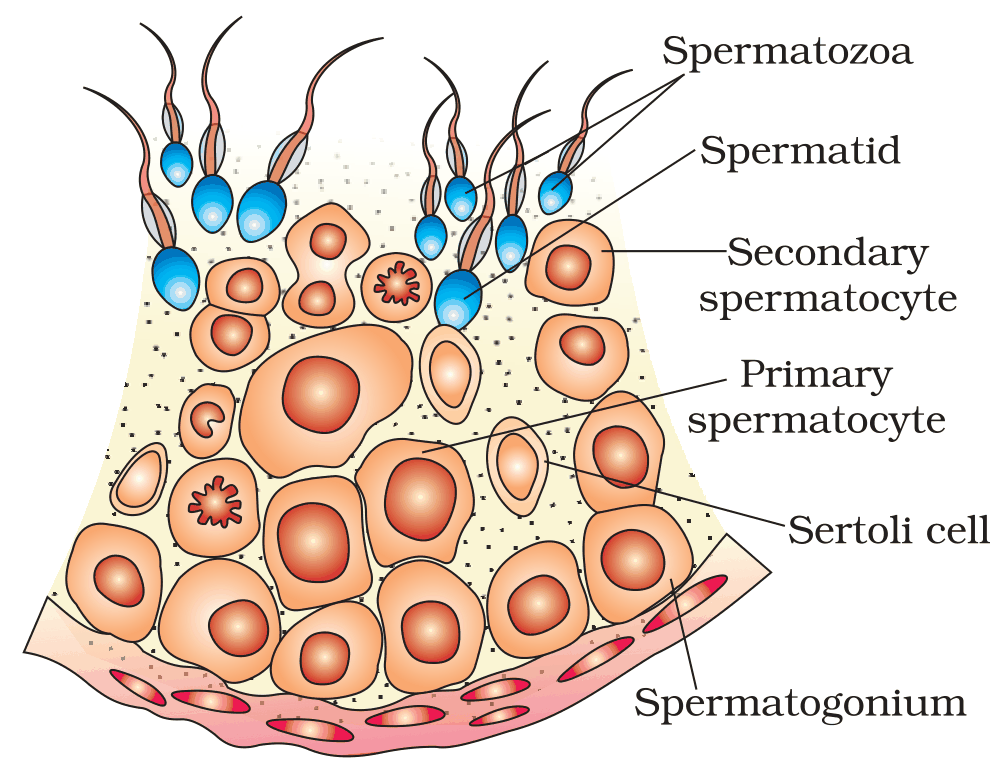
Figure 2.5 Diagrammatic sectional view of a seminiferous tubule (enlarged)