
Which equipment is used for cultivating microbes on a large scale for the industrial production of enzymes?
Answer & explanation
Correct answer: option 3
The correct answer is Option (3) → Bioreactor
Microbes make many useful products, such as enzymes, antibiotics and organic acids. To make them on an industrial scale, the microbes are grown in very large vessels. Chapter 8 calls these vessels fermentors; Chapter 9 calls them bioreactors. They hold 100–1000 litres of culture and keep the temperature, pH, oxygen and nutrients at the best level for growth.
Option (1) Sludge digester — Incorrect. A sludge digester is a tank in a sewage plant. Bacteria there digest sewage sludge without oxygen and give off biogas. It is not used for making enzymes.
Option (2) Industrial oven — Incorrect. An oven only heats or dries things. It cannot keep microbes alive and growing, so it cannot be used to culture them.
Option (3) Bioreactor — Correct. A bioreactor is a vessel in which raw materials are converted into products such as enzymes by microbial, plant, animal or human cells. It allows large volumes of culture to be grown.
Option (4) BOD incubator — Incorrect. A BOD incubator holds water samples while the oxygen used by microbes is measured in the BOD test. It is a testing tool, not a vessel for large-scale production.
NCERT Extract:
Microbes in Industrial Products – “Even in industry, microbes are used to synthesise a number of products valuable to human beings. Beverages and antibiotics are some examples. Production on an industrial scale, requires growing microbes in very large vessels called fermentors (Figure 8.4).”
Obtaining the Foreign Gene Product – “… To produce in large quantities, the development of bioreactors, where large volumes (100-1000 litres) of culture can be processed, was required. Thus, bioreactors can be thought of as vessels in which raw materials are biologically converted into specific products, individual enzymes, etc., using microbial plant, animal or human cells.”
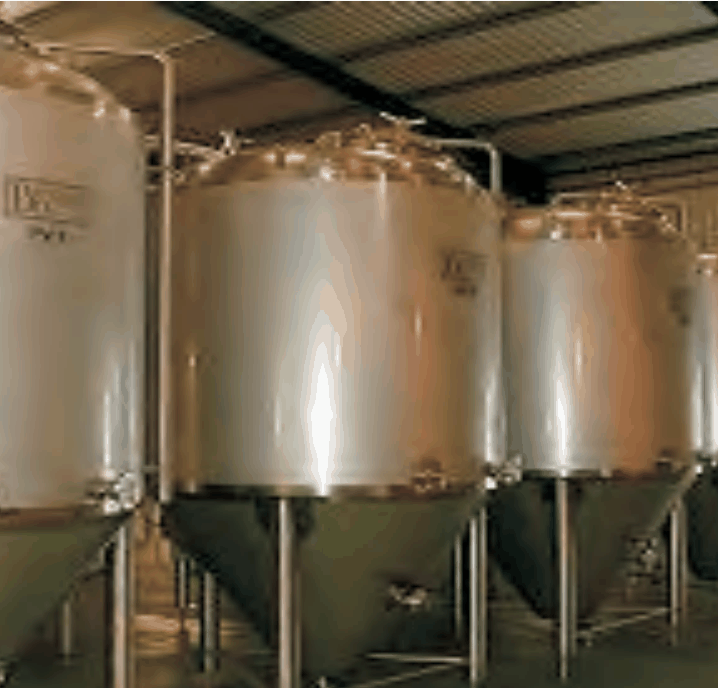
Figure 8.4 Fermentors