Select the correct statements about Hill folk from the options given below:
A. Hill folk were known as Paharias.
B. Their land was known as Damin-i-Koh.
C. From the forest they collected mahua (a flower).
D. They lived around Rajmahal hills.
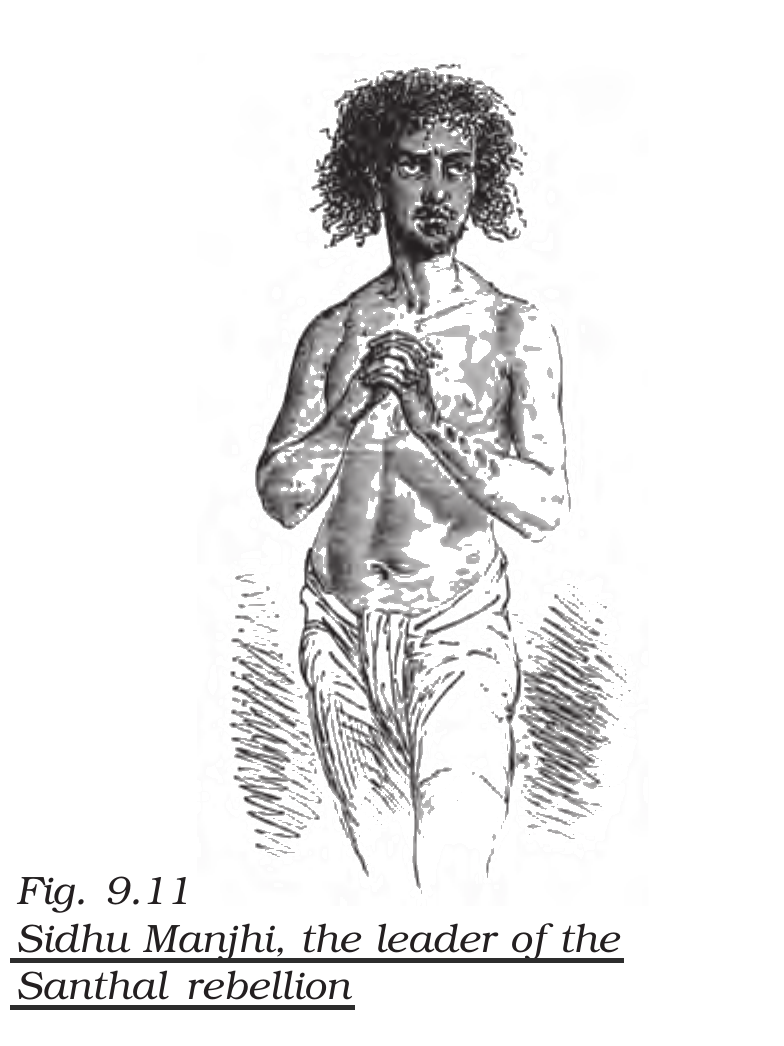
E. Sidhu Manjhi was their leader.
Choose the correct answer from the options given below:
Answer & explanation
Correct answer: option 3
The correct answer is Option (3) → A, C, D only
A. Hill folk were known as Paharias. Correct. Late-eighteenth-century revenue records show that the hill folk Buchanan met were known as Paharias.
B. Their land was known as Damin-i-Koh. Incorrect. By 1832 a large area of land was demarcated as Damin-i-Koh and declared to be the land of the Santhals, who had been persuaded to settle in the foothills of Rajmahal; it was not the land of the Paharias.
C. From the forest they collected mahua (a flower). Correct. From the forests the Paharias collected mahua (a flower) for food, silk cocoons and resin for sale, and wood for charcoal production.
D. They lived around Rajmahal hills. Correct. The Paharias lived around the Rajmahal hills, living on forest produce and practising shifting cultivation.
E. Sidhu Manjhi was their leader. Incorrect. Sidhu Manjhi was the leader of the Santhal rebellion, not a leader of the Paharias.
NCERT (2026-27): “2.1 In the hills of Rajmahal … If we look at late-eighteenth-century revenue records, we learn that these hill folk were known as Paharias. They lived around the Rajmahal hills, subsisting on forest produce and practising shifting cultivation. They cleared patches of forest by cutting bushes and burning the undergrowth. On these patches, enriched by the potash from the ash, the Paharias grew a variety of pulses and millets for consumption. They scratched the ground lightly with hoes, cultivated the cleared land for a few years, then left it fallow so that it could recover its fertility, and moved to a new area. From the forests they collected mahua (a flower) for food, silk cocoons and resin for sale, and wood for charcoal production. The undergrowth that spread like a mat below the trees and the patches of grass that covered the lands left fallow provided pasture for cattle. 2.2 The Santhals: Pioneer settlers … The Santhals were given land and persuaded to settle in the foothills of Rajmahal. By 1832 a large area of land was demarcated as Damin-i-Koh. This was declared to be the land of the Santhals. They were to live within it, practise plough agriculture, and become settled peasants.…”
|